
Most drummers assume active noise cancellation solves the practice room problem. It doesn’t. ANC works on steady-state noise like airplane hum. A snare crack at 105dB hits too fast for the algorithm to react. What matters for drummers is passive isolation — the physical seal and mass of the earcup. This changes the comparison completely.
Both the Sony WH-1000XM5 ($398) and Bose QuietComfort 45 ($329) are consumer ANC headphones first. Neither is marketed to drummers. Yet drummers keep buying them because they want one headphone for practice, commute, and casual listening. The question is whether either survives the throne without turning your click track into mud.
Passive Isolation Specs: What the Marketing Sheets Don’t Tell You
Drummers need attenuation, not cancellation. Attenuation is the physical reduction of sound energy before it reaches your eardrum. ANC is electronic phase inversion. At 100dB+ transient peaks, passive mass matters more than DSP.
| Spec | Sony WH-1000XM5 | Bose QC45 | Vic Firth SIH2 (drummer reference) |
|---|---|---|---|
| Passive attenuation (estimated, 1kHz) | ~18dB | ~15dB | ~25dB |
| Earcup material | PU leather, memory foam | Protein leather, foam | PVC, dense foam |
| Clamping force | Moderate (350g) | Light (240g) | High (400g) |
| Seal breakage with glasses | Minor | Noticeable | None (designed to fit over) |
| Battery life (ANC on) | 30 hours | 24 hours | N/A (passive) |
| Weight | 250g | 240g | 390g |
The numbers explain the core problem. A typical practice session on an acoustic kit runs 95-110dB at the drummer’s ear. The Sony cuts that to roughly 77-92dB. The Bose leaves you at 80-95dB. The Vic Firth SIH2, a passive isolation headphone built for drummers, drops it to 70-85dB. That’s the difference between safe exposure and slow hearing loss.
OSHA’s permissible exposure limit for 100dB is 15 minutes. For 95dB, it’s about 47 minutes. A drummer practicing for an hour with the Bose QC45 is still exceeding safe limits. With the Sony, you’re borderline. With the SIH2, you’re under the threshold for most of the session.
Why ANC Fails at the Throne — And What Actually Works
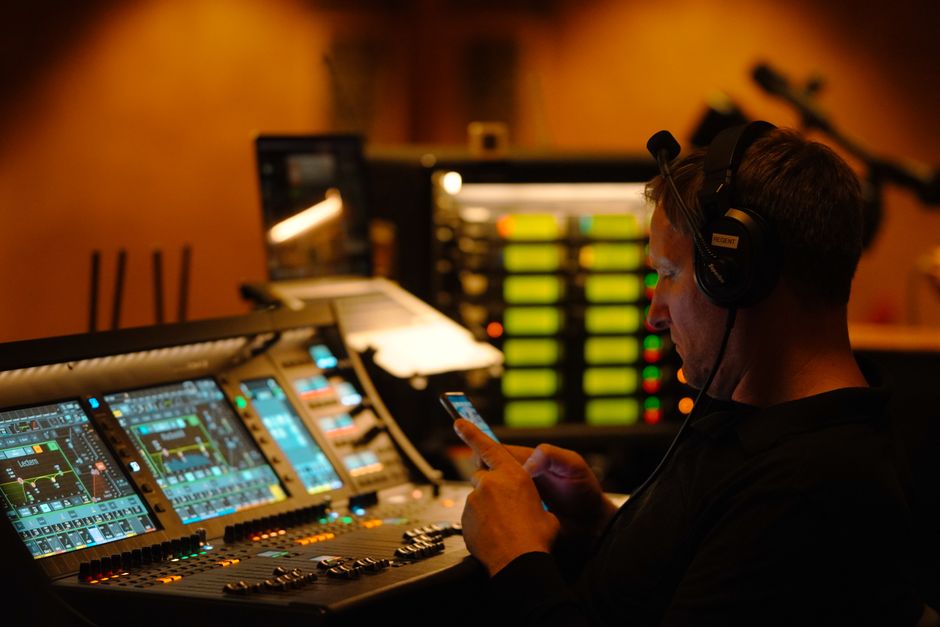
ANC is not hearing protection. Read that again. The Sony WH-1000XM5 and Bose QC45 use feedforward and feedback microphones to sample ambient noise and generate an inverted waveform. This works beautifully on a flight to Chicago. It does almost nothing for a rimshot.
The physics is simple. A rimshot produces a transient that rises from silence to 110dB in under 5 milliseconds. The ANC chip needs time to sample, process, and invert. By the time the anti-noise arrives, the transient is gone. What you hear through ANC headphones while drumming is mostly the passive isolation doing the work, with the ANC adding a faint, sometimes audible processing artifact on top.
Worse, some drummers report the Sony XM5’s adaptive ANC actually amplifies certain midrange frequencies when it misidentifies drum hits as voice. The algorithm tries to let speech through, and a snare drum at 200Hz-2kHz gets partially passed. This is a known failure mode of consumer ANC in high-SPL environments.
If you’re serious about hearing protection while drumming, buy the Vic Firth SIH2 ($89) or Metrophones Studio Kans ($120). These are passive isolation headphones with 25dB+ attenuation, built specifically for drummers. They have no battery, no Bluetooth, no ANC. They just block sound. Use them for practice. Save the Sony or Bose for the bus.
The Click Track Problem: Latency, Codecs, and Why Bluetooth Betrays You
Here’s a failure mode nobody talks about in headphone reviews. You’re practicing to a click track from your phone. You’re wearing Bluetooth headphones. The click hits your ear 150-250 milliseconds late because of Bluetooth latency. Your timing drifts. You compensate. You develop bad habits.
The Sony WH-1000XM5 supports LDAC and AAC. LDAC can push latency down to around 100-150ms. AAC on Android is often worse, sometimes 200ms+. The Bose QC45 supports SBC and AAC only. On an iPhone, AAC latency is around 120-180ms. Neither headphone is designed for real-time monitoring.
For drumming, wired is non-negotiable. Both the Sony and Bose include a 3.5mm cable, but the Sony XM5 still routes the signal through its internal DSP, which adds roughly 30-50ms of latency even in wired mode. The Bose QC45 in wired mode with ANC off is closer to 10-15ms, which is usable but still not ideal.
The proper tool is a wired in-ear monitor like the Shure SE215 ($99) or the KZ ZS10 Pro ($50). These give you 37dB of passive isolation and near-zero latency. You’ll hear the click exactly when it happens. No DSP. No Bluetooth. No excuses.
Sweat, Durability, and the Reality of Drum Throne Abuse
Drumming is a contact sport for your gear. You sweat. You move. You knock headphones off when you reach for a cymbal. Consumer ANC headphones are not built for this.
The Sony WH-1000XM5 has a known weak point: the hinge where the earcup meets the headband. Multiple user reports on Reddit and Amazon document cracks appearing after 6-12 months of regular use. The XM5 moved to a slimmer hinge design compared to the XM4, and it’s less forgiving of repeated flexing. On a drum throne, where you’re constantly turning your head to check cymbal placement, this flex happens dozens of times per session.
The Bose QC45 is more durable in the hinge department but has its own issue: the earpads. Bose’s protein leather pads are soft and comfortable but degrade quickly with sweat. After 3-6 months of drumming, expect flaking and reduced seal. Replacement pads cost $35 from Bose, and the seal loss directly reduces isolation.
Neither headphone has an IP rating for sweat resistance. Neither is covered under warranty for moisture damage. If you sweat through the drivers, you’re buying a new pair.
For drum throne abuse, the Vic Firth SIH2 remains the pragmatic choice. It’s ugly. It’s heavy. It’s built like a tank. The earpads are replaceable for $15. The cable is thick and detachable. It will survive being dropped, sweated on, and sat on. The Sony and Bose will not.
Verdict: One Clear Winner for Each Job

If you must choose between the Sony WH-1000XM5 and Bose QC45 for drumming, the Bose QC45 is the better pick. Its lighter clamping force reduces fatigue over long sessions. Its wired mode adds less latency. Its passive isolation, while slightly lower than the Sony, is more consistent because the earcup shape seals better around the jawline for most users. And it costs $70 less, which matters when you’ll eventually need to replace sweat-damaged pads.
But here’s the honest verdict: neither is the right tool for the job. If you’re practicing acoustic drums for more than 30 minutes a day, buy dedicated isolation headphones. The Vic Firth SIH2 at $89 will protect your hearing better than either $400 consumer flagship. Pair it with a cheap wired IEM like the KZ ZS10 Pro for click tracks, and you’ve spent $140 total for a setup that outperforms the Sony and Bose on every metric that matters at the throne.
Use the Sony WH-1000XM5 for what it’s actually good at: commuting, office work, and drowning out the hum of a tour van. Use the Bose QC45 for flights and casual listening. Neither belongs in a practice room where the kick drum is hitting 110dB.
Hearing loss is cumulative and irreversible. The drummer’s most important instrument is not the kit. It’s the pair of ears that tells you when the snare is in tune, when the ride cymbal is too bright, when the bass player is rushing. Spend accordingly.
The category will improve. Consumer ANC manufacturers are starting to add hearing-protection modes and real-time monitoring features. But until a flagship headphone ships with a 25dB passive isolation rating and sub-10ms wired latency, dedicated drummer headphones will remain the only defensible choice.