Jeff Rosenstock live at Belgrave Music Hall review – songs to tear the roof off

Critically acclaimed punk rocker Jeff Rosenstock marked his return to the UK with an explosive, sweat-drenched performance in Leeds, packed with clever changes of pace, raucous singalongs and underlying anti-capitalist rage.

16 Undertone gig reviews deep, no act I’ve seen thus far has taken to a stage quite like Jeff Rosenstock did at Leeds’ Belgrave Music Hall. For most acts, their grand entrance onto the stage is hammed up as one of the most thrilling moments of the night. Be it dodie‘s gentle organ hum, Sam Fender‘s static fuzz or Jungle‘s interminable sirens, some sort of lavish musical fanfare usually marks the end of the hours-long wait for the artist on our tickets. Even less well-known artists like Larkins or The Beths dimmed the lights and donned facemasks to remain anonymous as they set up their own equipment onstage, attempting to save the big reveal for the giddy few seconds before the start of their first song. The Beths even had their own hoodies with words like “guitar tech” written on their backs in an attempt to fool the audience (stood right at the front and with prior knowledge of just how unusually tall guitarist Jonathan Pearce was, I wasn’t buying it).

It was a surprise, then, when Rosenstock and his band practically stumbled onto stage minutes after the phenomenal Fresh had wrapped up their supporting set. I once again found myself right at the front and within touching distance of the great man as he taped a scrawled set list to the monitor in front of me and wrestled with a mic stand that had become entangled in cables. When one of Rosenstock’s songs happened to come on as background music, him and his band even started briefly jamming along to the disbelieving delight of the crowd.

The lowkey start was indicative of punk music’s general lack of self-importance, and Rosenstock’s humility in particular. Before digging into furious thrash metal of opener NO TIME, Rosenstock announced that he was here just to play some songs. For a pop gig this might have sound like an admittance of creative laziness, but for Rosenstock’s endearingly homegrown brand of rock, “some songs” was all the performance we needed.

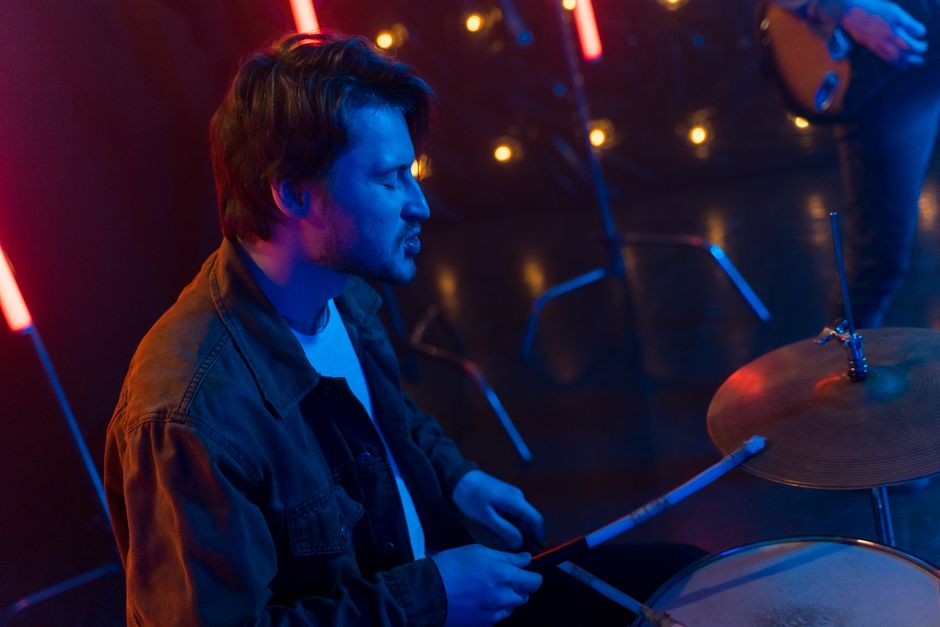
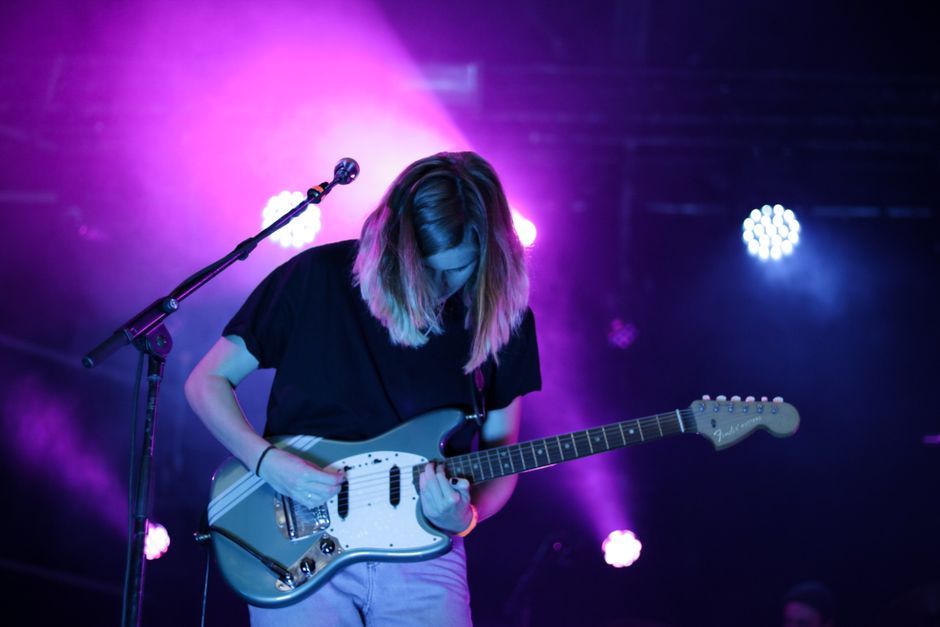
Rosenstock performing on his replacement guitar

It helped, of course, that Jeff Rosenstock happens to have one of the most lauded discographies in rock today. Since his solo debut in 2012, he’s released one outstanding project after another, peaking with 2016’s immaculately-paced WORRY., which gladly took up a significant chunk of the set list in Leeds. His latest effort, 2020’s bitter and cathartic NO DREAM, came to define the pandemic summer for me and close friend Ewan, who, just like me, was hardly able to contain his excitement as we waited near the front of the queue outside Belgrave Music Hall. I had donned my NO DREAM t-shirt whilst Ewan’s giant Rosenstock flag remained proudly hung up in his bedroom at home.

Despite the night being Rosenstock’s first UK performance in many years, he was in no mood for gentle reintroduction. Choppy Nikes (Alt) had fans pogoing early on, as we screamed about “staring down the barrel of our shitty future” and “looking for a dream that won’t morph into a nightmare”. Scram! – the finest single on NO DREAM – was just as thrilling, and there was something vaguely touching about a group of (mostly) millennial men coming together in a room to sing about how desperate they are to run away from all the myriad personal problems in their lives. Musically, the climax of Scram! is extraordinary, with a barrage of kick drum hits that wouldn’t sound out of place on a Slipknot track, before eventually giving way to a rollicking garage rock payoff.

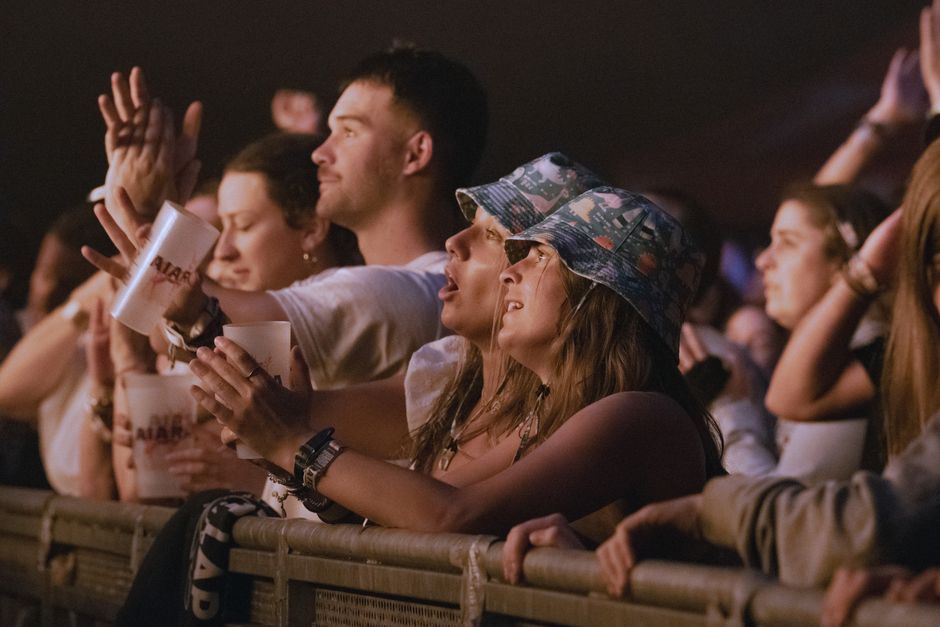
Rosenstock held nothing back in his performance of every last song, convulsing and twitching towards the microphone during his most pointed lyrics, turning around and keeling over his guitar in the ecstatic pain typical of loud rock music during many vocal breaks. It was scarcely more than 15 minutes in by the time he started to get visibly sweaty, and another 15 minutes later I could feel the occasional speck of lukewarm sweat splatter onto me whenever Rosenstock got overly energetic in his dancing; such is the visceral experience of being at the very front of a Jeff Rosenstock gig. His poor guitar got so drenched that he had to swap to his ‘backup’ guitar halfway through, telling us a story about how he apparently sweats much more than the average person. We all believed him.

Fun and goofy-sounding up-tempo numbers like Hey Allison! and Monday at the Beach were even faster in the flesh, almost to a fault, although seeing Kevin Higuchi smack the snare drum at such a rapid tempo never got old. Festival Song was a clearer highlight of the night, with its bounty of singalong riffs and propulsive final chorus, elevated by the screech of Mike Huguenor’s guitar. Majestic You, In Weird Cities should really have closed the entire night, but it was still rapturously received much earlier in the set. Rosenstock’s saxophone antics of the song’s live version had Ewan and I excited, not least because keyboardist and guitarist Dan Potthast had been occasionally playing a tenor throughout the night. In the end we didn’t quite get the saxophone solo we had been hoping for, but an a capella singalong of the song’s awe-inspiring final hook nonetheless felt pretty special. f a m e, NO DREAM‘s grandest moment, was the only significant set list casualty of the night.

The hits continued with the restless N O D R E A M, which was a good excuse for Ewan’s first stagedive of the night to the ire of the Belgrave security guards and general approval of fellow revellers, although no one quite had the boldness to do any crowdsurfing of their own for the entire night. The absurd sight of my friend’s limbs coming in and out of view in the melee beside me enhanced the giddy excitement of Rosenstock’s noisiest tracks. After that first stagedive I wasn’t to see him for a good 30 minutes whilst I clung on to my spot at the very front, wary of crush injuries from the occasional mosh pit surge. I was close enough to Rosenstock for him to confer with me in bafflement when the inevitable “Yorkshire” chants arrived before the encore.

Rosenstock connected with the fans on the closing tracks

And what an encore. To the delight of Ewan and I, it was mostly devoted to the final five songs of WORRY., which are woven together beautifully into one remarkable ten-minute long rock opus. Every chorus set the mosh pit on fire, and in quieter moments Rosenstock was almost entirely drowned out by a crowd intent on screaming every last lyric. Exhausted, Rosenstock lay down on stage towards the end of the segment, dozens of hands pouring at his shoulders and willing him to push himself out above the heads of the audience.

It had been a show with little fanfare and little space for sentimentality, but at the very end Rosenstock gave us a morsel with the calming cooldown of We Begged 2 Explode. “All these magic moments are forgotten,” we all chanted as Rosenstock waved goodnight. If we had bothered to listen to the words we were screaming, we may have realised how fleeting emotional highs like these really are.


Herbie Hancock live at Jazz à Vienne review – world class musician meets world class venue

On a memorable warm summer’s night in Vienne, Herbie Hancock found himself a spectacular venue to deliver one remarkable rendition of his famous compositions after another. Jazz’s answer to Paul McCartney, the 82-year-old remains the unparalleled titan of his genre.

There was little to see onstage after Thomas de Pourquery wrapped up an impressive (if overly long) support slot, but the roar through Vienne’s magnificent Roman ampitheatre was as if a gladiator had just landed a fatal blow. An outlier in the multitude of paper airplanes had just been chucked stageward by the crowd from the upper reaches of the stands and was miraculously floating closer and closer to the stage, eventually plonking itself in front of a giant speaker stack before being scuttled away by a busy stagehand a few seconds later. It was a moment that ignited the match-ready buzz of anticipation in the crowd minutes before the great Herbie Hancock took to the stage, a man who can now quite reasonably claim to be the great living jazz musician on the planet. I had travelled to Vienne, near Lyon, with three friends and had already enjoyed one night of the festival (an improved, well-contained Cory Wong; a somewhat tired, cheese-laden George Benson). Tonight, however, was clearly the apex of the whole holiday – a reason for Fionn and I to crack out fresh, specially-bought shirts and douse ourselves in cologne for no particular reason other than “it’s for Herbie”. Now well informed about the dangers of sitting for two hours of more on unforgiving stone steps, I made my way uphill through Vienne carrying a pillow from our Airbnb, itself dressed in a fading Rex Orange County t-shirt to avoid stains. As we got comfortable in a spot high up in the ampitheatre – hardly a detraction as the view of the sunset over Vienne was remarkable – there was already a sense that nothing could ruin this night.

The sky had turned sapphire blue by the time Hancock strolled onto stage. “This place feels like home, I’ve been here so many times,” he told us as another paper airplane rudely made its way towards Hancock’s feet. It’s a phrase that may have sound like a boast from any other artist – the sheer number of people perched on the steep, curved stone steps around him was staggering – but from the mouth of Hancock it felt natural. Why should a man with such harmonic genius and jazz history (he was a crucial component of the Miles Davis Quintet, of course) ever feel overwhelmed by the occasion? A long opening medley – a bewildering tour of Hancock’s extensive discography including a journey through Textures performed with impressive attack and physicality considering Hancock’s old age – cemented the idea that Hancock has the ample experience required to play at the very highest standard in any venue he likes.

The nightly scene at Vienne’s Théâtre Antique during the festival

It helped that Hancock had populated his band with a cast of esteemed unsung heroes of the American jazz world. Guitarist Lionel Loueke was the easy standout performer, almost stealing the show on several occasions with dazzling solo works of wizardry, switching from gritty roar to silky smooth cantabile seemingly with the flick of a plectrum. His technically dazzling introduction to a somewhat disappointingly lightfooted Chameleon early on in the set was masterful. Trumpeter Terrence Blanchard, another extraordinary musician who could quite easily produce his very own sellout show of hits, took the spotlight for his own arrangement of the popular standard Footprints. Choppier than the original yet retaining the sense of nuanced constraint and control, the rendition was one of the many exquisite highlights of the night, not least thanks to Blanchard’s trumpet solo that soared up towards the highest ramparts of the Théâtre Antique like glorious morning birdsong.

It was hard to take in the occasion as, one by one, favourite tunes that me and my friends had played time and time again in youth jazz bands throughout our childhood were checked off. Cantaloupe Island, a song about as crowd pleasing as jazz gets, was one such moment with Hancock’s unforgettable chugging blues riff providing the first reason to those around me to get off their feet and get dancing. The rapid fusion of Actual Proof felt even more piercing when positioned directly after the relatively serene Footprints. The agitated basslines of James Genus found the perfect match in Justin Tyson’s dazzlingly busy and precise drumming, although the spontaneous harmonic whirlwind flowing out of Hancock’s Fender Rhodes inevitably, and deservedly, dominated proceedings. Oftentimes Hancock’s soloing felt like the stuff of legend, deserving to be plastered across YouTube as a viral video clip with a breathless, all-caps video title extolling Hancock’s general godliness. The extended, often wildly adventurous solos seemed to come and go distressingly quickly. It wasn’t that Hancock’s set was too short, but that his live, unrepeatable pianistic feats were simply too remarkable to hear once.

Dusk falls behind Herbie Hancock and his band

Hancock did well to resist the tempation to pack the setlist with somewhat overplayed greatest hits. Sublimely soulful deep cut Come Running to Me was an inspired song choice as dusk became nighttime and an excellent excuse for Hancock to take to the vocoder, an instrument he popularised singlehandedly during his period of technological boundary-pushing in the 1970s. A detour late on saw Hancock left entirely alone with his vocoder, repeating the crushing line “I’m not happy without you” through a cloud of dense, shape-shifting cluster chords. In a night of predictable, well-worn hits, it was a moment of striking sincerity and without doubt the evening’s emotive crux. Quite what emotion Hancock was unleashing was up to interpretation; an enlightening epiphany that could pave the way to happiness, or a grief-stricken realisation of love’s darkest consequences? The beauty of it all was the effortlessness in which Hancock moved from despair to hope and back again, each carefully chosen chord moving the piece forward in unexpected ways.

The absence of a proper, funky Chameleon aside, it had been a flawless evening. Thousands of raised hands clapped and cheered below us as the band took their bows, the time fast approaching midnight. The giddy feeling of being within eyeshot of such an indisputable living legend had not left me all night and 82-year-old Hancock was still triumphant and energetic as he made a final wave to the crowd following a blistering two hour set.

The roar continued right through to the encore, only stopping as Hancock arrived at the mic to speak. “Oh, one more thing,” he told us with a grin and faux nonchalence. Cue Chameleon once more, now with keytar and that stonking, immortal bassline. Hancock’s playing was stupendous: crunchy and risky synth slaps squashed up against virtuosic runs before fading almost to nothing in preparation for one last, showstopping buildup. With the pretty orange glow of the Rhône valley in view behind the stage and twinkling constellations now clearly in view, it felt like there was surely no better place in the world to be for those five minutes. If there was any doubt that Hancock could produce a set of music to live up to his staggering career in jazz, it had been well and truly put to bed. Who could possibly ask for more?


Samm Henshaw live at Gorilla review – pristine at the cost of personality

With a lack of the real horns and backing singers that his densely-layered pop-soul hits demanded, Samm Henshaw was always fighting a losing battle on an underwhelming opening night in Manchester.

Chowing down on a barely-warm double big mac in a central Manchester branch of McDonald’s minutes before completing my second journey to Gorilla in the space of three days, it’s telling that my main anticipation was about whether or not the bouncer would allow me to enter the venue with a half-filled bottle of water. I should have been buzzing with excitement, but the truth is the main reason I had found myself with a ticket to see on-the-rise Londoner Samm don’t-forget-the-extra-M Henshaw was that five of my friends happened to have one too. There was a faint hope, too, that the occasionally bland easy-listening soul that populates Henshaw’s recent debut album Untidy Soul would have new punch and purpose when played at loud volume in a room full of genuine fans. If it worked for Larkins it should work for Samm, right?

It’s perhaps telling that I showed up on a Monday night under the arches at Gorilla in a group of five after struggling to muster similar company for the mighty Sons of Kemet on the preceding Saturday. There is nothing like the challenging modern jazz compositions of the Sons in Henshaw’s music. Instead, there’s well earned mass appeal by way of polished funk grooves, playful lyrics and injections of soul and gospel sunshine. His concise, catchy tracks are often perfect for trendy Spotify playlists, where listeners glide from track to track without needing to engage with any broader message beyond love or vague optimism. That said, as I like to think with my favourite band Vulfpeck, sometimes lyrical depth isn’t necessary when the musical backing is rock solid. Henshaw is no Jack Stratton, but he sure knows how to write a catchy pop single.

The crowd in Gorilla seemed to match Spotify’s core demographic: young, diverse and happy and spontaneous enough to go out and party on a random Monday night in February. Our group had made it in – water bottle and all – with no hitches, although Fionn was disapproving of the ale selection and our disappointing position behind tall heads and far from the stage took some getting used to for poor Manon, both the most excited and shortest member of the group. “I hate to say it,” Fionn mentioned to me as the final preparations for Henshaw were being made on stage. “It’s not looking good for horns, is it?” He was right – one vocal mic wouldn’t cut it for the saxophones and trumpets we had our fingers crossed for. Backing vocalists, vital for Henshaw’s gospel edge, also seemed out of the question.

In the end, Henshaw’s eventual entrance (hopelessly obscured by the already-drunk man lumbering around in front of us) brought with it more disappointment than anticipation. Opener Thoughts and Prayers set the tone for the things to come. It was a pleasant if hookless start, but the tasteful trumpet lines of the studio recording just weren’t cutting through when played through the speakers. Follow-up Grow would have been a completely different ball game had some backing singers showed up to sing the hook, but instead the band let a recording we’d all heard before do the honours.

Henshaw’s band lacked flair

The obvious fact that Henshaw’s band were sticking tightly to a pre-orchestrated track for the entire night blunted the experience of live music. Each musician performed with the confidence of the seasoned pros they no doubt are, but their precision was at the cost of authenticity. The drums lacked some soul, with fills hammered out precisely on the beat, bridging the gaps in Henshaw’s melodies with unnatural perfection. The bassist and keyboardist – who had the advantage of a strong selection of riffs to bash out – were even more faceless, and a single guitar solo plonked towards the end of the set came and went without any of the fanfare it deserved. For the lightheartedness of the frontman to fully come across, an element of playful improvisation was essential. Instead, Henshaw found himself singing elaborate karaoke.

Even so, the set wasn’t without its highlights. Slick hip hop number Chicken Wings was the first song to deliver a great singalong chorus despite its total lyrical banality. Later on, the creamy R&B of East Detroit ended a long, dull patch of slower duds, providing an excellent chance for Henshaw to demonstrate his exceptional vocal ability. It was Church, however, that was the night’s surprise of the night, with a winning piano riff propelling the track to joyous highs. Henshaw’s energetic demand to “wake up and get yourself to church!” had the crowd bouncing in double time, no extra gospel singers required. A lack of hip hop duo EARTHGANG for a guest verse left a hole in the middle of the track, but a final bubbly chorus helped ease the pain of Henshaw’s reliance on a backing track.

Attempts to work in the multiple interludes that appear on Untidy Soul achieved mixed results. The voice memo intro to Loved By You was a well-coordinated change of pace, whilst Keyon was almost embarrassingly played over the speaker, the tasteful muted trumpet solo of the Keyon in question painfully absent. Broke – Henshaw’s biggest hit and his best song by some distance – was somewhat clumsily thrown into the set just a song or two later. As far as I was concerned, the effortlessly funky opening groove had been destined to be greeted by frenzied cheers from the crowd after Henshaw and his band had made a false exit. Instead, Henshaw prematurely gave his concert a highlight that he had no hope of topping. He did at least milk the moment with some good old-fashioned call and response.

Joy was the song of choice, then, for the finish. The heartfelt ballad about Henshaw’s search for happiness came dangerously close to being sickly sweet (“this one ‘gon leave you teary eyed” Henshaw promised over the first few bars, before encouraging us to hug our friends and sing the lyrics to one another) but most of us were happy to follow along with it. In fairness, the simple singalong finish proved a hit, and there was a brief feeling of heart-warming togetherness as we sang “don’t you worry what tomorrow will bring / ‘cause we got joy” over and over. It was the sort of contradictory platitude that album reviewers rightfully scoff at, but when played in earnest to a receptive audience it was easy to sense the kind heart and good intentions behind the rushed lyrics. For all the show’s flaws, I left with a smile.

I tried and failed to catch sleep on the hopelessly slow 2307 Trans-Pennine Express back across the moors as Fionn enjoyed what looked like some good shuteye slumped over the table in front of me. I couldn’t help but question whether buying the gig ticket in the first place was a wise move. Despite the night’s great company, a 7:30am alarm call was approaching like the grim reaper. I decided it’s time to give Gorilla a miss for a little while.

15 Bass Music Albums to Power Your Workout in 2026

Top 15 Bass-Heavy Workout Albums (Ranked by Intensity)

1. Hybrid Riot – “Neuro Bass Assault” (2026)

Genre: Neurofunk / Drum & Bass | Avg BPM: 174
Album cover alt: Hybrid Riot in full gear dropping neck-snapping neurofunk bass.

  • Insane, razor-sharp basslines that fuel every rep
  • Keeps your heart pounding with unrelenting breakbeats
  • Perfect for lifting heavy or crushing sprints🔥
    Standout Tracks: “Bassquake,” “Lift Off,” “Neurocharge”
    Stream: Spotify / Apple Music / YouTube / Bandcamp
    Intensity: 9.5/10

2. Rusko – “Riddim Revolt” (2026)

Genre: Dubstep / Riddim | Avg BPM: 140
Album cover alt: Rusko’s fiery riddim bass shaking the gym ceilings.

  • Face-melting bass drops to smash plateaus
  • Wicked wobble and aggressive bass growls that lift the vibe
  • Endless motivation for those tearout dubstep sessions
    Standout Tracks: “Grindstone,” “Bass Detonator,” “Riddim Rush”
    Stream: Spotify / Apple Music / YouTube / Bandcamp
    Intensity: 9/10

3. Noisia – “Split The Atom 2.0” (2022)

Genre: Neurofunk / Drum & Bass | Avg BPM: 172
Album cover alt: Noisia’s signature dark bass smashing through speakers.

  • Complex sound design to keep you locked in
  • High-octane bass hits for focused weightlifting madness
  • Keeps a steady, fast pace for cardio or strength workouts
    Standout Tracks: “Machine Gun Reloaded,” “Dead Limit,” “Collider”
    Stream: Spotify / Apple Music / YouTube / Bandcamp
    Intensity: 9.3/10

4. Flosstradamus – “BASSHEAD HYPE” (2026)

Genre: Bass House / Trap | Avg BPM: 130
Album cover alt: Flosstradamus throwing down bass house beats that hit like a wrecking ball.

  • Heavy bass drops to amp up your workout energy
  • Perfect blend of trap aggression and bass house grooves
  • Keeps you hyped for long sets or brutal lifting sessions
    Standout Tracks: “Bass Cannon,” “Wreckhouse,” “Trap Slam”
    Stream: Spotify / Apple Music / YouTube / Bandcamp
    Intensity: 8.7/10

5. Virtual Riot – “Bassline Madness” (2026)

Genre: Dubstep / Hybrid Trap | Avg BPM: 142
Album cover alt: Virtual Riot flexing heavy bass drops and glitchy synths.

  • Raw energy that makes you want to deadlift a truck
  • Hybrid trap influences offer big melodic breaks between brutal bass hits
  • Perfect for those mid-workout peak moments
    Standout Tracks: “Face Melter,” “Glitch Banger,” “Bassline Frenzy”
    Stream: Spotify / Apple Music / YouTube / Bandcamp
    Intensity: 8.9/10

Quick Intensity Ratings

  • 9.5 – Hybrid Riot – Neuro Bass Assault
  • 9.3 – Noisia – Split The Atom 2.0
  • 9.0 – Rusko – Riddim Revolt
  • 8.9 – Virtual Riot – Bassline Madness
  • 8.7 – Flosstradamus – BASSHEAD HYPE

Ready for a full-on bass assault in your next workout? These albums deliver the goods—massive drops, killer grooves, and relentless energy to power you through every set.

Bonus: 2026 Upcoming Bass Albums to Watch

Keeping your workout fresh means staying ahead with the newest bass-heavy releases. Here are some of the most anticipated 2026 bass albums that promise high energy and heavy drops to power your sessions:

  • Subtronics – Riddim Nation 3 (Bass, Dubstep, 150+ BPM)

    Expect aggressive bass drops and relentless riddim vibes, perfect for weightlifting and high-intensity cardio bursts.

  • Noisia – Outer Edges II (Neurofunk, Drum and Bass, 170 BPM)

    Following their groundbreaking sound, this neurofunk album is set to deliver sharp, dark basslines that push your limits.

  • Zeds Dead – Echoes (Bass House, Hybrid Trap, 140-150 BPM)

    A smooth blend of bass house and trap, ideal for warming up and maintaining momentum through mixed workout routines.

  • Excision – Apocalyptica (Heavy Dubstep, Bass, 140 BPM)

    Known for festival dubstep, this release promises earth-shaking bass drops to keep motivation high during intense lifting sessions.

  • REZZ – Hypnotic Frequencies (Mid-Tempo Bass, 110-130 BPM)

    For those preferring a groove-driven yet powerful bass workout vibe, this album offers hypnotic beats and deep basslines.

These albums are projected to redefine pre-workout music albums in 2026 with aggressive electronic music and heavy bass drops motivation that gym enthusiasts crave. Keep an eye out on streaming platforms like Spotify and Apple Music as these releases drop—you won’t want to miss adding them to your bass house gym playlist or neurofunk lifting music rotation.

How to Build the Ultimate Bass Workout Playlist from These Albums

Creating the perfect bass-heavy workout playlist takes more than just picking your favorite tracks. To keep energy high and motivation steady, structure your playlist with a clear flow—warm-up, peak, and cool-down. Here’s how to get the most out of the bass music albums featured:

Recommended Track Order for a 60-Minute Session

  • Warm-Up (0-15 mins): Start with tracks at a moderate BPM (around 120-130). Think bass house or hybrid trap with steady but controlled beats. This primes your muscles without burning out early.
  • Peak (15-45 mins): Time to crank it up! Use high-energy drum and bass, neurofunk, or heavy dubstep with BPM pushing 150-170+. This is where aggressive electronic music with heavy bass drops and riddim vibes will keep your intensity at max.
  • Cool-Down (45-60 mins): End with slightly slower bass tracks around 110-120 BPM to help your heart rate gradually drop. Choose more melodic or spacey bass tunes without losing groove.

BPM Ramp-Up Guide

  • Start light, increasing BPM by about 5-10 every 5 minutes during warm-up
  • Push your limits mid-session with consistent 160+ BPM bass music for cardio and weightlifting
  • Lower the BPM gradually in the last 15 minutes to avoid abrupt energy drops or muscle soreness

This approach mirrors the natural energy curve of a workout and taps into the power of pre-workout music albums and heavy bass drops motivation. Use streaming platforms like Spotify or Apple Music to customize your order easily and explore specific workouts matching the tempo.

With this playlist structure, your workout won’t just have sound—it’ll have the pulse of powerful bass music driving every rep and run.

Frequently Asked Questions

What BPM is best for lifting vs cardio?

  • For lifting and strength training, slower to moderate tempos around 120-140 BPM work best. They keep you focused and motivated without burning out too quickly.
  • For cardio and running, faster BPMs of 150-180+ provide the high energy and rhythm to keep your pace up, especially for drum and bass or bass-heavy running playlists.

Where can I download these albums offline?

  • Use official platforms like Spotify Premium, Apple Music, and Bandcamp for offline downloads. These services let you save full albums and playlists directly to your device for gym sessions without data use.
  • Always choose legitimate sources to support the artists and get quality audio files.

Are there cleaner (radio edit) versions for public gyms?

  • Many bass-heavy workout albums offer radio edits or clean versions on streaming services. These remove explicit lyrics and heavy profanity, making them suitable for public or family-friendly gym settings.
  • Check the album details or look for “clean” versions specifically if you need a more gym-appropriate mix.

What are the best headphones/earbuds for heavy bass in 2026?

  • Look for headphones with excellent bass response and noise isolation. Some top picks include:
    • Sony WH-1000XM5 – well-balanced with powerful bass and industry-leading noise cancellation.
    • Beats Fit Pro – super bass-heavy, perfect for EDM and bass house workouts.
    • Bose QuietComfort Earbuds II – clear sound with strong bass and comfort for long sessions.
  • Wireless earbuds that stay secure during movement are a big plus for workouts.
  • Avoid overly bright or treble-heavy headphones to maintain that low-end punch in your workout tracks.

25 Best House Music Singles for Summer Beach Vibes 2026

Picture this: the sun dipping low over the horizon, waves gently lapping, and the perfect house music singles pulsating through the salty air. If you’re chasing that irreplaceable summer beach vibe, you’ve landed in exactly the right spot. Whether you’re curating your ultimate summer house playlist 2025 or just need that soundtrack to turn any beach day into an unforgettable party, we’ve got you covered. These feel-good, melodic, and tropical house tracks promise to bring energy without overpowering—the kind of tunes that slap, shimmer, and soothe all at once. Ready to find your new favorite beach house music? Let’s dive into the 25 best singles that will carry you straight into endless sunsets and salty, cocktail-fueled memories.

What Makes a House Track “Beach-Perfect”?

When we talk about a beach-perfect house track, we’re zeroing in on that special vibe that makes you want to kick off your shoes and feel the sand between your toes. These tunes usually groove between 110 and 124 BPM—just the right tempo to keep things chill but danceable under the sun. Think lush, warm pads that fill the air, alongside bright, melodic touches like saxophone riffs or steel drum accents that instantly scream tropical paradise.

Add to that some uplifting vocal hooks—catchy phrases that stick in your head while lifting your mood—and splashy percussion elements like rim shots, shakers, or congas that embody the sound of waves crashing and beach parties coming alive.

Several house sub-genres dominate the summer scene:

  • Tropical house: Breezy, carefree, perfect for poolside lounging.
  • Melodic house: Emotional, rich melodies that paint warm sunsets.
  • Deep house: Smooth grooves with soulful undertones.
  • Soulful house: Vocal-heavy tracks dripping with positive energy.
  • Afro-house with a summer flair: Rhythmic, percussive beats inspired by African sounds but tailored for beach vibes.

This beachy house sound isn’t new — it’s got roots going back to iconic compilations like Café del Mar and Hed Kandi that pioneered the ultimate sunset and beach party playlists. Fast forward to today, artists like Kygo, Meduza, and Elderbrook are carrying the torch, blending classic elements with modern production to keep the sea breeze soundtrack fresh in our ears.

So, when you hear those warm pads, uplifting vocals, and sun-kissed beats, you know exactly why that track is tailor-made for those endless summer beach days.

The Top 25 House Singles for Summer Beach Vibes 2026

  1. Kyrre – “Sunlight Waves” (2026)

    A shimmering tropical house track that feels like a warm ocean breeze. Uplifting vocal hooks like “Feel the sun inside your soul” make it perfect for midday pool parties. Tropical house, 118 BPM — standout steel drum accents.

  2. Meduza ft. Elderbrook – “Golden Hour Glow” (2026)

    Deep house meets melodic charm with smooth pads and soaring vocals. The chorus “Hold on to this moment” fits perfectly for golden hour beach strolls. Melodic house, 122 BPM — crisp, splashy percussion drives the beat.

  3. Saffron & Jaxx – “Seaside Serenade” (2026)

    Soulful house with sultry saxophone lines and a laid-back groove. Ideal for sunset chill sessions as “the waves kiss the shore” sets a calm, dreamy vibe. Soulful house, 115 BPM — intimate, warm pad textures.

  4. Nala Beats – “Island Breeze” (2026)

    Afro-house infused with energetic percussion and lively vocal chants. Perfect for early evening beach parties when the mood shifts up a notch. Afro-house, 120 BPM — standout tribal drums.

  5. Mila Mallory – “Shimmer” (2026)

    Uplifting vocal house anthem with bright synths and a catchy hook: “Let your heart shimmer in the sun.” Poolside or ocean drive, it keeps the energy light and joyful. Vocal house, 124 BPM — dynamic layered vocals.

  6. Luxe Grooves – “Crystal Tide” (2026)

    Melodic deep house with soothing pads and subtle steel drum flourishes. A serene track ideal for sunrise yoga flows or quiet beach moments. Deep house, 112 BPM — smooth bassline stands out.

  7. Riva & Sol – “Dusk Dance” (2026)

    Tropical house rhythms paired with playful steel drum melodies. The lyric “Dance underneath the fading sky” nails the carefree sunset vibe. Tropical house, 120 BPM — punchy percussion hits.

  8. Eden Rae – “Sunset Pulse” (2026)

    Soulful deep house with jazzy saxophone licks and emotive vocals. It’s a sunset anthem to slow down and savor. Soulful house, 116 BPM — silky saxophone riffs shine.

  9. Kairos Collective – “Wave Rider” (2026)

    Afro-house infused with vibrant percussion and chant-driven vocals. A perfect track to ignite sunset beach dancefloors. Afro-house, 122 BPM — energetic drum patterns.

  10. Luna Sky – “Golden Sands” (2026)

    Melodic house with warm pads and airy vocal layers that evoke endless summer days. Ideal background for beachside aperitivos. Melodic house, 114 BPM — lush, expansive synth work.

  11. Theo & Luna – “Saltwater Dreams” (2026)

    Deep house with a chill beach vibe, highlighted by subtle saxophone melodies. The hook “Dreaming under the salty breeze” makes it a night-wind essential. Deep house, 113 BPM — emotional saxophone presence.

  12. Azure Isles – “Sun-Kissed” (2026)

    Uplifting vocal house anthem perfect for mid-afternoon poolside grooves. Lyrics like “Sun-kissed and free” are made for carefree summer moments. Vocal house, 123 BPM — vibrant vocal layering.

  13. Djembe Flow – “Rhythm Tide” (2026)

    Afro-house with deep tribal drumming and chant hooks. A sunset pick-me-up that captures summer’s heat. Afro-house, 121 BPM — dynamic percussion.

  14. Velvet Rise – “Ocean Glow” (2026)

    Melodic house with ethereal pads and jazzy sax riffs that fit perfectly with dusk beach vibes. Melodic house, 117 BPM — standout saxophone melodies.

  15. Nero & Sola – “Breeze Alive” (2026)

    Tropical house with catchy steel drum motifs and uplifting vocals. Great for lively beach parties and upbeat moments. Tropical house, 119 BPM — infectious steel drum rhythms.

  16. Cielo & Rayne – “Drift Away” (2026)

    Deep house track that captivates with warm soundscapes and smooth vocal hooks. Wonderful for late afternoon chill-outs. Deep house, 112 BPM — soothing pad layers.

  17. Sunlit Paths – “Endless Horizon” (2026)

    Soulful house with a jazzy edge, featuring heartfelt vocals and gentle percussion. Perfect for winding down and reflection at sunset. Soulful house, 114 BPM — subtle percussion textures.

  18. Axel Tide – “High Tide Vibes” (2026)

    Afro-house track that pushes energetic drum beats and tribal chants to build a beach party crescendo. Afro-house, 123 BPM — percussive intensity.

  19. Echo Waves – “Blue Hour Beat” (2026)

    Melodic deep house with smooth pads and a memorable saxophone hook. Nights by the bonfire call for this one. Deep house, 115 BPM — memorable sax phrasing.

  20. Coral Sands – “Summer Pulse” (2026)

    Vocal house with shimmering synths and a catchy chorus for pool parties in full swing. Vocal house, 124 BPM — bright, punchy synths.

  21. Maya Flow – “Palm Shade” (2026)

    Smooth tropical house with gentle steel drums and relaxing vocal layers. Perfect for easy sunsets under the palms. Tropical house, 118 BPM — steel drum highlights.

  22. Rhythm Cove – “Salt & Sound” (2026)

    Afro-house beat with deep drums and soulful chants. Sunset beach dancefloor essential. Afro-house, 120 BPM — deep tribal beats.

  23. Alto Groove – “Breeze Through” (2026)

    Deep house enriched with jazzy brass accents, ideal for laid-back beach evenings. Deep house, 114 BPM — jazzy brass.

  24. The Solace Project – “Sunset Whisper” (2026)

    Soulful house with soft vocal textures and warm, splashy percussion. A perfect track for scenic late-night beach moments. Soulful house, 116 BPM — warm percussion.

  25. Tropic Moon – “Wavelight” (2026)

    Uplifting tropical house anthem with bright synths and captivating vocal loops. Poolside vibes all day long. Tropical house, 122 BPM — shimmering synth layers.

Mini Bonus Sections for Ultimate Summer Beach Vibes

5 Underrated Deep House Gems Flying Under the Radar

Sometimes the best summer house tracks aren\’t the biggest hits but hidden deep house treasures waiting to be discovered. These tracks feature smooth, soulful vocals and warm, melodic grooves that blend perfectly with ocean breeze moments. Think subtle percussion, lush pads, and hypnotic basslines that keep you relaxed yet moving.

  • Artist X – “Ocean Whisper” (2026) – Warm vocal samples paired with a laid-back 112 BPM groove. Perfect for those chill poolside hours.
  • Artist Y – “Silent Tide” (2026) – Deep bass and airy synths with an uplifting hook that sneaks up on you.
  • Artist Z – “Golden Dusk” (2026) – Minimal but emotive, this one builds gentle tension, ideal for sunset vibes.
  • Artist A – “Drift Away” (2022) – Smooth saxophone layers and deep rhythm make this a beach playlist secret weapon.
  • Artist B – “Soft Sands” (2026) – A subtle steel drum pulse underpins this melodic deep house groove, super warm and inviting.

5 Afro-House Tracks That Explode at Sunset

Afro-house brings vibrant energy and rhythmic complexity that perfectly match the fiery colors of sunset on the beach. Expect dynamic percussion, tribal rhythms, and chant-like vocals that build atmosphere and call everyone to the dancefloor.

  • Artist C – “Sunset Call” (2026) – Percussive layers and hypnotic vocals, hitting 120 BPM for that dance-ready feel.
  • Artist D – “Savanna Breeze” (2026) – Rich drum patterns mixed with airy pads, an Afro-house anthem for pool parties.
  • Artist E – “Golden Hour Glow” (2026) – Uplifting vocal phrases paired with traditional percussion elements.
  • Artist F – “Twilight Steps” (2026) – Smooth melodic hooks fused with deep, tribal beats—sunset energy in sound form.
  • Artist G – “Dusky Rhythms” (2026) – Dark bass and rhythmic chants create an immersive beach dance vibe.

5 Throwback Hed Kandi-Style Vocal House Classics (2000s–2010s)

Nothing says summer beach vibes like the classic vocal house era from Hed Kandi compilations. These feel-good anthems combine catchy lyrics, upbeat melodies, and rich production that instantly transport you to Ibiza or a stylish pool party.

  • Artist H – “One Day In My Life” (2005) – Classic vocal hooks with bright, splashy percussion. Timeless feel-good energy.
  • Artist I – “Sunshine” (2007) – Uplifting story-driven vocals with that signature Hed Kandi melodic groove.
  • Artist J – “Move Your Body” (2010) – Infectious chorus and vibrant synths perfect for beach dancefloors.
  • Artist K – “Perfect Sunset” (2009) – Smooth saxophone accents and warm basslines that never get old.
  • Artist L – “Happy Days” (2006) – Bright piano riffs combined with catchy vocals, pure summer anthem gold.

Best Remixes of 2026 That Elevate the Original to Beach Status

Sometimes a remix transforms a track from a club banger to a beach anthem. These remixes dial in the tropical house and melodic deep house vibes, with reworked percussion and added uplifting vocal layers that make you want to hit the sand immediately.

  • Artist M Remix of Artist N – “Sunrise Drive” (2026) – Adds bright steel drum accents and slows the BPM to 118 for ultimate chill.
  • Artist O Remix of Artist P – “Ocean Lights” (2026) – Transforms a dark original into a melodic house beach party staple with airy synths.
  • Artist Q Remix of Artist R – “Feel the Breeze” (2026) – Uplifting vocal hooks and splashy percussion, perfect for sunset sets.
  • Artist S Remix of Artist T – “Island Dreams” (2026) – Infuses tropical house elements that transport you to ocean waves.
  • Artist U Remix of Artist V – “Last Wave” (2026) – Smooth deep house rework with warm pads and an irresistible chorus.

How to Use These Tracks – Playlist Scenarios

These house music singles aren’t just great individually—they shine when matched to the perfect summer moment. Here’s how to make the most of them throughout your beach day:

  • Sunrise Yoga Flow: Start with mellow melodic house and soulful deep house tracks around 110–114 BPM. Think gentle pads, smooth vocal hooks, and subtle percussion to set a calm, uplifting mood as the sun rises.
  • Golden Hour Aperitivo: Transition to tropical house and vocal deep house tunes that bring a warm, relaxed vibe. Look for splashy steel drums and saxophone accents to pair perfectly with that golden light and a refreshing cocktail in hand.
  • Peak Beach Party: Turn up the energy with Afro-house and uplifting house anthems in the 120–124 BPM range. These tracks deliver strong rhythms, catchy vocal hooks, and vibrant percussion—ideal for dancing barefoot in the sand.
  • Sunset Chill: Slow it down with soulful house classics and throwback Hed Kandi-style vocals. Deep basslines combined with emotive melodies create a magical sunset soundtrack that matches the fading light and cool breeze.
  • Late-Night Bonfire: Close out with deep house gems and melodic house tracks that have a more intimate, warm feel. Smooth grooves and jazzy accents keep the vibe laid-back while friends gather around the fire.

Tailoring your playlist to these different moments creates a seamless soundtrack for your summer beach experience.

Skylights live at Whelan’s review – lads on tour have the place bouncing

Carried by a wave of support from a large and boozy entourage of travelling fans, Leeds locals Skylights seemed to be having the time of their lives on a one-off night in Dublin. Who cares if their music wasn’t very good?

Iknew I was out of my depth as soon as I asked for a drink at one of the many bars in the gloomy upstairs quarters of Whelan’s, one of Dublin’s most renowned drinking and live music establishments. “J2O? What’s J2O?” the bartender replied, appearing genuinely baffled by my request. “And first of all, have you got a ticket?” he followed, pointing at the visibly annoyed ticket steward behind me that I had just unknowingly sauntered past. I apologised and awkwardly loaded up the ticket on my phone. Back at the bar, I settled for a Coke (not available by the tap, but a few bottles in stock), relieved that at least this beverage did indeed exist on this side of the Irish Sea.

A general feeling of discomfort stayed with me for the whole night. I had spontaneously taken a cheap flight out of Leeds Bradford Airport that morning, embarking on my first ever trip outside the UK alone mostly for a thrilling but comfortingly short new adventure, although there’s surely no more familiar and pleasant foreign destination for a Brit than Ireland. Standing alone in a dark corner of Whelan’s cradling my glass of Coke, I began to feel my age as the Guinness flowed around me, the drinkers invariably twice my age.

Yet, I waited in Whelan’s with the credentials of one of the main act’s ultra fans. Skylights are Acomb, York lads after all (although their allegiance these days lies much more strongly with Leeds, and Leeds United football club in particular), and I even found myself falsely telling Belfast support band Brand New Friend (after an exceptional performance) that I had travelled abroad just for my beloved Skylights, just like the many men around me who were already warming up with chants of “Leeds! Leeds! Leeds!”. The chants only grew louder and the men more lairy, culminating in a roar as the four Skylights lads appeared from the side of the crowd. Raised beers replaced the raised iPhone cameras I had become used to seeing at the bigger gigs I had attended back in England.

The four-piece wasted no time bashing out their hits, endearingly excited and pumped up for their first ever gig outside of the UK and a rare outing beyond the realm of Leeds’ vibrant indie music scene. Particularly with so many football fans around me, the gig felt bizarrely like an exciting non-league cup tie – Whelan’s is hardly Wembley, but this was still the beloved hometown heroes making the journey to the big, unfamiliar city, kept company by their most loyal followers. Skylights are certainly non-league musicians; bassist Jonny Scarisbrick works at a building society during the day, guitarist Turnbull Smith is an electrician. The surreal thrill of travelling to a different country and playing your homemade songs for a modest but enthusiastic crowd of 100 was evident on the musicians’ faces, not least Smith, who seemed to spend the entire gig beaming from ear to ear. Frontman Rob Scarisbrick was the most outwardly nonchalant of the group, only releasing a smile on the many occasions a tipsy man emerged from the crowd to give him a fist bump mid-song.

Amongst all the boozy fervour for the band in that cramped room in south Dublin, it would have been easy to overlook all the musical flaws had I not been standing aside from the main action in the crowd, arms crossed with my 330ml of Coke. The truth is, Smith only really seems to have one guitar riff up his sleeve: a sort of washed out, Oasis rip-off that felt tired from about ten minutes into the set. Scarisbrick was hardly charismatic as a frontman, often taking breaks in vocals to stand well back from the mic and stare blankly into the mid-distance, waiting for his next cue and extinguishing all the on-stage energy in the process. It was a relief on the occasion he picked up a tambourine and gave it a bash to keep himself occupied in the breaks. Drummer Myles Soley was undoubtedly the most technically accomplished member of the group, but got into a habit of overplaying just to prove it: too loud, too many fills and not enough solid groove to bring out the best from the three men in front of him.

And yet, of course, no one seemed to care, and excitement amongst the crowd built steadily through the band’s catchier numbers like Enemies and What You Are, culminating in a glorious finale of dancing and beer sloshing. I’ve never witnessed an atmosphere at a gig quite so merry; this is what indie venues like Whelan’s live for. The band’s debut single YRA in particular tore the roof off, and for once I could begin to understand why. With a bit more mainstream attention, Scraisbrick’s straightforward, instantly unforgettable hook could quite easily find its way into the chanting repertoire at Elland Road, and Whelan’s was certainly packed with fans who had already learnt all the words by heart. A simple song structure and even simpler three chord loop leant the song the same appeal as a cheesy but loveable Eurovision entry – everything in me said I should dismiss it like all the other forgettable Britpop songs in the set, but I found myself soon getting swept up in the mindless joy of the music. YRA would certainly flop in the professional jury vote but dominate the televote, and I wasn’t complaining when the band decided to milk the adoration of the crowd and reprise the song for the end of the show, in probably the first genuinely unrehearsed encore I’ve ever seen.

With the gig wrapped up, Skylights headed for backstage via the audience right in front of me (it was that sort of venue) and I had time to give them a quick pat on the back, ditch my empty glass at the bar and swiftly take the next bus back to my hostel, keen to spend no longer than necessary in the uncomfortable surroundings of people in their forties getting plastered (Scarisbrick promised a long night of partying ahead as he left the stage). It hadn’t been an altogether brilliant night – I tended to watch all the action rather than attempt to get involved in the mayhem as I would usually do with familiar company in more familiar venues – but, as my solo adventures tend to be, it was a great way to make new memories and venture a little out of my comfort zone. I may not be the Skylights superfan I professed to be but, as the band’s following continues to grow, I’ll still be proud to say that I was there the night our York lads played Dublin.


Top Electronic Music Releases This Week New Tracks and EPs

Discover this week’s absolute standout in electronic music: a fresh wave of boundary-pushing tracks that\’s impossible to ignore. Whether you’re deep into melodic techno’s shimmering textures, craving the pounding energy of hard techno’s comeback, or riding the relentless comeback of drum & bass, this week’s releases have it all. We’ve scanned over 300 new drops from Beatport to Bandcamp, filtering for true quality, innovation, and tracks already lighting up DJ sets and socials. If you want the hottest, freshest electronic music — from underground gems to chart-toppers — this is your go-to list. Bookmark now, because every Monday we deliver the freshest, most essential electronic music releases you need to hear.

Top 20 New Electronic Releases This Week

  1. #1 – Lane 8 – “Midnight Whisper” (Joris Voorn Remix) [Anjunadeep]

    Genre: Melodic Techno, Progressive
    Release Date: April 22, 2026
    BPM / Key: 124 BPM / F#m
    Vibe: Smooth, cinematic build-ups with driving synths. Perfect for late-night sets and sunset vibes. Fans of Above & Beyond and Yotto will appreciate this.
    Listen on Spotify |
    ▶️ (Embedded Player)

  2. #2 – Charlotte de Witte – “Neon Pulse” [KNTXT]

    Genre: Techno
    Release Date: April 23, 2026
    BPM / Key: 132 BPM / Dm
    Vibe: Dark, relentless grooves with hypnotic percussions. A club banger that’s perfect for peak-time raves. Influences from Adam Beyer and Amelie Lens.
    Listen on Spotify |
    ▶️ (Embedded Player)

  3. #3 – Fisher – “Glow Up” [Catch & Release]

    Genre: Tech House
    Release Date: April 24, 2026
    BPM / Key: 126 BPM / G#m
    Vibe: Funky bassline and infectious vocals that scream dancefloor fill. Ideal for party starters and festival vibes. Similar to Chris Lake and Claude VonStroke.
    Listen on Spotify |
    ▶️ (Embedded Player)

  4. #4 – London Elektricity – “Skyfall” (Sub Focus Remix) [Hospital Records]

    Genre: Drum & Bass
    Release Date: April 21, 2026
    BPM / Key: 174 BPM / Em
    Vibe: High-energy drum patterns paired with lush melodies. Perfect for DnB heads craving that liquid touch. Reminiscent of Netsky and High Contrast.
    Listen on Spotify |
    ▶️ (Embedded Player)

  5. #5 – Andrew Bayer – “Ethereal Drift” [Anjunadeep]

    Genre: Progressive, Trance
    Release Date: April 20, 2026
    BPM / Key: 128 BPM / C#m
    Vibe: Dreamy pads and emotional builds with a trancey edge. Great for sunset moments and melodic journeys. Fits fans of Above & Beyond and ilan Bluestone.
    Listen on Spotify |
    ▶️ (Embedded Player)

  6. #6 – Noisia & The Upbeats – “Dark Matter” [Vision Recordings]

    Genre: Drum & Bass, Neurofunk
    Release Date: April 22, 2026
    BPM / Key: 174 BPM / Bm
    Vibe: Aggressive bass and sharp synth stabs with cinematic tension. A heavy hitter for underground sets. Perfect if you’re into Black Sun Empire and Phace.
    Listen on Spotify |
    ▶️ (Embedded Player)

  7. #7 – Duke Dumont – “Sunray” [Blasé Boys Club]

    Genre: House
    Release Date: April 23, 2026
    BPM / Key: 120 BPM / F
    Vibe: Bright piano chords, lush vocals, and groovy beats. A sunny feel-good track for daytime parties. You’ll enjoy it if you like MK and Gorgon City.
    Listen on Spotify |
    ▶️ (Embedded Player)

  8. #8 – Bicep – “Cascade” [Ninja Tune]

    Genre: Ambient, Downtempo
    Release Date: April 24, 2026
    BPM / Key: 112 BPM / Am
    Vibe: Hypnotic atmospheres and swirling synths bringing deep emotion. Ideal for chilled-out moments or after-hours listening. Similar to Jon Hopkins and Four Tet.
    Listen on Spotify |
    ▶️ (Embedded Player)

  9. #9 – Tchami & Malaa – “After Dark” [Confession]

    Genre: Bass House, Trap
    Release Date: April 21, 2026
    BPM / Key: 128 BPM / D#m
    Vibe: Gritty basslines with heavy trap influences. Perfect for late-night club bangers and festival main stage. Fans of Yellow Claw and Wiwek will vibe here.
    Listen on Spotify |
    ▶️ (Embedded Player)

  10. #10 – Olafur Arnalds & Nils Frahm – “Silent Waves” [Erased Tapes]

    Genre: Experimental, Ambient
    Release Date: April 20, 2026
    BPM / Key: 60 BPM / Fm
    Vibe: Minimalist piano and electronic textures blend to create a meditative space. Perfect for introspective listening or creative flow. Think Max Richter and A Winged Victory for the Sullen.
    Listen on Spotify |
    ▶️ (Embedded Player)

…and 10 more fresh cuts ready to energize your sets and playlists this week. Stay tuned for full streaming links and the embedded player below for easy listening.


Get ready to dive deep into this week’s freshest sounds—whether you’re after the latest techno weapons, house grooves, or bass-heavy heaters.

Genre Spotlight: This Week’s Hottest Electronic Tracks

Biggest Techno Releases This Week (Top 5)

Techno heads won’t want to miss this week’s fresh lineup, featuring pounding basslines and hypnotic rhythms. Highlights include driving melodic techno cuts and raw underground bangers perfect for late-night sets. Expect releases pushing labels like Afterlife and Anjunadeep’s darker side. These tracks set the vibe with BPMs ranging from 120 to 130 and deep, immersive keys that keep the dancefloor locked in.

Hottest House & Tech House Tracks

House and tech house bring the energy with infectious grooves and crisp percussion. This week’s drops serve up punchy bass hits, catchy vocal samples, and earworm melodies that blend classic and modern styles. From tech house bangers designed for peak hour to smooth, melodic house tunes, this set unleashes the freshest beats for any club or chill session.

Drum & Bass / Jungle Heat

Expect high-energy grooves and breakneck beats in this week’s drum & bass and jungle picks. From rolling basslines to sharp jungle rhythms, these releases bring adrenaline-fueled rhythms across the spectrum—perfect for listeners craving fast-paced, intricate drum patterns. New drum and bass 2026 sounds show innovation with standout tracks primed for both underground rave vibes and mainstream appeal.

Trance & Progressive Highlights

Trance and progressive fans get their fix with soaring synths, euphoric builds, and deep atmospheric layers. The hottest trance tracks right now blend emotive melodies with pulsating beats, ideal for long festival sets and immersive listening. Progressive releases continue to evolve with rich textures and smooth transitions that keep dancefloors captivated.

Bass / Dubstep / Trap Wave

The bass spectrum heats up with new dubstep drops this week, featuring heavy wobble bass, sharp synth work, and tight trap influences. Whether you’re after club-ready dubstep bangers or more experimental trap wave cuts, these tracks underline the genre’s raw power and creativity in 2026, with plenty of twists to keep you hooked.

Ambient / Downtempo / Experimental Picks

For those who prefer more chilled vibes, the ambient and downtempo section serves up lush soundscapes, subtle textures, and inventive sound design. Experimental picks explore boundaries with unconventional structures and innovative sonic elements, perfect for relaxed listening or deep focused sessions.

Want to dive deeper into live electronic performances? Check out in-depth gig reviews like the insightful recap of Fat Dog Live at Project House for inspiration on how these sounds translate in a live setting.

Hidden Gems & Underground Picks

Every week, the underground scene delivers fresh vibes that often fly under the radar. Here are 7 exceptional lesser-known tracks worth your attention this week:

  1. #1 – Lune Mirage – “Shadow Walk” [Phantom Vibes]

    | Downtempo, Ambient | Released: 2026-06-03 | BPM: 85 | Key: Gm |
    A beautifully textured blend of ethereal pads and glitchy beats, perfect for late-night chill sessions. Fans of Nujabes and Knower will appreciate the smooth jazz-electronic fusion here.
    Listen & Buy

  2. #2 – Kavah – “Silent Motion” (Subdeck Remix) [Deep Spectrum]

    | Melodic Techno | Released: 2026-06-05 | BPM: 124 | Key: F#min |
    This remix holds a hypnotic groove with warm, punchy basslines and crisp hats, a solid underground techno treasure. Think along the lines of Afterlife’s signature style.
    Stream here

  3. #3 – Mina Lotus – “Echoes of You” [Moonlit Records]

    | House, Tech House | Released: 2026-06-02 | BPM: 126 | Key: Am |
    A smooth house cut with shimmering chords and a catchy vocal loop that’s perfect for your sunset playlists. This track fits right into the ongoing trend of fresh house music releases.

  4. #4 – Obscura5 – “Fragments” [Underworld Sounds]

    | Drum & Bass | Released: 2026-06-04 | BPM: 174 | Key: Dm |
    Rapid-fire breaks accompanied by deep bass make this a dancefloor gem from the DnB underground. Fans of the Beatport top 100 will find this a refreshing alternative.

  5. #5 – Aera Nova – “Void Lines” [Subsonic Tones]

    | Ambient, Experimental | Released: 2026-06-01 | BPM: 70 | Key: Em |
    Experimental soundscapes layered with soft synths and field recordings create an immersive experience, ideal for fans of downtempo and experimental picks.

  6. #6 – Electric Bamboo – “Jungle Fires” [Bass Haven]

    | Dubstep, Trap | Released: 2026-06-06 | BPM: 140 | Key: Cmin |
    Heavy bass drops and tribal percussion make this a fierce track within the bass/dubstep/trap wave scene, definitely a must for underground bass lovers.

  7. #7 – Solaire – “Night Bloom” [Echo Chamber]

    | Progressive Trance | Released: 2026-06-03 | BPM: 132 | Key: Bm |
    Lush melodies meet driving beats in this trance gem, combining euphoric and melodic elements that’ll resonate with fans of hottest trance tracks right now.

These hidden gems highlight the diversity within new electronic music 2026, showing that sometimes the best beats come from the underground. Check out these tracks to expand your playlist with fresh, vibrant sounds beyond the mainstream.

This Week’s Must-Have EPs & Albums

Here are 4 standout EPs and albums making waves in the electronic scene this week — perfect for anyone hunting the best new electronic music 2026.

1. “Luminous Trails” – Maya Zolotova [Anjunadeep]

Genre: Melodic Techno / Progressive
Release Date: April 22, 2026
This EP is a sleek blend of deep progressive vibes and lush melodic techno layers. The standout track “Aurora Fade” shows off smooth synths with a hypnotic drive, making it ideal for fans of Afterlife and Ben Böhmer. It’s atmospheric yet dancefloor-friendly, perfect for late-night sets.

2. “Neon Rush” – Kenta Kudo [Self-Released]

Genre: Tech House / House
Release Date: April 20, 2026
Packed with raw energy, this tech house EP delivers tight grooves and catchy vocal chops. “Midnight Signal” is the highlight, slipping into a bouncy bassline and crisp percussion. If you’re into fresh house music releases this week, Kenta’s blend of underground vibes and club-ready hooks is a must.

3. “Submerge” – Kai Rooks [Hospital Records]

Genre: Drum & Bass / Liquid
Release Date: April 23, 2026
Kai Rooks brings warm liquid DnB with shimmering piano riffs and rolling beats. “Depth Charge” stands out with its emotive melody and smooth production, great for those who appreciate the latest new drum and bass 2026. A solid pick for chill yet energetic listening sessions.

4. “Echoes of Space” – Iris & Azura [Self-Released]

Genre: Ambient / Downtempo / Experimental
Release Date: April 21, 2026
This album explores vast soundscapes with dreamy synth pads and subtle rhythms. Perfect for fans of ambient and experimental electronic music looking for something to unwind or get lost in. “Celestial Drift” is a serene standout, ideal for late-night downtime.

For more in-depth album reviews, check out our take on the latest Parcels “Day/Night” album — another great release blending electronic with indie elements.

Best New Electronic Music – Week 23 2026: Full Spotify Playlist

To keep your electronic music cravings satisfied, here’s our full weekly Spotify playlist, “Best New Electronic Music – Week 23 2026.” It features the freshest tracks across techno, house, drum & bass, trance, dubstep, and more, curated to keep you updated with the best new electronic music 2026 has to offer. Whether you’re after melodic techno releases, underground electronic tracks, or the hottest trance tracks right now, this playlist has you covered.

Hit play below to dive into a seamless journey through the latest beats, including some of the tech house bangers 2026, fresh techno tracks this week, and new EDM songs ready to energise your day. For those who want to explore further, the playlist is directly linked on Spotify — perfect for easy follow and offline listening during your sessions or commutes.

[Spotify Playlist: Best New Electronic Music – Week 23 2026]
Embed Spotify player here

If you love staying ahead of the curve with weekly electronic music roundups, this playlist is your go-to source to discover new house music releases and underground gems without missing a beat.

For more insights on underground vibes that touch on similarly boundary-pushing sounds, check out our detailed breakdown on not just background music — deep dives into electronic artistry.

RNS/Ólafsson live at the Glasshouse review – quite possibly the best pianist in the world right now

Beethoven’s flamboyant Emperor concerto was an odd choice for this master of pianistic introspection, but Ólafsson nonetheless proved his world class status following a typically daring and dynamic first half from Sousa’s Royal Northern Sinfonia.

It’s a chilly Wednesday night at St. James’ Park, and the music is a heady mix of Hey Jude, a Wembley-themed Que Sera, Sera and a live rendition of Newcastle United’s own gloriously cheesy anthem Going Home. It’s odd to think that amongst the thousands of fans twirling their scarves in the stands one of Europe’s foremost concert pianists, a fresh United scarf draped over his chic turtleneck. What would Víkingur Ólafsson, a man known for his heartfelt and studied renditions of obscure Bach organ works, make of the wilfully dated sax melody and the thumping 80s drum groove?

Almost unbelievably, it turns out the Icelandic piano sensation wasn’t just there out of curiosity. In fact, he’s been a fan since he was a child, boldly going against the consensus of his Reykjavík schoolmates by picking Newcastle over Manchester United. After this 40-minute Beethoven recital in Gateshead, he recounts the wild events of the previous night’s victorious cup tie, provoking chuckles from the audience as he – dressed in a pristine suit and hair neatly gelled in position like a lovable teachers’ pet – struggles to recall the words “howay the lads”. “I originally picked Newcastle because they played exciting football,” he remarks before reeling off several names from Newcastle teams of yore, as if to prove his true allegiance. “But now I realise it’s because they are black and white, like the piano keys.”

It is a bizarre footnote that somewhat explains Ólafsson’s unlikely appearance in Gateshead. The Glasshouse is undoubtedly one of the finest concert halls in the North but, even for them, getting Ólafsson is something of a scheduling coup – the pianist won a Grammy just days ago for his superb recording of Bach’s Goldberg Variations, which is generally considered as one of the finest readings of that legendary suite of music. Next week he has a blockbuster series of recitals with fellow piano god Yuja Wang in the hallowed concert halls of Toronto and New York. Consequently, the atmosphere in a packed Glasshouse is simply electric. The lady next to me can’t help but burst into conversation about Ólafsson, telling me about his “magical” Prom last summer, the majesty of his Bach organ transcriptions and, most giddily, that “he was on Petroc this morning!” If BBC Radio 3’s silken-voiced presenter approved, then it seemed certain we were in for a classic concert.

First, though, we had the first half of the programme to get through. Fortunately, resident conductor Dinis Sousa is not one for adding crowd-pleasing filler to his concerts. He continued his noble work of promoting contemporary classical music with an opening rendition of Ciel d’hiver, the 2013 piece from recently departed composer Kaija Saariaho. The Finn was known for her fascination with light in all its subtleties, and it was the eerie grey of a dusky winter sky that was most clearly evoked here through Charlotte Ashton’s icy opening flute solo. Later, strings slid from note to note unnervingly, and bubbling harp glissandi gave way to alarming rushes of cymbals. The programme notes suggested Ciel d’hiver would be a beautiful experience, but this was more of an orchestral horror film, vividly portrayed by an RNS demonstrating their fine attention to detail, even in avant garde, pulse-free pieces like this one.

It was a fitting warm up for the following piece, Bartók’s masterwork Music for Strings, Percussion and Celesta, which is known for its inclusion during a particularly unsettling sequence in Stanley Kubrick’s The Shining. In Gateshead, this was a reminder of why classical music is best enjoyed live – two groups of strings players sat directly opposite each other, and their battling, overlapping melodies made for a thrilling stereo experience. It culminated in the electrifying Allegro molto duel, each section leaning forwards as they dug their bows into the strings like fencers going in for a lunge. The strings joined forces for a jagged and impressively synchronised pizzicato passage, whilst pianist Benjamin Powell’s agitated exchanges with Fionnuala Ward’s celesta (essentially a piano that strikes steel plates instead of strings) proved that the piano, at its heart, is in fact a percussion instrument. Dinis Sousa’s conducting was uncharacteristically rigid throughout, and rightly so: this is a claustrophobic piece of music – a symphony in a straitjacket, albeit a straitjacket from which it is desperately trying to escape.

The choice of Beethoven’s Emperor piano concerto for Ólafsson’s visit to Tyneside was mysterious. The programme had originally listed Brahms’ second piano concerto as the headline piece (a convenient change for me, since I’d already seen Sunwook Kim‘s businesslike rendition of that one in 2023). One concertgoer I ended up asking about the switch to Beethoven said it was something to do with Ólafsson’s health concerns, but this concerto, a piece oozing with flair and self-confidence typical of late-era Beethoven, hardly seemed like an easy cop-out for the pianist.

Even so, perhaps for Ólafsson Emperor really is a cakewalk. It certainly seemed that way as he delved into the fiendish technical passages that open the concerto, sat back on the stool as if even he was stunned by the acrobatic feats his fingers were pulling off. This sort of musical showmanship is somewhat unchartered territory for Ólafsson, who in 2023 distinguished himself as a Bach specialist when he embarked on playing the Goldberg Variations for 88 concerts in a row in a world tour that took in every continent bar Antarctica. He’s adept at drawing out the hidden inner melodies of Bach’s knotty fugues, as well as tricky task of locating the deep springs of human emotion buried beneath the composer’s cold mathematical genius. Setting him to work at some relatively uncomplicated Beethoven then – one clear refrain per movement, repeated over and over like a pop song – felt a bit like taking a Ferrari to work.

Nonetheless, there was never a sense of superiority about Ólafsson’s impeccable playing, giving the opening movement’s radiant refrain all the vigour it deserved, then sitting back during the breaks and eagerly watching his melodies take flight in the violins around him, clearly delighted by the results. Emperor‘s dominant emotion is simple and persistent joy, although Ólafsson still found room for brief moments of reflection towards the end of the first movement, easing off on tempo momentarily before a delightful final flourish of quicksilver scales.

It was the slow middle movement where Ólafsson seemed most at home. Beethoven’s tranquil theme here is often likened to a hymn, but to me it sounds starkly contemporary, and even pop-y (is there a through line from Beethoven’s steadily rising refrain to the chorus of Becky Hill’s pop hit Remember?). In Gateshead, Ólafsson’s elegant piano melodies were superbly matched by Sousa’s RNS, the strings sounding delectable over the theme’s hushed rise and fall.

The eventual third movement, foreshadowed with subtlety by Ólafsson a few bars earlier, was pure elation. The bombastic refrain looked like terrific fun to play on piano, and Ólafsson did well to ensure even the very loud passages remained light-footed and playful. For a studious-looking pianist whose discography leans towards the austere, this was a reminder that he is still not one to take himself too seriously. A final symphonic prank from Beethoven – the dummy of a quiet ending on piano, followed by a blast of conclusive chords from the orchestra – cued five straight minutes of rapturous applause.

It took the insistence of Ólafsson himself for the applause to finally abate. After his charming chat about Newcastle United, the pianist had one last surprise in store: an encore of Jean-Phillippe Rameau’s The Arts and the Hours, dedicated to the late concert pianist and former RNS director Lars Vogt, who had in fact chosen this specific Steinway grand piano for the Glasshouse. The piece – a devastating tapestry of falling melodies and mellow harmonies – was the sort of music that words could never do justice to. The piece’s title and its dedication to Vogt made it a deeply moving meditation on the mortality of artists and the immortality of their art. This was Ólafsson at his most extraordinary; there can be few people in the world this good at communicating emotion so powerfully. Ólafsson had been a close friend of Vogt, and shared with us a text he received from Vogt just days before his death in 2022. The message was simple, but it haunted me all the way home after this scintillating night of music: “Don’t ever take the music for granted.”

Ezra Collective: Dance, No One’s Watching review – jazz champions play to their strengths

The jazz group that set the Mercury Prize alight last year return with an album that goes all in on infectious dance grooves. Their knack for melody seems to have been forgotten in the party, but this bloated record does conclude with the most moving track of this band’s career.

The level of study I devote to albums reviewed on this blog varies, but sometimes, like with this latest Ezra Collective album, I take my journalistic duties to give the entire record a fair hearing seriously: I sit down in a darkened room save for a dim desk lamp, scribbling details of every track in a notepad and staring blankly at Spotify as the highlighted song title gradually works its way down the track list. It took about 20 minutes of listening to Dance, No One’s Watching before I properly read the album title writ large across the top of the screen. Alone on a rainy night in my bedroom, it felt like an instruction addressed directly to me. In fact, cowering over a desk is the exact opposite effect of Ezra Collective’s third album which is, unsurprisingly, a heartfelt ode to the power of dancing.

Ezra are labelled a jazz act – and are the most commercially successful act in the nebulous genre of UK jazz by some margin – but anyone who’s seen the five Londoners take to a stage since their emergence five years ago will know compulsive dance grooves have always been an essential part of this band’s appeal. Their performance at last year’s Mercury Prize (fittingly of a song called Victory Dance) had the attendees in the cabaret seating setting aside their glasses of champagne to clap and frug along to the infectious Latin groove like the band members themselves. It was a joyful musical fireworks show that seemed to render the competition a forgone conclusion. Ezra Collective were destined to be the Mercury Prize’s first jazz champions, and they showed up ready to claim the trophy.

Unfortunately their follow-up album, Dance, No One’s Watching lacks a track quite as thrilling as Victory Dance, but there’s no shortage of peppy Afrobeat grooves to move your hips to. The standout is Ajala, named after a legendary Nigerian journalist who was so busy with his travels his name became Yoruba slang for someone who can’t sit still. It is a fittingly up-tempo, restless number, with Ife Ogunjobi and James Mollison’s skipping melodies played in blunt unison – Ezra Collective are a band far more concerned with delivering a straightforward good time than trying any fiddly counterpoint or melodic harmonies. Ajala has groove in buckets, but what it’s lacking is everything else that makes for a good jazz composition, namely an interesting B section (here the melody simply drops out for 16 bars) and a wild solo.

Ajala is far from the only track where Ezra Collective’s tunnel vision on producing a danceable groove leaves the melodies feeling underwritten. N29 is essentially just one (admittedly very funky) bass riff lacking in hardly any musical development at all, let alone a melody to hold on to. Opener The Herald starts promisingly enough, but again it’s as if they’ve forgotten to write half of the chorus, and Ogunjobi’s trumpet solo is given no room to grow. The devotion to a rock solid groove is admirable – and brothers Femi and TJ Koleoso are without a doubt one of the tightest drum and bass duos in the business – but it should be possible for a funky, repetitive groove and interesting harmonic shifts to exist in the same song.

Intriguingly, Yazmin Lacey and Olivia Dean’s featured tracks – two of the very finest voices on the UK jazz scene – offer a relatively restrained take on the dance-focused thesis. Lacey’s smoky tones are a fine match for the tender horn lines on God Gave Me Feet For Dancing, but with no-nonsense lyrics like “Give me bass line / Give me dollar wine” it’s odd the band don’t rise above a muted throb all song. Dean’s track, No One’s Watching Me is slinkier and sexier and features Ogunjobi’s best solo on the record – each note placed with unusual restraint and care – although Dean’s chorus is scant.

Further down a bloated track list, Shaking Body and Expensive offer a purple patch. The former is pure Ezra Collective joy and a natural successor to Victory Dance, with a Latin hook bubbly enough to justify its many repeats. Mastermind of the keyboard Joe Armon-Jones offers luscious jazz voicings typical of his brand of frantic genius, and Femi Koleoso’s hammering of the ride cymbal in the chorus is a joy to behold. Expensive improves on the light-footed Afrobeat of the record’s first half with intelligent, patient sax and trumpet solos that prove Ogunjobi and Mollison have done their jazz homework, moving beyond the crowd-pleasing screeches found on their most raucous party starters.

The penultimate track appears at first to be some surplus jazz musings from Armon-Jones on piano, but the song is called Have Patience for a reason – Everybody immediately follows, a magnificent album closer and one of the most beautiful tunes the band have ever penned. In an album lacking in strong melodies, here is a beauty: an elegant, sighing rise and fall, shimmering within Armon-Jones’ textured piano chords before emerging in a solemn trumpet line and, rousingly, a distant choir. Before long, Obunjobi and Mollison are up to what they do best – rapturous, euphoric improvisations that come together and fall apart again like two birds in flight. It’s a piece ripe for crowd participation and a poignant marker of how far they’ve come: a band with collective in the name, experts at uniting audiences from summer festivals to glamorous awards shows through dance and crowd participation. Dance, No One’s Watching may not go down as their finest record, but that precious Ezra Collective spirit remains alive and well.

‘Every bandmate is infusing their tastes into this album’: seven-strong pop collective Couch on their funky debut record

After years of virtual band meetings and drumming up buzz online, Boston band Couch look set to take over the world with a debut album of polished, meticulously crafted pop bops and a sprawling 36-date tour. They spoke to Undertone about launching a band during the Covid years, their vulnerable new single, and the tricky task of making music with seven songwriters.

The pandemic did strange things to the music industry. On the one hand, we saw a fresh wave of what was giddily termed the 2020s’ “disco revival”. Jessie Ware, Róisín Murphy, Lady Gaga and Dua Lipa all released unequivocally dancefloor-primed records that perversely chimed with listeners trapped indoors all day, pining for a hedonistic escape and a return to the wonderfully unhygienic surroundings of a cramped and sweaty nightclub. On the other hand, the pandemic was a prompt for many artists to return to their roots with homespun, introspective album recorded with minimal equipment from home studios. Paul McCartney’s stripped-back McCartney III had the man himself play all the instruments, Charli xcx was in a reflective mood on how i’m feeling now, and Adrienne Lenker’s understated magnum opus songs was entirely recorded in a cabin in rural Massachusetts. As with seemingly many other aspects of society, such a radical change was only temporary: a few years after releasing her own folksy and minimalist albums folklore and evermore to critical acclaim, Taylor Swift is firmly back to her stadium-filling former self.

Couch, meanwhile, were biding their time, patiently plotting their route to stardom. Purveyors of soulful pop in the vein of Vulfpeck, Sammy Rae and Lake Street Dive, the seven-strong group specialise exactly the kind of free-spirited disco and funk tunes that topped the charts in 2020. For them, however, the pandemic (as well as attending various colleges across the States) meant it was three years of intermittent band meetups and FaceTime calls before the Bostonians finally took to the stage together for the first time.

That may sound tedious, but it was a blessing in disguise, keyboardist Danny Silverston tells me. “Once Covid hit, a lot of bands were like ‘man, what do we do now?’, but for us it was like ‘we actually kind of know what to do now’. We got to spend some really quality time together, and it set us up pretty effectively for our first ever tour, which was pretty much like a slam dunk.” Guitarist Zach Blankstein, who doubles as the band’s manager, agrees. “We had that remote incubation period where we got to share our music with people and start to feel some external excitement. Getting everyone [in the band] to make themselves available to go tour eventually was easy because we were all excited to go do it and felt like was a long time coming by that point.”

Silverston and Blankstein, as well as bassist Will Griffin, speak to me partway through a 16 hour drive back to Boston from Asheville, North Carolina, where they’ve just performed a charity show. The band may still be relatively new, but they’re no strangers to this sort of long-distance touring, and their first trip to the UK – an impressively full-throttle show which Undertone was lucky enough to catch – was over two years ago. For Griffin, touring and songwriting go hand in hand. “Something that feels best for us in the rehearsal space might feel totally different on stage. It opens up different opportunities to explore variations of arrangement styles and grooves.” In fact, Couch’s huge upcoming tour, which starts in November, was booked well before the new record was even fully written. Other times, though, it’s the finished song that comes first. “But they’re definitely very connected processes, no matter which order they happen,” Blankstein adds.

Perhaps it’s a sign of Couch’s easy-going, fluid approach to songwriting that, as Blankstein admits, the new album Big Talk isn’t even finished by the time of our interview. The band’s exceptional attention to detail, in particular with their knotty horn sections (see: Still Feeling You‘s wonderfully wiggly breakdown), no doubt slows down the writing process, but their emphasis on collaboration from all band members also partly explains the six year gap between their debut single and Big Talk. Whilst singer Tema Siegal takes the lead lyrically, musically the band takes a more democratic approach, taking turns as bandleaders and voting on creative choices. “On the one hand, I imagine it kind of slows us down,” Silverston says, “but it also means that the final product will really be Couch‘s debut, not like one or three individuals. It really feels like every single person in the band is infusing their tastes and sensibilities into the album.” It’s a key asset, Silverston says, that his bandmates don’t have identical, or even similar, musical tastes. “Jared [Gozinsky, drummer], for example, likes a lot of big band jazz stuff, which gets mixed with a few other band members who like more rock, heavy music. I think that difference is actually what makes songwriting so exciting, and where our growth can be seen the most.”

The first taste of this growth comes via the band’s slick new single What Were You Thinking, which winningly pits a tale of a romantic power imbalance against a sumptuous disco bass line and a silky smooth piano breakdown. The vulnerable lyrics and anthemic melodies make for an interesting contrast, I note to Blankstein. “Jeff [Pinsker-Smith, trumpeter] brought the demo that we all really liked and when Tema heard it she felt like it called for something a little angry,” he explains. “She had this story in her mind for a while […] and the energy she was feeling from the instrumental felt compatible with that story”. The result is a pop song that sounds simultaneously embittered and euphoric, matching Seigel’s snappy takedowns (“What were you thinking / Handling a heart of 20 years like that?”) with a sense that she’s emerged from the relationship with her sense of joy and self-confidence ultimately undimmed.

What Were You Thinking promises to be the highlight of Couch’s latest live offering, which will tour 36 cities across 11 countries from November to March. Fans can expect “most of, if not the entire new catalogue of music, plus some new arrangements of the older tunes that we’re really excited about,” says Blankstein. If it’s anything like their debut UK show in 2023 – which produced an electric atmosphere in Manchester’s Band on the Wall – it should be an memorable night of jubilant funk-pop singalongs. “We’re putting together a proper show to pay tribute to this album,” he concludes and, given the time and energy the whole band have put into Big Talk, there’s no doubt there’ll be plenty to love.