New Music Notes: Indie, Jazz and Electronic Sounds to Keep Close

Indie jazz and electronic music desk collage

The most interesting listening right now is happening between categories. Indie records are borrowing the patience of ambient music, jazz players are leaning into club rhythms, and electronic producers are making tracks that feel more handmade than programmed. That middle ground is where a lot of the best music lives.

Indie music is getting quieter and stranger

The strongest indie songs at the moment are not always the biggest ones. Many of them work through restraint: dry drums, close vocals, guitars that sound like they were recorded in a room rather than polished into glass. That intimacy gives the songs character.

Jazz keeps moving outward

Modern jazz continues to thrive when it treats tradition as a starting point rather than a museum. Groove-led playing, electronic textures and shorter song forms can all sit comfortably beside improvisation. The result is music that feels serious without becoming sealed off from everyday listening.

Electronic music is embracing warmth

There is still plenty of maximal electronic music around, but the warmer end of the spectrum feels especially rewarding. Dusty percussion, imperfect synth tones and patient arrangements are giving producers more emotional range than the cleanest possible mix ever could.

For Music Boats, that combination feels like the right direction: thoughtful listening without losing energy, and genre coverage that follows the sound rather than the label.

The Return of Patient Listening

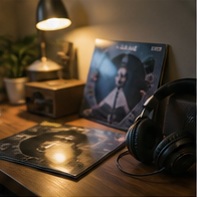
Quiet listening corner with headphones and records

Music culture moves quickly, but listening does not have to. The constant flow of new tracks can make everything feel disposable, even when the songs themselves are carefully made. Patient listening is a quiet refusal of that pressure. It means giving a record enough time to become familiar before asking whether it matters.

Discovery is not the same as attention

Streaming has made discovery easy. Attention remains difficult. Finding a song takes seconds; living with it takes longer. The difference matters because some music is designed for instant recognition, while other music works by slowly changing the listener’s sense of mood, rhythm or memory.

Patient listening does not require abandoning playlists. It simply asks for a different habit: return to the same album over a week, listen without skipping the middle tracks, notice how sequencing changes the meaning of individual songs. These small choices make music feel less like background and more like a conversation.

The slow listen is coming back

There are signs that listeners still want depth. Vinyl culture, album-listening clubs, long-form music podcasts and detailed fan essays all point to the same desire: people want to spend time with music, not just pass through it. The format may change, but the need is old.

Patient listening is not a purist stance. It is a practical one. Some songs give everything immediately. Others need room. The pleasure is learning which is which.

Not just background music: the art of the soundtrack

How exactly does the art of music-making change when it becomes a small part of a much larger video game or feature film? And what makes the soundtrack of Spider-Man: Into the Spider-Verse so remarkable? Alex Walden is on hand to reveal all.

One of the things that I love most about music is that it’s entirely subjective. There’s no genetic influence on what type of music you enjoy or what you look for in music; it’s completely down to just what your brain likes and that’s what makes it so unique. There’s complete freedom over what songs you like, what you like about music and what music you prefer to listen to while experiencing specific emotions. Take me for example: I can go from Kanye West to Nirvana straight to Jorja Smith like its nothing. Music’s ability to merge its way into any and every situation in life is one of the best things about it. So, what happens when entertainment corporations begin to realise this? The simple answer is that you get soundtracks, a collection of songs which feature sometimes extensive lists of artists from the same genre who are recruited to essentially convey to you how a project should sound. If done well, these soundtracks can become a great way to further indulge yourself into a corporation’s project. But what makes a soundtrack so good? By looking at some of my favourite examples I hope to give you an insight into exactly that.

DOOM and the ability to immerse
To this day, the pair of unbranded plain grey headphones that my father bought for me as a Christmas gift years ago remain one of my essential items. The main reason for this is that they come with what was at the time a new feature known Active Noise Cancelling. Although I found this feature amazing when I first experienced it, it made me appreciate the idea of having music as background noise more. For example, as I’m typing this right now on my busted AirPods at about 60% volume in my silent room I can still hear the tapping sound of my fingers on my laptop, which is helping me from becoming completely focused on this Slum Village album, whilst helping me focus on what I’m writing. The addition of music is sometimes the crucial piece needed to allow a consumer to become immersed in entertainment and Mick Gordan’s DOOM soundtrack is a prime example of this.

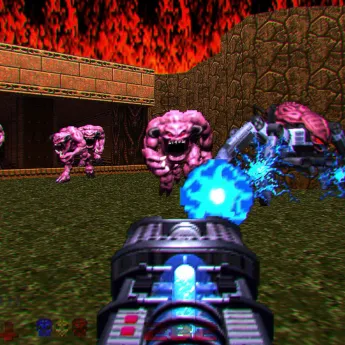
For those who don’t know, DOOM is a video game series which has been going since 1993. What started out as a simple arcade-style shooter has gradually progressed in recent years to become one of the most intense games ever released. You can only imagine how intense a game set on Mars with your primary objective to kill everything in sight in increasingly gruesome ways could be. Filled with fast paced action and highly detailed combat sequences, this game series has earned its place as one of my favourite game series to play. The game itself may be great, but the soundtrack is the driving force as to why this game is so special.

DOOM‘s original release dates back to 1993

As you tread through the game’s map you are given a subtle warning as a stream of white noise and bass tones hit you. In addition these sounds have been completely transformed by an extensive list of phasers, pedals, distortion boxes, reverb effects and many more. These short stretches of music are known as stems and are designed to give you an uneasy feeling of dread. It forces your brain to tell you “I don’t know what’s up ahead but whatever it is, it’s going to a be a lot”. As soon as the combat starts, the game’s techno-based sounds are completely thrown out the window, now replaced with no-nonsense metal. The addition of heavy metal music which accompanies a swarm of demons as they head directly towards you forces your body to produce a surge of adrenaline as you try fight your way through the horde.

Mick Gordon’s idea of combining metal with electronic sounding drums and heavily altered stems is not only genius, but also extremely difficult to pull off. Metal music has always been a violent badass and extremely niche category of music. It’s aggressive, fast paced and resembles everything about this new generation of music that your grandma hates. However, the fact that metal is so niche that can be its downfall sometimes. There are occasions metal fans don’t like when their genre is mixed in with more cliché genres such as techno. They feel as if their music is being watered down or that the people who make it are just doing it for money, not just the love of music. Yet Mick Gordon is able to use just the right amount of techno influence in extremely heavy basslines to add that extra kick that makes the music hit that bit more. I mean seriously – the drums and guitar riffs in this game are completely unmatched. It sounds something far beyond the capabilities of some video game composer from Australia.

Sometimes I need to pause DOOM… either I need to turn my volume down or I feel way out of my depth.

There have been times when I’ve had to pause the game while in the middle of a combat scene. This is always because of two reasons: either I need to turn my volume down because I can feel a headache coming on, or I just feel way out of my depth and need a minute to gather myself before I jump back into the game. That’s why I love DOOM so much. I’ve never played a game where I feel as if I’m being mentally dragged right out of my comfort zone, pushing myself to my limits as I try to comprehend everything around me while also trying to stay alive. I assure you that without a soundtrack, this game wouldn’t feel the same. (No seriously, I’ve actually played the whole game on mute while I watch a show in the background). But with Mick Gordon’s remarkable background music blasting through my ears, my mind constantly bounces back and forth between the thoughts of how amazing a song is and how I’m currently flirting with death in my game right now. It’s as if the game is able to control my brain, messing with me so that I’ll find it all the more challenging to complete.

Spider-Man: Into the Spider-Verse and the construction of fictional universes

It’s time I let you into my lives a little more now. I have to admit I’m practically in love with the Post Malone and Swae Lee song Sunflower. Ask anyone who knows me and they’ll tell you I have a borderline unhealthy addiction to this song. At the time of writing this, Sunflower is my most played song on Spotify since I created my account (that must say something considering that this I discovered this song 5 years after I first created my account). If I’m honest, I could easily write a whole dissertation level paper about how the movie, Spider-Man: Into the Spider-Verse, is a perfect movie but for now I’m going to attempt to restrain myself and try to only talk about why the soundtrack is able to help construct a fictional universe for the consumer.

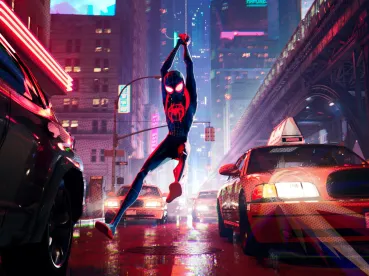
Spider-Man: Into the Spiderverse received widespread critical acclaim in 2018 for its creative storytelling and hit-filled soundtrack

Spider-Man Into the Spider-Verse is, in my opinion, the best spider-man film made to date. The story follows Black and Puerto-Rican teen Miles Morales as he begins his journey at the Brooklyn Visions Academy. It’s clear from the beginning that Miles isn’t a huge fan of the academy and feels pressured to live up to his father’s expectations. However, while hanging out with his Uncle Aaron, Miles’ entire world gets completely flipped upside down when he gets bitten by a radioactive spider. I’ll spare you my synopsis of this film, but seriously there’s practically and endless list as to why I love this movie so much. One of the key things I always notice is that like most teens in this day and age, Miles gets anxious and things can feel mentally out of his control very quickly. It’s through music that Miles is able to calm himself down, which I know is a very common practice for people who struggle with anxiety, so we naturally relate to him because we see he’s just a kid underneath the mask.

One of the best decisions Marvel made was constructing this specific movie soundtrack. We feel as if we’re being brought into Miles’ world. With tracks like What’s Up Danger and Start a Riot we get the textbook high energy songs that let our minds wander and draw up our own Spidey-themed scenarios in our heads, but with tracks such as Sunflower, Invincible and Scared of the Dark we’re brought into Miles’ personal life. Behind all the vigilante stunts, he’s really just a kid from Brooklyn. It’s through this that were able to build a connection with Miles and we feel as if we actually know him – after all, we know his music taste, his character traits, and his biggest secret.

It’s through the soundtrack that we’re about to build a connection with Miles. We see he’s just a kid underneath his mask.

One of the most common issues with movie soundtracks today is that, although companies tend to recruit artists who are in the mainstream scene at the time, it often sounds forced and cringey because let’s face it, the number one rule with any creative passion is that it shouldn’t be forced because everyone can tell when it’s not from the heart. I’ve even read up on cases where artists have been paid to name drop specific brands in their lyrics. People can tell if you have a genuine passion for something or if you’re just doing it for clout. But with Into the Spider-Verse’s soundtrack, Marvel managed to group together artists who fit quite well in the hip hop and pop rap categories, so for them this was just another song for them to write. In particular, you can hear how good the genuine chemistry is between Post and Swae throughout the song Sunflower. It’s probably why Post decided to take Swae Lee on tour with him after the songs release.

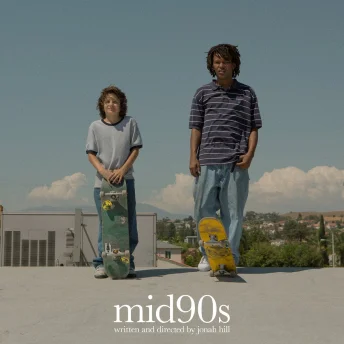
mid90s and cultural representation

If you would’ve told me when I was a kid that hip hop would become one of the most popular genres of music in the future, including the number one in America at one point, I would’ve thought that you were talking complete nonsense and I’d have fair reason to. Up until 2016, hip hop was seen as the outcast genre. It was viewed as the genre which your kids should avoid and hip hop artists were deemed to have no valid musical talent. One of my other favourite hobbies as a kid which also got a bad rep was skateboarding. I grew up in the era of skateboarding where the days of kids watching Tony Hawk blast off crazy huge ramps and go around pools were starting to fade as street skating grew in popularity. This obviously led to skateboarding being viewed as a reckless sport which some people even saw as a crime. The representations of these two interests of mine are why they used to be home to quite niche communities, which is the same reason they ended up getting represented so poorly in mainstream media, because the people who write about it often don’t know anything about it. Despite this, there is the odd moment where it’s done well and mid90s is a prime example of how it’s done perfectly.

Jonah Hill gave all the kids on set real iPods to listen to 90s hip hop on. As someone who skates, this is a major victory.

The story of mid90s is relatively simple. It follows 13-year-old Stevie (Sunny Suljic) as he navigates his way through summer accompanied by a troubling home life and a group of friends he meets at the local skate shop. What I like most about this film is that it accurately represents the skate community by showing all skaters are different; hell, some of the skaters in this film are in their teens while some are just kids. It’s not just some attempt at seeming edgy for a money grab. In fact, all the people who play skaters in mid90s were skating way before they were acting. You can find them on the Illegal Civ YouTube channel which is what makes this movie so comforting to watch you feel as if you’re just watching some kids skate. It doesn’t feel like you’re watching some scripted attempt at making skating seem rebellious and edgy.

mid90s marked Jonah Hill’s directorial debut in 2018

One of the best aspects of this film is that it features music from the time that the film is set. As a matter of fact, director Jonah Hill gave all of the kids on set iPods which were all filled with songs that he used to listen to growing up in the 90s. Many of the songs on these iPods were from artists such as Pixies, Wu Tang Clan and The Pharcyde who were also featured during the movie. Now, to the average viewer this would just be seen as a method to help add to a scene, but as someone who skates this is a major victory. I remember hearing 93 ’til Infinity by Souls of Mischief and Put It On by Big L and feeling surprised that a movie about skating was using songs that actual skaters listen to. My friends and I actually listen to some of these songs on the regular and I’m hearing it in this movie? It felt weird at first but then it felt great realising that the director, who had decided to bring quite a small sport to the big screen, had actually nailed the portrayal of skaters and had taken the steps necessary to do so. Not only that, but thanks to mid90s I was able to discover loads of new artists and songs. After watching the movie, one of the first things I did was find a Spotify playlist with all the songs featured in the movie. I was blessed with Spotfiy’s own official mid90s playlist which even included small anecdotes from Jonah Hill himself. It was through this playlist that I was able to discover golden era hip hop and how as well as good music, it doubled as an awesome soundtrack for skating. I remember trying to skate around my neighbourhood while listening artists such as Raekwon, Nirvana and, now one of my favourite groups of all time, A Tribe Called Quest. It was through times like this that I was able to explore skate culture which has become one of the best parts about my daily life. Of course, there were other instances as to why I had discovered skating, like the famous Tony Hawk games, but I feel as if it weren’t for mid90s I wouldn’t have been able to link together this fun hobby with one of my favourite things in the world, music, which has led to skating and skate culture becoming a huge part of me.


So there you have it: three examples of how a soundtrack can become a valuable feature of any project. I feel like often soundtracks can get overlooked by some who just view it as an accessory and I will admit that sometimes it can fit that description if poorly constructed, yet I hope that these three examples of iconic soundtracks have helped you realise that soundtracks can often be underrated. Maybe it’s just my habit of having a particular interest the little things and small details talking for me, who knows? What I do know though, is that next time you go watch a movie or play a video game or even go somewhere with your friends or family and you feel some extreme emotion whether it be joy, sadness, anger, or any other variation of mood, pay attention to what music is playing in the background or the songs that you play that day. You might make some amazing memories which you can then attach to a specific song. That is what makes soundtracks so amazing.

Britain’s new age indie scene – a new sound is on the rise and you don’t want to miss out

A new wave of indie music has been brewing and the potential isn’t barred by any limits. Indie music has been huge in the UK for as long as I remember, but new factors are changing the sound of the new up-and-coming talent into something completely different. By Matthew Rowe.

Indie music has often been praised as the voice of the younger generation, and you will often find that the youth will associate themselves with the sound of the ever-recognisable tunes of the Arctic Monkeys, the Strokes, and Pulp, just to name a few. These are big household names who have helped develop and create their own indie sound, one that will certainly never be forgotten. However, more recently, there has been a huge burst of creativity within the indie scene, with a lot of new talent alongside it. These new artists are helping preserve the meaning of indie while putting their own twist on it.

As a genre, indie music has a massive cultural significance that can’t be ignored. For one, the university experience I’ve enjoyed wouldn’t have been anywhere as good without it. You can’t go to a party without soaking up indie music and its culture. My personal favourite venue, The Leadmill, is host to many indie nights out and so many great gigs; it is truly a hub of musical exploration and a place to have a damn good time (bless the £1.50 doubles).

If I had a pound for every reference to the Tories in indie songs, I’m be deemed a Conservative.

The sound may be developing but some things in indie don’t change. Themes in indie songs still follow consistent themes and messages. If I had a pound for every reference to how bad the Tories are in an indie song, I’d be deemed a Conservative voter. But this is what it’s all about: the voice of the youth expressing their opinions on a vast amount of issues both inside the UK and globally, one example being Declan McKenna‘s British Bombs, a modern-day cult classic that is recognisable instantaneously. The standard themes are being followed but some have rightfully been pushed further than others. Ideas of identity, self-worth and female empowerment have been made so much more vocal, creating an insight into issues recently pushed into the public’s eye, often to the distaste of the older generation. Two songs that I think show this beautifully are Lime Garden’s I Want To Be You and CMAT’s Whatever’s Inconvenient. The sounds of the greats don’t lose their value and are often replicated by bands wanting to reach the great hits their predecessors had. This is shown by Sheffield-based band The Reytons, who have adapted local legends and the Arctic Monkeys sound relatively successfully. If you are ever on a night out, it’s unexplainable, but the atmosphere will become electric whenever an indie banger comes on.

These developments can’t purely be put down to indie music; the music scene as a whole has shifted in recent years. Huge developments in UK jazz, post-punk and rap have all had their impact on the genre, elevating it to a whole new level. This allows a level of creativity and it shows. Post-punk has had such an amazing impact; artists such as BC,NR have had such a huge impact, and other bands in the crank wave subgenre are interchangeable with indie. Hard-hitting indie bands Do Nothing, Dry Cleaning, and Courting are great examples of the development of indie in the post-punk direction. This isn’t the only way the scene has developed; spoken word has snuck its way in almost seamlessly. Leeds band Yard Act are a great example of this, often leaving the preconceptions of how an indie song should be laid out, allowing them to both create standard songs with funky hooks but also much more solemn monologues. This sound is also shown by the much more popular Wet Leg.

The impact of other otherwise irrelevant genres is not to be understated

Outside of the UK, very unexpected artists have been entering the domain. Rapper Lil Yachty gained a reputation for creating rap songs such as iSpy, but last year he took a huge risk by entering alternative indie with the very influential album Let’s Start Here. This was a complete change in vibe for the American artist but it paid off. The song Drive Me Crazy! is a perfect example of this new experimental feel he was going for, creating a perfect example of how the genre of rap has been infused into indie. The concept has been around for a while. Years ago, Arctic Monkeys collaborated with British icon Dizzie Rascal to create Temptation Greets You Like Your Naughty Friend. Bloc Party is known for mixing the two consistently, but it’s incredibly promising to see otherwise unexpected artists entering the subgenre.

Here are some songs by the insane new talent that you need to hear:

I Want To Be You – Lime Garden (Single)

This song is a perfect embodiment of how the standards held by those famous on TV lead to innate jealousy and a desire to change their body and lifestyle, highlighting the huge issues of being surrounded by these fake idols. This is consistent in Lime Garden’s music, a girl band who seamlessly expresses modern issues in their songs

Nearly Daffodils – English Teacher (Nearly Daffodils)

Heavily post-punk inspired band English Teacher often takes a heavier, rock feel to indie, especially in this song sounding akin to a hybrid of Fontaines D.C., Dry Cleaning, and Wet Leg. The singer, ironically named Lily Fontaine, bridges the gap between a harsh, brutal instrumental and a much more melodic and soothing voice, despite still being able to shout out to drive home the whole point: “You can lead water to the daffodils, but you can’t make them drink.” Fontaine’s range is shown in their discography, with much more melancholy compositions like Mastermind Specialism and a poetic start to Yorkshire Tapas.

R Entertainment – Sports Team (Gulp!)

It wouldn’t be a list of indie recommendations if I didn’t mention Cambridge-formed band Sports Team, who gained notoriety in 2020 with their debut album Deep Down Happy and many of my favourite indie rock songs, such as Stations of the Cross. They haven’t slowed down since, going on several tours or releasing a second album, Gulp!. This album hasn’t gained as much traction as their debut, but in my opinion it has songs of the same or even better quality. R Entertainment is my pick from this album, a commentary on how desensitised the general public has become to otherwise shocking content and how war, homicide, and car crashes have become almost trivial to us. “They’re mowing us down, for R entertainment.” The slang just emphasises how much of an issue it is in the UK.

I Wanna Be a Cowboy, Baby! – CMAT (If My Wife New I’d Be Dead)

CMAT has one of the most impressive voices I have ever heard. Hailing from Ireland, she doesn’t hold back with her loud, passion-filled choruses. I had the pleasure of seeing her live recently, and I was amazed her voice hadn’t died by the end of a nearly three hour action packed and downright fun set. Her song I Wanna Be a Cowboy, Baby! covers so many issues while being an incredibly catchy banger. Several people in the crowd donned cowboy hats for the gig. Issues of self-identity and empowerment are covered here with lines such as “But I break down every time I’m on the scales” and “My style icon is the wolverine / Between each finger lies the key / To getting home without a buckaroo.” These lines emphasise issues of body standards as well as how society and men will often go out with the pure intention of going home with someone and view women as objects, the keys referencing needing self-defense on a day-to-day basis. Her discography covers so many deep issues while maintaining high quality and listenability.

The British music scene and indie as a whole are in great hands; these new talents have already achieved brilliant things, from widely acclaimed albums to supporting huge global talents to having their own national and international tours. I can’t wait to see what they are capable of and how other genres will continue to influence both new and established artists. The Arctic Monkeys delving into more lounge and art rock is a great example of this. To conclude, please give the new indie scene a listen, specifically the songs mentioned above.


The wonderful adventure: why Slipping Through My Fingers is ABBA’s tragic masterpiece

A devastating account of a mother’s loss doubles as a universal meditation on the human compulsion to cling on to the past in a pop single that mixes ecstasy and agony in a way no other song has before or since.

Slipping Through My Fingers is twice as old as me, and yet, unlike any song released before my birth – or really any song released before 2015, for that matter – it stirs something deep within my soul. It’s had a modest renaissance other the last year after Declan McKenna, an indie rock figurehead of my own generation, released a tasteful if unspectacular cover of the track, which somehow remains his second most popular song on Spotify. It’s obvious in McKenna’s tender, wavering vocals that this song means as much to him as it does to me, and yet on paper our adoration of it makes no sense. We should be reaching for remix-ripe disco hits like Gimme Gimme Gimme or TikTok-able snippets like Angeleyes’s chorus or Chiquitita’s outro, not a ballad told unambiguously from the perspective of a Swedish mother in her thirties. Presumably like McKenna, I cannot directly relate to experiencing your child leaving home – on to school, university, or marriage – for the first time, although I have played the “absent-minded schoolgirl” in my own departure to university, and have watched my parents process some of Agnetha Fältskog’s pain in real life.

But the daughter (now 51-year-old Lena Ulvaeus) is far from the only thing slipping away in this pop masterpiece. Add a comma (“Slipping through my fingers, all the time”) and suddenly time, not the daughter, is the song’s principal subject. “It’s okay, we have time,” Donna reassures Sophie moments before STMF begins in Mamma Mia!, but really she’s fooling herself – STMF primarily deals with the disturbing mystery of time’s “funny tricks”. How can a lifelong bond between mother and daughter suddenly be a thing of the past without warning? Even when it feels like there are some things, love perhaps, that can make time stand still, why do memories inevitably fade, and joy revert to a sort of distanced numbness? Why is time so slippery? “Sometimes I wish that I could freeze the picture,” the narrator admits in the song’s only dud lyric (pictures are, by definition, already frozen), a line that only makes proper sense when heard over that spine-tingling melody and Anni-Frid Lyngstad’s shrill vocal harmonies.

What’s most poignant about STMF, however, is how the mother mourns the idea that she might one day know her daughter entirely. “Each time I think I’m close to knowing, she keeps on growing,” she reflects beautifully. It’s a line imbued with equal parts melancholy and hope – ‘knowing’ her daughter may be forever just out of reach for the narrator, but what a gift it is to have a daughter so nebulous, so unfathomably special that she just “keeps on growing”. In the song’s moving rendition in Mamma Mia!, for a while Donna sings to Sophie’s back, the latter blissfully unaware of her mother’s agony as she preens herself in the mirror. “Do I really see what’s in her mind?” Donna mirrors back. To love is to know one another on the deepest possible level, but STMF comes to terms with the fact that we can never really “know” each other. The daughter will always have surprises for her mother, and indeed the mother hardly even knows herself, ending a verse with “And why? I just don’t know”. Such mysteries are the beauty of living.

That aching emotion you can hear in the music alone – the pull from major immediately to minor in the first two chords, the way a rising, major-chord bridge somehow sounds utterly desolate – perfectly complements the core of STMF’s exquisite tragedy: the mother mourns her daughter, but she must let her go. Crucially, the daughter is not simply leaving – the mother is actively letting her go, having come to the painful conclusion that her sorrow is the unavoidable cost of her daughter’s freedom. “Will you give me away?” Sophie asks, referring to her wedding, still just about young enough to act on her mother’s advice. Donna swallows a yes and nods. She lets her daughter go out of love, and yet weeps as a result of that same, heart-wrenching love.

On top of all that tragedy is a certain world-weariness in ABBA’s swooping melodies and plodding drum groove. This is, after all, a “well-known sadness” and an “old, melancholy feeling”. Has the narrator felt pain this before? Perhaps this agonising dilemma – whether to hold on to the past in vain, or to let go and mourn – is an integral part of human condition? We all have a compulsion to cling on to what we know, and yet the universe transpires to forever keep changing against our will in ways both subtle and profound.

Remarkably, despite the specificity of the lyrics, STMF succeeds (like all the best pop songs) in being readily malleable into whatever meaning the listener sees fit. Whilst traveling this summer, I found myself overlooking the tragedy and reading into the song’s ample euphoria. I took it as a reminder that this moment, in all it’s thrillingly novel glory – navigating towards a sparkling Eiffel Tower at night, summitting a rugged peak alone in the Bosnian mountains, watching the sunset from a boat on the Bosphorus – is of course only transient. In fact, it’s precisely that transience that makes those moments so special. After I arrived home, I found STMF morphed into a rallying cry for a return to that trip’s whole-hearted spirit of adventure and personal development. “What happened to the wonderful adventures?” Fältskog muses, and I hear a call to snap out of all my obsessing over tricky coursework or a patch of unhappiness and remind myself that this too is an adventure and, like the daughter, I will “keep on growing”.

Tellingly, STMF ends completely unresolved. Fältskog returns to the first verse having apparently learnt little from her revelations about love and loss, and the daughter finally waves goodbye, leaving only the sounds of a clock quietly ticking in the background. The mother doesn’t know what comes next for her daughter, and in fact she can’t know; this is not her story to tell any more. The daughter will continue to grow. Perhaps she will become a mother herself, or maybe she’ll find cause to run back to her mother for a spell, temporarily reigniting those wonderful adventures. But without any doubt, at some point along the way, the daughter will feel the full weight of her mother’s thoroughly human dilemma: to hold on, or to let go. In ways big and small, this is a question we all must tackle over and over in our lives. Long may Slipping Through My Fingers keep me asking it.

Nujabes: The growing legacy of the ‘Godfather of Lo-fi’

A favourite for hardworking students the world over, the relaxing tones of lo-fi hip hop make it a hidden giant of the music industry. Alex Walden traces the origins of the genre through its underappreciated founding father Nujabes and gets to the bottom of the unlikely link with anime.

One of the best things I’ve discovered about going to university is the complete melting pot of people you’ll meet. Naturally, as an utter music nerd, I love finding out about what music people listen to. I mean seriously if you would’ve told me when I started that I’d be rekindling my love for Led Zeppelin and would swap listening to Kanye West for The Vacations, I’d be surprised. Despite all these new genres and artists I’m discovering from people, there’s one genre that everyone listens to: lo-fi hip hop.

Even when his label began to take off, Nujabes still found time to DJ.

Ah yes, lo-fi hip hop, whether you’re cranking out a huge dissertation or just relaxing on your bed, it’s there for you. If you’re a nonstop livestream viewer or playlist organiser once again, it’s there for you. Lo-fi is one of the biggest genres among young people right now yet often with new genres we tend to associate the fact that a music genre is new with the concept that it has no history yet we can easily trace. One prominent figure who played a vital role in the creation of lo-Fi is Nujabes. Despite being critically acclaimed as “The Godfather of Lo-Fi”, in the grand scheme of things I can’t help but see Nujabes as the unsung hero. Despite his career and fanbase, there’s just an incredible impact this man had on the music scene that I think was forgotten too easily. However, being my usual fan-boy self, I’m going to attempt to do the impossible and break it down for you.

A star is born

Jun Seba was born on February 7th 1974 (many hip-hop heads will recognize this as the birth date of iconic producer J Dilla as well) in Nishi Azabu, Tokyo. Growing up, Seba was a huge fan of music and began to dabble with the art of DJing. After reversing the order of his name to make his iconic stage name, Nujabes was officially born. While DJing and producing on the side is fun, it rarely brings in the big bucks in the beginning, so Nujabes decided to make a name for himself through a more corporate method and during his 20s, he opened two record stores, T Records and Guiness Records. After a few successful years at the shop, Nujabes decided he wasn’t done yet and set up the record label Hydeout Productions in 1998. The label was moderately successful with its roster of local legends such as Uyama Hiroto while also acquiring overseas talent such as American artist Emancipator. Sadly, Nujabes’ story ended briefly due to his unfortunate death in 2010 due to a car crash. While he is still missed today, his legacy arguably grows more every day.

What made Nujabes so iconic?

Samurai Champloo’s refreshing blend of hip hop and samurai is a must-watch even for non-anime fans.

To describe Nujabes as the godfather of lo-Fi sounds like an outrageous take to someone who doesn’t know who he is, yet after learning about his work and listening to his projects, the influence is clear as day.

Nujabes’ music was the definition of perfect chill music: it doesn’t control you, it works with you.

Around the 90s era of hip hop, the trend of sampling had completely exploded. Behind every major hit, there was a producer who had taken a slither of a soul or jazz song and had completely reworked it to the point where you couldn’t even recognise the sample in some cases (producer J Dilla is very well known for this). Nujabes was no different to any other producer in the fact that he sampled too, but the way he would sample would be so different. Nujabes didn’t want to take a piece of music and completely flip it on his head so you could try to work out all the secret little differences to the original sample. Instead, he wanted the sample to effectively take the lead on the whole song, letting his production take a back seat. The reason for this is as clear as day (and you can find it throughout the Luv(sic) Hexalogy album). It’s because Nujabes is just like me and you: he appreciates music for what it is. He doesn’t want to rework it and put his spin on it but he wants to show you the beauty behind the sound. It’s as if he’s managed to tame the music and in doing so has trained each instrument to stand out in their own specific way. You can piece together every little detail at your own pace. That’s the true definition of perfect “chill” music to me: it doesn’t control you, it works with you.

The anime connection

Although I could talk about how his music is legendary for ages, it’s not enough to justify the take that he’s the “Godfather of Lo-Fi”, after all, there’s more to lo-Fi than just chill beats. It’s a whole culture in nowadays. When I mention the word “lo-Fi” to you there’s a strong chance you think of the famous lo-Fi girl, and I wouldn’t be surprised if that little anime girl who’s been studying non-stop is arguably the face of the lo-fi hip-hop scene. That’s very important because I feel that the anime influence in lo-Fi hip hop often gets overlooked when examining the genre, but where did it come from?

Luv(sic) Hexalogy is regarded as one of the most influential Japanese hip hop albums.

Nujabes’ music has a few ties with anime culture. In 2004, Nujabes’ and Shing02’s song Battlecry premiered as the theme song for the anime series Samurai Champloo, and he got production credits for the outro song beat Laments the World. Often when hearing that an artist you like made the theme song for an anime, you think that it would be your favourite musical thing about the show. However, I find myself saying that it’s the show’s fine details that truly make it a show for hip hop fans. Throughout the show, there’s a plethora of lo-bap/jazz beats that can be heard when scenes escalate or fights inevitably break out, as well as this the cutaway sound to signify a change in scenery is a literal DJ scratching. It’s a nice to make an abrupt change in scenery be smooth yet also keep that abrasiveness to it.

The show Samurai Champloo falls into the category of all-time great anime that got a US distribution on the late-night Cartoon Network channel Adult Swim. Surrounding itself with shows such as Full Metal Alchemist and my personal favourite of all time, Cowboy Bebop, it’s no wonder that the show’s anime/hip hop fusion completely took off and resonated with future artists of the lo-fi genre.

Nujabes never got to see his full legacy take shape. I hope he can see it from a better place.

I feel like there’s a sense of comfort that is similar to the nostalgia of thinking back to staying up late watching Adult Swim TV shows that is prominent in lo-fi hip hop and that is what makes it so great. It’s great at capturing that comfort while also stripping away the nostalgia so you can focus purely on music instead of constantly trying to think back to a better time.

Nujabes’ tragedy

Honestly, I can’t help but feel sad when thinking about how Nujabes had so much potential. Like many artists who die young, he didn’t get to see his full legacy take shape. Combined with his jazz-inspired beats and his anime soundtracks, it’s clear that this man had a gift that was only just beginning to take shape during the peak of his short-lived career. However, it is good to know that what he made what became essentially the building blocks for one of the most popular genres among young people today. I just hope that he can see it from a better place.

Rest in peace, Nujabes.


Hideki Naganuma’s Jet Set Radio: how a video game helped birth a musical generation

Jet Set Radio was once long forgotten, but following recent news that the game could possibly be making a return, Alex Walden is here to analyse the musical side of the game and the soundtrack’s cultural significance.

I woke up and ate some cereal and began checking the news like any other day. It wasn’t until I opened YouTube and watched a video reviewing an alleged leak from SEGA headquarters that my day began to change. After over 20 painfully slow years, I couldn’t believe that one of my biggest influences on me as a kid Jet Set Radio was supposedly getting a new addition to its catalogue. I honestly wouldn’t be surprised if no one who read this had even played the game. I had forgotten about the game until earlier this year. It was a cool game but it lost its popularity very quickly so you can understand why I wasn’t jumping around my room in excitement yet. I was still interested though so I thought I’d see the footage and it wasn’t until I heard that classic tune of Hideki Naganuma’s Humming The Bassline that it all came flooding back to me. It was like a flashbang of nostalgia had blinded me, the rush of how the game used to make me feel came back so suddenly. I instantly knew I had to put on the soundtrack again while I tried to find my PS Vita to play the game one more time.

After playing I realised that Jet Set radio is the same as any action game to come out of the 1990s/2000s era of video games, in being that it includes an incredibly awful set of controls (seriously, the camera controls are almost rage-inducing), no ability to explore without a timer over your head and the equalizer that makes everything bad about it not seem so bad after all: an absolute banger of a soundtrack, courtesy of composer Hideki Naganuma.

Jet Set radio was renamed to Jet Grind Radio in the US due to licensing issues. The US market is also why the game features the New York-based Grind City map.

As I played through the tutorial, all I could think was “damn I used to want to be these people so bad”. I paused and looked around my room. I realised that if young Alex could see himself now, he’d be pretty impressed with how the influence of Jet Set Radio is still rooted within me. But what makes this game so incredibly influential? I mean I played hundreds of video games as a kid yet for some reason this was one of the few that helped shape my life.

The soundtrack – a melting pot of sounds


Don’t get me wrong, tearing around the streets of Tokyo-To on magnetically driven inline skates tagging every wall I see with my own custom graffiti is incredibly cool, however, much like anything I do today, it’s no fun unless I have a killer soundtrack, and Hideki Naganuma takes care of that problem with ease. Yes, the self-proclaimed “CEO of funky fresh beats” manages to gather up numerous genres and cram them into a tiny little mix. For a video game soundtrack, it does an amazing job of putting through your main character’s thought process. It sounds erratic and high intensity, yet it also has this smooth undertone that keeps you collected as you hope and pray that your character skates land on that rail without falling over on the ground incredibly hard. The soundtrack has a good clash of songs that keep you hyped up (e.g., Let Mom Sleep and Grace and Glory) as well as songs that keep you chilled out (e.g. That’s Enough and Moody Shuffle).

Funk, electronica, hip hop, rock and acid jazz are squashed together, fighting for their chance to be admired.

There’s a nice balance of songs that give off a futuristic vibe as well as keeping in style with that classic hip hop sound. A good example would be when the character Combo is introduced and you play your first mission as him. The game’s soundtrack gives you a smooth simple beat on the track Everybody Jump Around that fits well with his 80s New York hip hop reminiscent style, but the song is filled with scratches and chops of audio samples to throw you off. By doing this your brain becomes scattered on what to focus on and gives you this psychological rush to match your character who’s racing down the streets of Tokyo-to.

It doesn’t just stop at hip hop though. Throughout the soundtrack you can notice elements of funk, electronica, hip hop, rock, acid jazz and many more. It feels like this cluster of genres that are all squashed together fighting for their chance to be admired, making the soundtrack sound erratic and abrasive, yet Naganuma is able to make all this work through the magic of sequencing all the songs together one by one so the party in your ears doesn’t stop. This feature is a subtle one, for first-time players you’ll hardly notice it because you’re too busy rolling around the speed of sound trying not to be shot by police. But when you notice it, you can’t help but realise how much it assists in creating a different world that only you and your console are in for a short period of time. You begin to realise that these are no longer just a bunch of street rat vandals whom you get to play as; these are artists who are making their own paths in a city where what they do is not tolerated and they do this by throwing all their interests together and seeing what comes out of it. It feels like you’re hanging out with the cool kids in high school TV shows who smoke behind the schoolyard. You know that they’re kind of bad news but they just look so cool you can’t resist. It’s not often I say this, but as someone who DJs in their spare time, it actually has me looking forward to the end of each song, in a good way of course. Now can you tell me a soundtrack that makes you feel like that? I thought not.

JSR didn’t just break barriers with its soundtrack, it was one of the first video games to use use the now iconic cell shading art style.

Why Jet Set Radio will never die


Although Jet Set Radio had been put away for the past 20 years, the game’s culture, along with the era of the 2000s, lives on – you just have to know where to look. It’s all underground, baby.

Considering the game tapped into cultures like techno music, graffiti and action sports marketed to a bunch of impressionable kids and young adults, it’s no wonder the game has a die-hard fanbase that many artists take inspiration from. A genre of music that resonates heavily with JSR fans today would be the genre breakcore. The genre takes a page out of the book of Naganuma by combining jungle and techno, bringing back this cyber personality to its music that was thought to be long forgotten along with its hard-hitting drum breaks and smooth melodies. With artists like TOKYOPILL, Star Trash and black balloons taking over the scene by storm, we can be assured that music-wise you’re in good hands.

It feels like an insight into the world we were promised as kids but never got because life got in the way.

While I think breakcore captures the cyber aesthetic of what Jet Set Radio was offering us, I have to be honest and say that no matter how amazing and well-crafted the song is, breakcore doesn’t give us that upbeat feeling that we get from the JSR soundtrack. Instead, I’d say that breakcore captures the futuristic unknowing of the 2000s better than the Jet Set Radio Vibe. The beauty of the JSR soundtrack was that it was upbeat but also light-hearted. Yes, you were running around avoiding police, helicopters and in some cases tanks, but it never felt too intense or pressuring. The soundtrack made it seem fun but when I listen to breakcore, I don’t feel like part of a group; I feel like my headphones are my only companion it feels like an exclusive experience just for me, not for anyone else. If you’re looking for something that sounds fresh from your Sega mega drive, look no further than 2Mello’s Memories of Tokyo-to. If having the name of the city where the game is located in the title isn’t enough to convince you, then you only have to listen to hear the odd Jet Set Radio sample here and there. Also, make sure to look out for the soundtrack for the upcoming game Bomb Rush Cyberfunk to hear songs produced by Hideki Naganuma throughout the game’s soundtrack coming August 18th.

The JSR influence is very heavy in BRC, and we’re here for it!

Looking to the future of JSR


Whenever I talk about Jet Set Radio, I always feel a little bit upset or sentimental, though this may have just been a game for some people that they played as a kid. For me, it feels like a reminder of the 2000s era and the culture surrounding it: everything ranging from music and fashion to attitudes towards the future. It almost feels like an insight into the world we were promised as kids but we never got it because life got in the way.

At this point I was going to talk about how not all hope is lost and that the release of JSR’s ‘spiritual successor’ Bomb Rush Cyberfunk was going to save us, but the day after I finished writing this article that whole story got thrown out the window entirely with the news of the new JSR leak. However, I recommend looking into Bomb Rush Cyberfunk if you are looking for some more high-speed combo-building action, Hideki Naganuma decided to bless us with his skills for parts of the soundtrack of that game too. Despite the game not being released yet, fans are already excited about what’s to come.

We can tell from the trailer alone that Mr. Naganuma never stopped perfecting his craft. The way that the drums of the song spit viciously across the track while robotic-sounding lyrics wrestle their way through the song’s techno melody felt as if like all those years that the Jet Set Radio had been forgotten about. All those grooves, those drums, those melodies made me feel as if it had come back with a vengeance and had punched me square in the face. It feels like an explosion of 20 years’ worth of culture that was waiting for me and had just had enough of waiting around.

I feel like the news of the Jet Set Radio leak as well as the announcement of Bomb Rush Cyberfunk best described a comment under Bomb Rush Cyberfunk’s trailer ‘My brain is saying “Nice to meet you” but my heart is saying “welcome home”.’ I can’t wait to rekindle my love for the Jet Set Radio soundtrack once more thanks to Naganuma and Team Reptile. I can look forward to what the future holds, just like how I did as a kid. That’s more than enough for me.


Songs for solitude: alone on a mountain with Phoebe Bridgers’ Punisher

There’s loneliness and there’s simply being alone, and as I plodded up the final steep slope to the minor peak of Froswick in the Lake District one evening last September, I only felt the latter. I hadn’t seen a soul since leaving the valley earlier that morning, locating with difficulty a faint path that guided me through dense bracken and up a ridge that rose gracefully above the glassy expanse of Haweswater behind me. Even on reaching the summit of High Street, the most significant fell in the area, I could eat a celebratory Wispa with only the company of a handful of disinterested sheep. Having spotted a sharper fin of lower peaks a little distance away from the barren plateau I had arrived at, I had diverted in their direction, enjoying the gloriously gentle wide ridge (High Street was once indeed a passageway for horses and carts, and a spectacular one at that). I found a picturesque tent pitch on Froswick for the night and wondered whether the tiny, potential outlines of people I’d seen earlier on the hill’s larger neighbour Ill Bell had been imaginary.

There were two reasons why listening to the second studio album from Californian singer-songwriter Phoebe Bridgers felt like the natural thing to do after I’d settled down that evening. The first was fear. I hadn’t seen anyone all day, but something about the prospect of a stranger approaching – particularly without me spotting them in advance – in such an exposed, vulnerable location scared me more than it perhaps should have. After all, I’d met a friendly enough fellow solo camper on a similar overnight trip up Helvellyn last year, and that night spent the first hour of darkness watching specks of headtorch light weave their way up the ridge I was sat on, willing them to turn away from me at the crest perhaps for the sake of a little more solitude. There were no such encounters on Froswick, although I heard the chug of helicopter blades from my tent later that night, which is surely one of the most inexplicably terrifying sounds you can hear when alone in a tent in the middle of nowhere, made worse when accompanied by a search light (camping is, after all, technically illegal in England, but not that illegal). For me, thankfully, there was no such light, and I breathed a sigh of relief as the sounds of the rotor promptly faded into nothing.

The view of Froswick and Ill Bell from the summit plateau of High Street was enticing.

The familiar sound of Punisher was, therefore, a vital extra comfort blanket over my icy sleeping bag and copious layered fleeces. The album exhibits a calmness so intense it can be easy to dismiss the whole thing as insubstantial or boring on first listen. The exceptional quietness of most of the songs invites deeper listening, and meticulous production provides plenty of hidden gems to uncover: alien electric guitar mumblings, minimalist and thoroughly intentional muffled drum grooves, the occasional frissen of electronic vocal manipulation. Bridgers’ vocal performance in particular encourages this tranquil, deep listening. Lyrics are recited patiently and deliberately, and Bridgers’ outstanding poeticism shines as a result. Seemingly one-dimensional lines like “if I could give you the moon, I would give you the moon” are rendered gut-punchingly poignant by Bridgers’ poised delivery, pausing several times for effect before ushering in a final rush of backing vocals. There’s no rush in Punisher, and neither was there in my wonderfully spare few hours atop Froswick.

Cars like fireflies occasionally made their way up the valley beside me, their full beam headlights clearly visible in the gloom.

The other reason was that Punisher seemed to fit the occasion in a way no other album could. Far from a distraction from the beautiful view in front of me – standing on Froswick’s modest summit, Windermere stretched out into the distance towards the barely-visible wind turbines of Morecambe Bay – Punisher is an album pristine enough to enhance that feeling of wonder. Kyoto, for example, includes a rousing trumpet melody that, completely independent of the lyrics, inspires pride and awe that I can quietly indulge in having made it up to the heaven of a Lake District fell entirely on my own steam. Other times, Punisher has an ability to transport me even further away from the problems of the real world than my rural location. Garden Song is one such escape, with Bridgers describing a surreal dream beside a single reverb-soaked guitar, her plaintive melody doubled by an eerie deeper vocal. “What if I told you I feel like I know you / But we never met?” she asks uneasily a few songs later. Nothing quite makes sense, but nor should it. Punisher feels like its own fantasy world with its own rules, and perhaps that’s why its meditative qualities resonated with me so strongly as day became night on Froswick. My perch on the summit gave a god-like perspective of the flat plain below. Cars like fireflies occasionally made their way up the valley beside me, their full beam headlights clearly visible in the gloom. Gradually, the residents of Windermere turned on their lights, which flickered gently as they proceeded with their Wednesday evenings. Being so high and so alone with my magnificent view of the land already felt blissfully unreal and gave a chance to momentarily untangle myself from the constant preoccupations of day-to-day life; Bridgers’ vivid world of strange, purring guitars and ghostly strings felt like just one step further into unreality.

Standing from the summit of Froswick, Ill Bell loomed over my tent, which looked out towards Windermere and the distant lights of Morecambe.

A sheep brought me back down to earth during Chinese Satellite, giving me a start when it appeared a few feet behind me, calmly munching some grass. It was a good prompt to stand up and turn towards the mountain range behind me for a few songs. Together we watched the colossal, boulder strewn slope of Mardale Ill Bell during Moon Song, the mountain’s valley base more and more thrillingly abyss-like as the darkness thickened. I was reminded why the song was one of my favourites of the album, largely thanks to Bridgers’ deeply evocative lyrics that offer a searing edge of resentment and melancholy to the lilting melody. “You pushed me in and now my feet can’t touch the bottom of you,” she tells us, apparently pointing out how comparatively tiny I am both amongst the mountains and the towns of people below, as god-like as I may like to feel. Being a mere drop in the ocean can be just as liberating as omnipotence, I was reminded.

A sheep brought me back down to earth during Chinese Satellite, giving me a start when it appeared a few feet behind me.

It was so dark by the time I reached louder, anthemic standout ICU the outlines of the great Cumbrian peaks to the west that I’d enjoyed during the day were beginning to become difficult to pick out. Truthfully, I grew so tired that the great musical explosives of closing track I Know The End washed over me. Beginning to shiver, I shuffled through the two fabric doorways of my tent and wrestled with my sleeping bag as Bridgers finished her finely crafted masterwork not with more acoustic musings but with a shocking, chest-rattling scream over a soul-stirring horn melody.

I would have preferred for Bridgers to somehow have continued through the night; even after many uneventful nights camping, the wind’s uncanny ability to shake the tent fabric in a way that sounds exactly like a sheep gnawing at guy ropes or, worse, footsteps of a wayward stranger, has always unsettled me. Of course, the logical part of me knew there was no one else nearby, and likely no one else on the entire mountain range. I couldn’t have been further from the buzzing confines of Leeds’ Brudenell Social Club, where Scottish new wave/post-punk band Altered Images were wrapping up their headline set to a no doubt rapt, sweat-drenched audience. Places of community like Brudenell give music their own ritualistic edge, whether one is hamonising as a collective in an improvised choir or colliding with bodies in a cathartic mosh pit. But on Froswick I learned that experiencing music in total solitude can feel every bit as life-affirming and vulnerable. It was quieter and more personal, but hearing Punisher that night provided all the feelings that come with a brilliant live gig: euphoria, awe and an unstoppable sense of freedom.