
The best music rooms are not showrooms. They are working spaces with a few objects that explain why certain albums, concerts and people still matter. A small sculpture can anchor that story when it is chosen for a real memory rather than bought to fill an empty shelf.
Begin with the memory, not the merchandise
Before arranging anything, write one sentence about the story the shelf should hold. It might be the summer you learned three chords and played until your fingers hurt, a parent who kept the radio on during long drives, a friend who always found the tiny venue before anyone else, or a teacher who made you listen for the bass line. That sentence is the filter. If an object does not help tell it, it can live somewhere else.
This matters because music collections grow easily. Ticket stubs, set lists, picks, cables, books and boxed editions all compete for attention. A shelf that tries to display every proof of fandom becomes difficult to read. Choose one anchor object, one piece of printed material and one small personal item. The gaps between them are part of the composition.
Use the sculpture as a visual rest
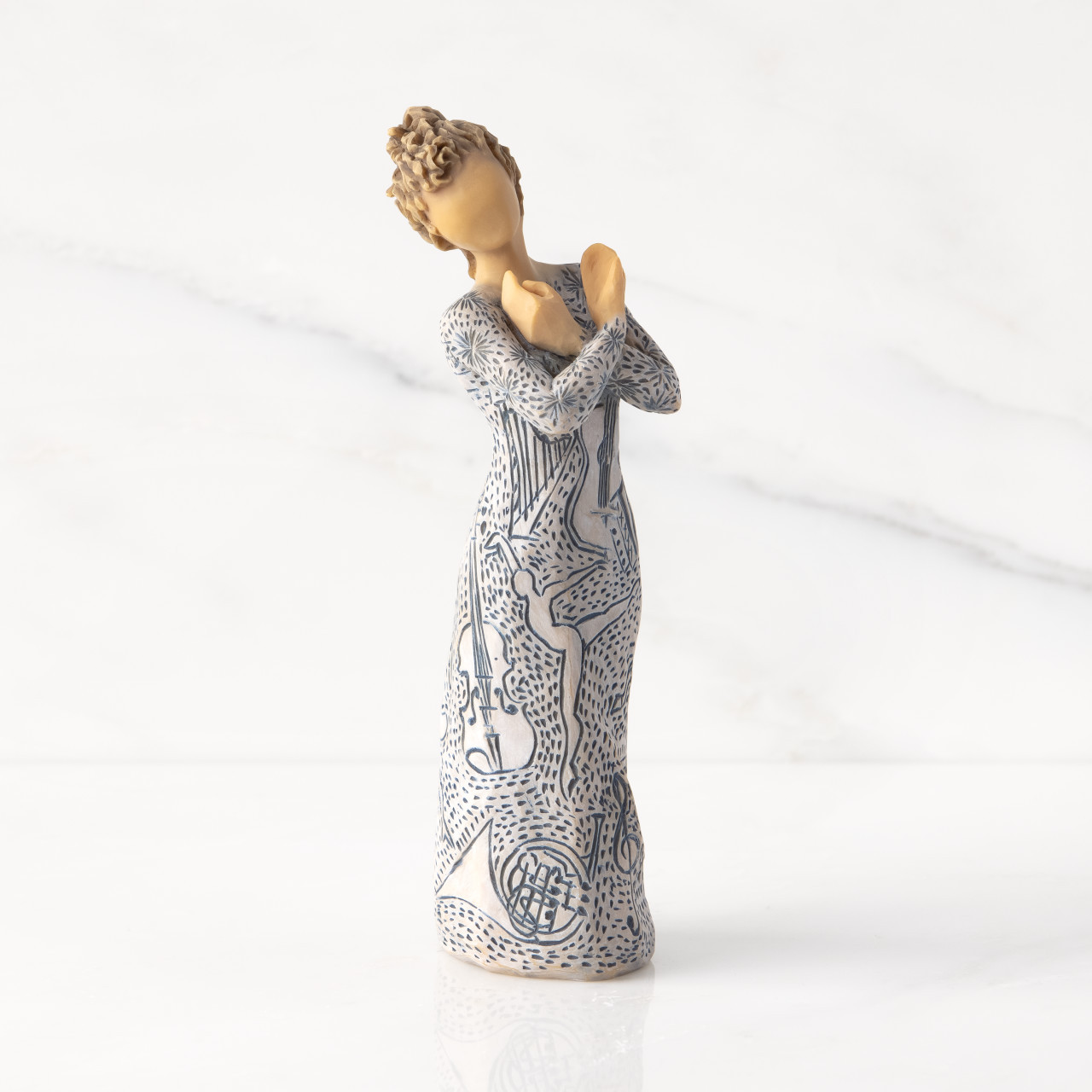
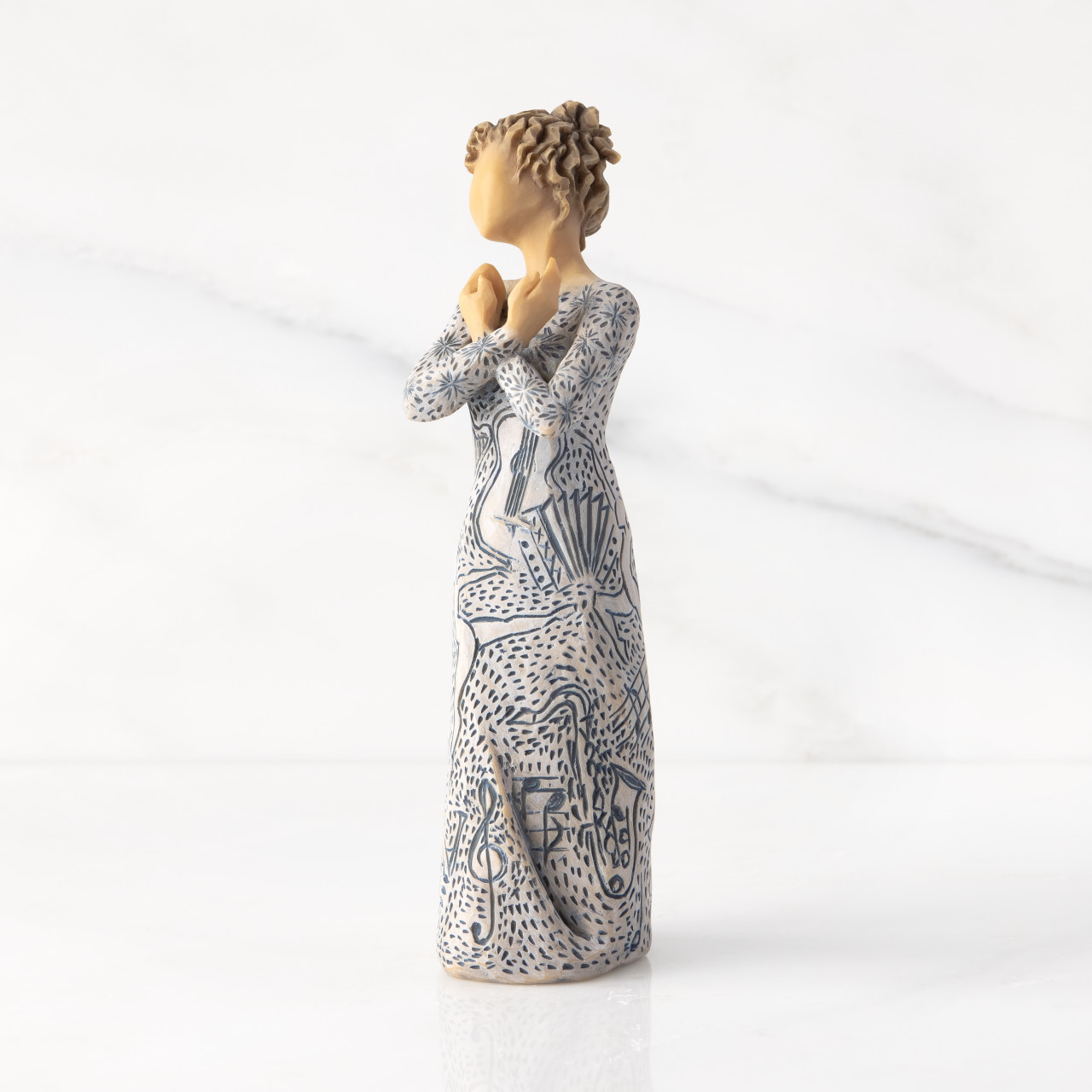
Willow Tree’s Music Speaks figure is carved with references to instruments, symbols and movement. From a distance, the pale form reads quietly; closer up, the pattern rewards inspection. That makes it useful beside visually busy record sleeves. It does not need to sit in the exact center. An off-center position usually feels more natural and leaves room for a sleeve, framed note or low stack of books.
Measure the available height and depth before ordering any display object. Product dimensions, finish, stock and price can change, so confirm the current details on the merchant page. Keep fragile pieces away from speaker edges, turntable lids, direct sunlight and places where a headphone cable could catch them.
Build three levels without buying display furniture
Use what a music room already has. A sturdy hardback can lift a small object. A framed ticket or album insert can create the back plane. The sculpture or a compact keepsake forms the middle. A pick tin, handwritten track list or small stone can sit low in front. Keep every support stable and do not stack valuable records horizontally beneath weight for long periods.
Vary texture more than colour. Paper, matte resin, wood and a small amount of metal give the eye enough to explore. Too many shiny surfaces can compete with the turntable and equipment. If the room already has strong poster art, keep the shelf restrained: two or three objects may be plenty.
Let the display change with the listening
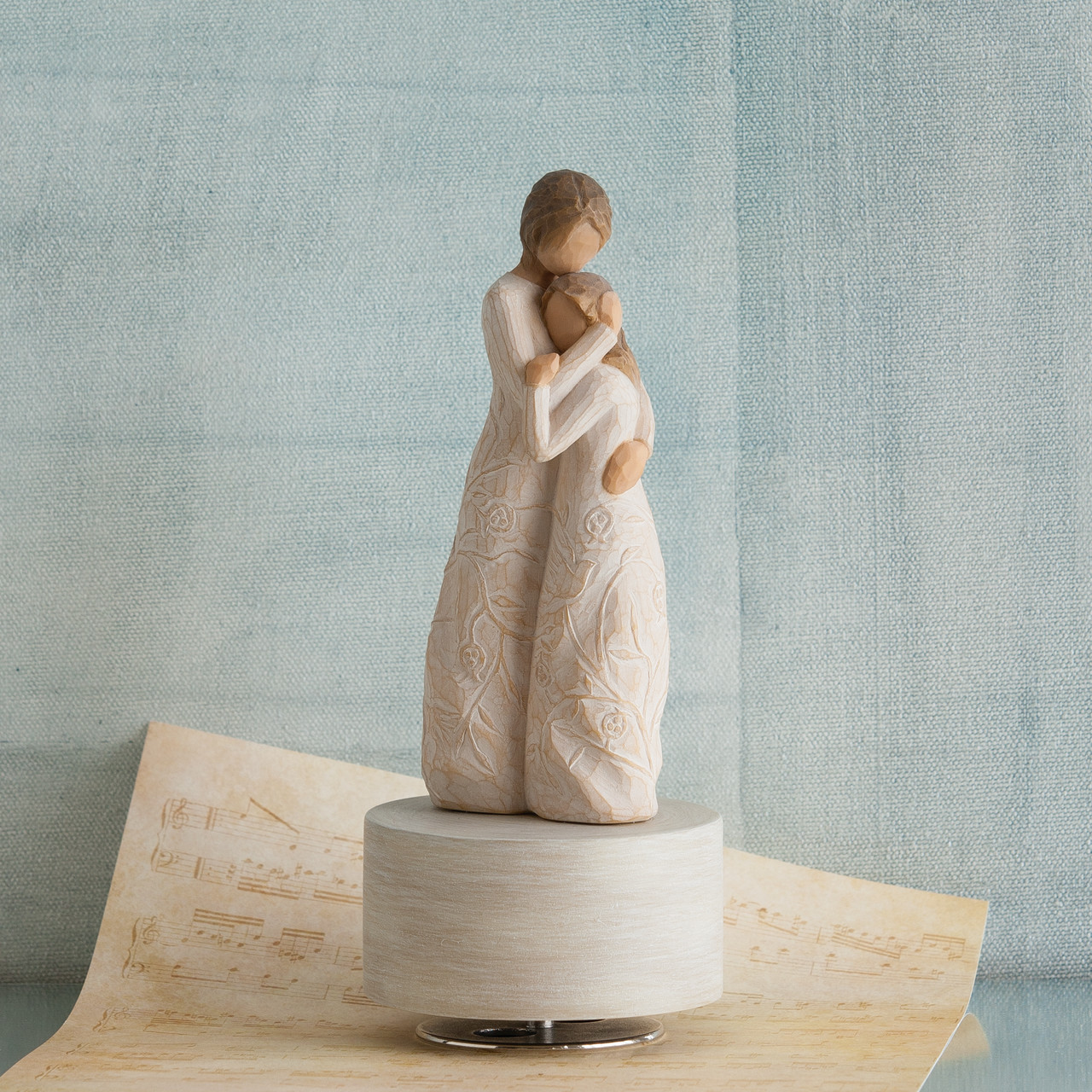
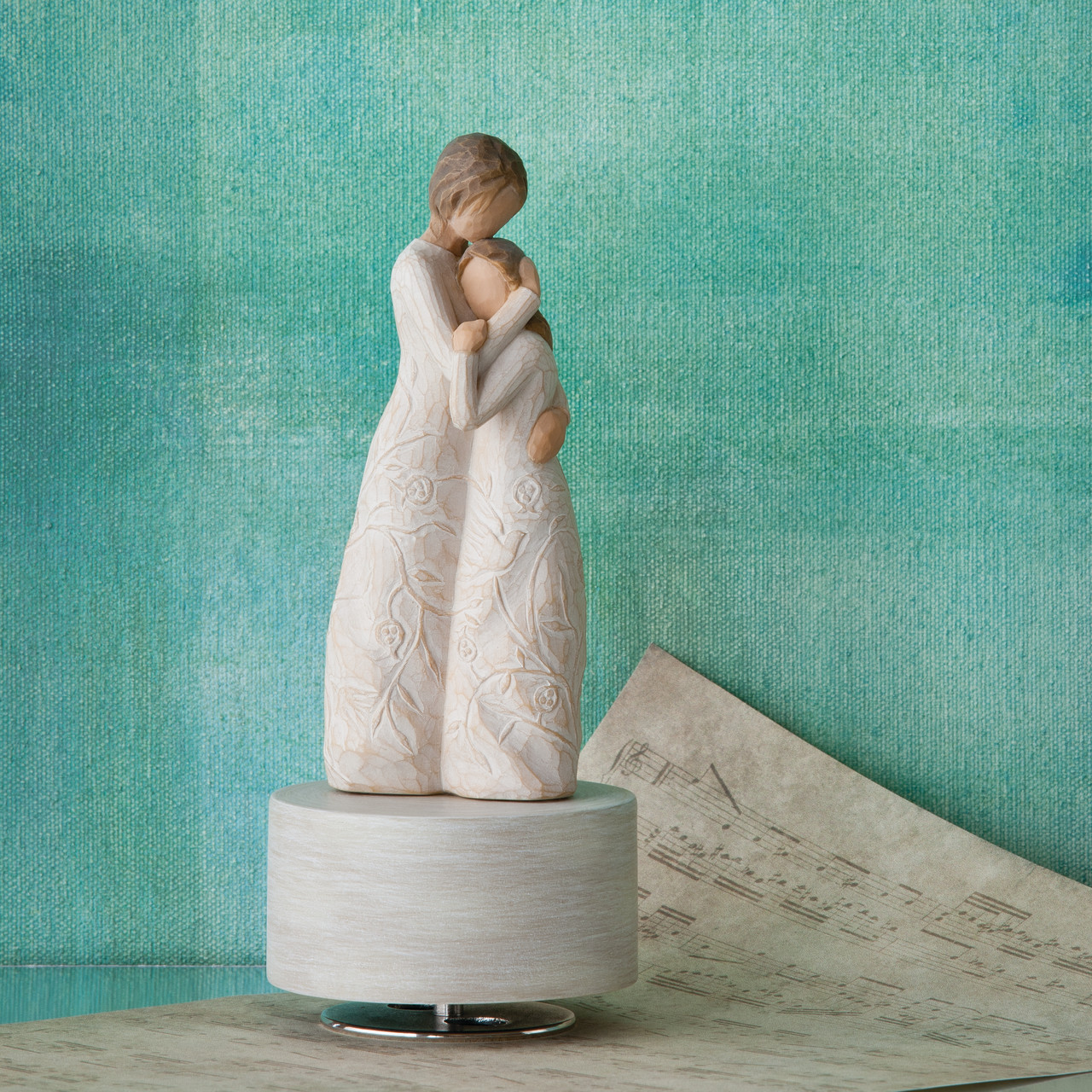
A permanent shelf can still rotate one element. During a month of jazz listening, bring forward a programme or photograph linked to that period. When a new local band becomes a favourite, add the ticket for a week. The anchor stays; the supporting material changes. This keeps the display connected to active listening instead of freezing it into nostalgia.
Take a quick phone photo before rearranging. It is easier to judge spacing in a flat image than while standing close to the shelf. Remove one item if the arrangement feels crowded. The goal is not symmetry. It is a clear path for the eye and enough open space that each object can register.
Protect the records and the room
Do not place resin or painted objects directly on a vibrating speaker cabinet. Avoid blocking rear ports, ventilation slots or the movement of a turntable cover. Use stable furniture, museum putty only when suitable for both surfaces, and a soft dry cloth or brush according to the maker’s care guidance. Keep water, solvents and cleaning spray away from the sculpture and the audio equipment.
If children or pets use the room, move breakable pieces to a higher, secure shelf. A meaningful display should make the room easier to enjoy, not create a new hazard. Once the practical details are handled, sit in the usual listening chair and check the shelf from there. That is the view that matters.
A good music shelf does not prove how much you own. It quietly explains why you kept listening.
Anchor
Choose one piece with a direct emotional link to music.
Context
Add one record sleeve, note or ticket that names the memory.
Air
Leave enough empty space for the story to be visible.
A quieter centrepiece
Explore Willow Tree pieces connected to music and memory
Review the current collection, dimensions and care details, then choose only the piece that fits the story and the shelf you already have.
Affiliate disclosure: Music Boats may receive compensation from an eligible purchase through this link. Availability and product details are set by the merchant.