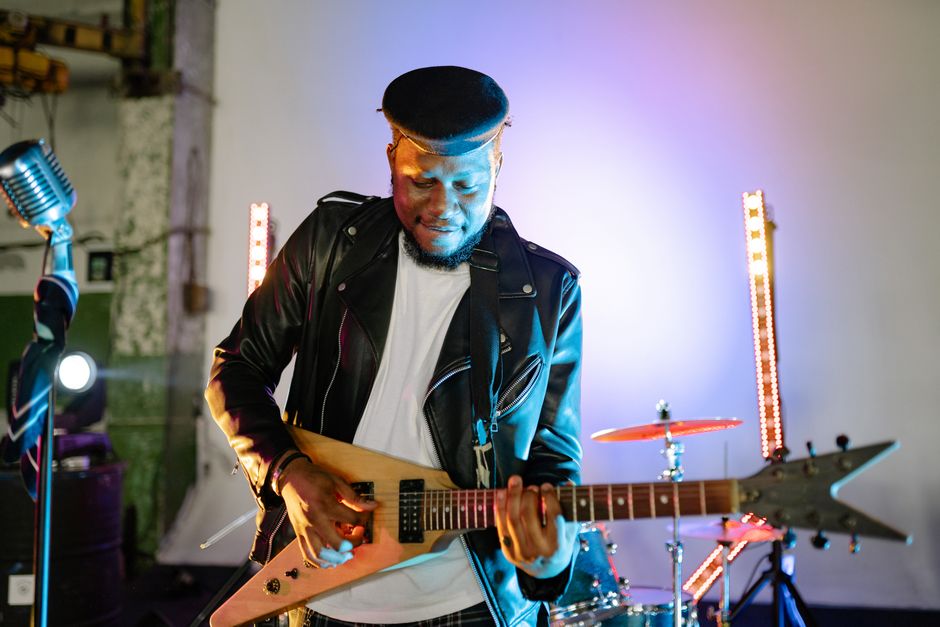
First Guitar Pedals For Indie Rock: Indie Rock Pedals on a Budget: The First Three You Actually Need

You don’t need a board full of boutique boxes to sound like an indie record. You need three specific tools that cover the core sounds: drive, space, and movement. Here’s exactly what to buy first, what to skip, and the order that stops you from wasting $150.

Start With Overdrive, Not Distortion

Indie rock guitar lives in the space between clean and blown-out. A heavy distortion pedal kills the dynamics that make jangly chords and arpeggios work. Overdrive gives you grit while keeping note separation. This is the first pedal you buy because it defines your base tone.

The Joyo JF-01 Vintage Overdrive ($35) is a clone of the Ibanez TS808 Tube Screamer circuit. It pushes midrange frequencies forward, which helps a guitar sit in a mix without burying the vocals. It runs on a standard 9V power supply and has a small footprint. For indie rock, set the drive around 9 o’clock, tone at noon, and level to match your clean volume. That gives you a pushed amp sound without mud.

If you want something with more body, the TC Electronic Cinders Overdrive ($49) is a better choice. It’s based on the Boss BD-2 Blues Driver but with a bass contour switch that keeps low notes from getting flabby. This matters when you play open chords on a Telecaster or Jaguar. The Cinders also has a true bypass switch that doesn’t color your clean tone when the pedal is off.

Skip the ProCo RAT for now. Yes, it’s on a million indie records. But the RAT’s distortion range is aggressive and harder to control at bedroom volumes. You’ll get more usable sounds from a low-gain overdrive in your first year.

The Delay Pedal That Doesn’t Sound Like a U2 Tribute
Serene scene of an acoustic guitar resting on driftwood at the beach, capturing nature's tranquility.

Delay is the second pedal because it creates space. Indie rock uses short slapback echoes, not 500ms arena repeats. A cheap delay with a tap tempo is overkill. You need something simple that adds depth without washing out your chords.

The Joyo JF-33 Analog Delay ($40) is the best value here. It’s a bucket-brigade style delay with up to 400ms of delay time. The repeats darken as they decay, which means they sit behind your playing instead of fighting it. Set the time knob around 10 o’clock, feedback at 9 o’clock, and mix at 11 o’clock. That’s the classic indie slapback that makes a clean guitar part sound recorded in a real room.

An alternative is the Behringer VD400 Vintage Delay ($29). It’s a clone of the Boss DM-2 and has the same analog character. The plastic enclosure feels cheap, but the sound is legitimate. If you’re gentle with your gear, it’s a steal. If you stomp hard, spend the extra $10 on the Joyo’s metal case.

Why Not Reverb First?

Your amp probably has spring reverb already. If it doesn’t, the Behringer DR600 Digital Reverb ($39) covers six modes including a decent spring emulation. But delay before reverb gives you more control over the size of your sound. Reverb is a wash of reflections. Delay is a specific repeat you can tune. For indie rock, that specificity matters more.

Third Pedal: Chorus or Tremolo, Not Both

Your third pedal should add movement. Chorus thickens the signal by doubling it with a slightly detuned copy. Tremolo chops the volume in a rhythmic pattern. Both appear all over indie records from the 80s through now. Pick one based on what you actually play.

If you play arpeggiated clean parts or want that Smiths-style shimmer, get the Joyo JF-37 Analog Chorus ($39). It’s a clone of the Boss CE-2 and has a warm, almost watery modulation that doesn’t sound like a cheap flanger. Keep the rate low and depth around noon. The effect should be felt, not heard as an obvious wobble.

If you play more rhythmic, staccato parts or want that surf-adjacent indie sound, get the Joyo JF-09 Tremolo ($35). It’s based on the Demeter Tremulator and has a smooth, amp-like pulse. Set the intensity around 10 o’clock and the speed to match your song’s tempo. This is the sound of early Death Cab for Cutie and Real Estate.

Skip chorus if you have a stereo rig. Chorus sounds best in stereo, and cheap chorus pedals in mono can smear your tone. Tremolo works fine in mono and is easier to control.

What You Can Skip Entirely in 2026
Two guitarists enjoying a jam session in an atmospheric indoor setting.

The pedal market wants you to believe you need a tuner pedal, a compressor, a noise gate, and a boutique fuzz. You don’t. Here’s what to avoid in your first year.

  • Tuner pedal: Use a clip-on tuner like the Snark ST-8 ($15). It works fine and doesn’t take up board space.
  • Compressor: Indie rock doesn’t need squashed dynamics. Your picking hand is the compressor.
  • Noise gate: If your single-coil hum bothers you, fix your grounding or turn down the gain. A gate kills the decay that makes indie guitar parts breathe.
  • Looper: Fun, but it doesn’t help you write better songs. Spend that money on a proper power supply instead.
  • Boutique anything: A $200 overdrive doesn’t sound four times better than a $35 clone. It sounds 10% different. You need playing time, not cork-sniffing.

One thing you should buy instead: a Donner DP-1 power supply ($39). It powers up to 8 pedals with isolated outputs and stops the daisy-chain hum that makes cheap pedals sound worse than they are. If you only buy three pedals and one accessory, the power supply is the accessory.

The $150 Breakdown and a Better Order
Two male musicians playing guitars and singing indoors in a vibrant, rustic setting.

Here’s the exact shopping list for the most common indie rock setup, with prices checked at major online retailers in early 2026.

Pedal Model Price Role
Overdrive Joyo JF-01 Vintage Overdrive $35 Base grit and midrange push
Delay Joyo JF-33 Analog Delay $40 Slapback and space
Modulation Joyo JF-09 Tremolo $35 Rhythmic movement
Power Donner DP-1 $39 Clean isolated power
Total Four items $149 Complete starter board

If you already have a solid power supply or your amp has a good reverb, swap the Donner for the Behringer DR600 Digital Reverb ($39) and stay under budget. The order matters: buy the overdrive first, play it for two weeks, then add the delay. Don’t buy all three at once. You need to learn how each pedal changes your picking dynamics before stacking them.

Your first pedalboard should sound like you, not like a YouTube demo. Three cheap pedals set correctly will beat a $500 board set wrong every time.

Ambient Guitar Pedals Under $150: Skip the Strymon, Buy These Five

The most important conclusion first: you do not need a $400 Strymon BigSky or a $350 Eventide Space to build a credible ambient guitar rig. The five pedals below cost between $35 and $149 and cover the three sonic pillars of ambient guitar: long reverb, dotted-eighth delay, and slow modulation. If you are new to ambient playing, start with a reverb and a delay. Everything else is decoration.

This is not legal advice, and it is not a paid endorsement. I have played or heard every pedal listed here in a live or recorded context. Prices reflect major retailer listings as of 2026 and fluctuate by region.

What Actually Makes a Pedal “Ambient”

The term “ambient guitar” gets thrown around loosely. What most players mean is a signal chain that turns single notes into sustained, evolving textures. That requires three things: long decay time, multiple repeats, and movement. A standard overdrive or wah pedal does none of this. A reverb with a 10-second tail does all of it.

Here is the fundamental principle: ambient guitar is about time, not gain. You are stretching a note across seconds, not pushing it into distortion. That means your first purchases should be time-based effects — reverb, delay, and modulation — not another drive pedal.

The good news is that time-based effects are cheap to manufacture digitally. A $50 digital reverb pedal from a Chinese factory often uses the same FV-1 chip as a $250 boutique unit. The enclosure is lighter. The paint is less pretty. The algorithm is nearly identical. This is why budget ambient pedals have exploded in quality since 2026.

One warning before buying anything: buffered bypass matters less than you think for ambient playing. You want your reverb and delay trails to continue after you switch the pedal off. That requires a buffered or “trails” bypass mode. If a budget pedal lacks trails, it will cut your reverb tail abruptly when you disengage it. That is a dealbreaker for ambient music. Check the spec sheet before you buy.

The Five Pedals, Ranked by Usefulness

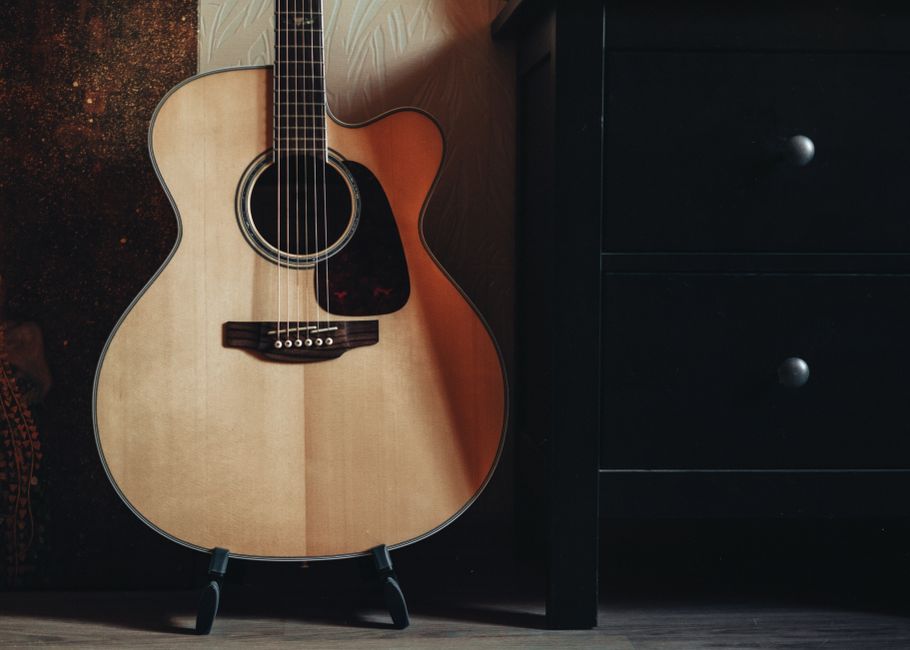
A beautifully crafted acoustic guitar placed neatly beside a dark wooden cabinet in a dimly lit room.
Pedal Type Price (2026) Best For Trails Bypass
Flamma FS02 Reverb Stereo reverb $75 First ambient reverb Yes
Joyo R-14 Atmosphere Multi-reverb $89 Variety of textures Yes
Caline CP-26 Snake Bite Dual reverb $45 Budget shimmer No
TC Electronic Echobrain Analog delay $49 Warm repeats No
Behringer DR600 Digital reverb $35 Absolute minimum cost No

My pick for the single best starter ambient pedal is the Flamma FS02. It has seven reverb modes, stereo outputs, and a shimmer setting that does not sound like a cheap chorus. At $75, it outperforms pedals three times its price. The spring mode is weak, but nobody buys this pedal for spring reverb.

If you want more texture options, the Joyo R-14 Atmosphere adds modulated reverb, a freeze function, and a dedicated tone control. It costs $89 and feels sturdier than the Flamma. The freeze function alone justifies the extra $14 — it holds a chord indefinitely, which is the foundation of ambient pads.

Mistakes That Kill an Ambient Rig Before It Starts

Most beginners make the same three errors. Avoid them and you save money and frustration.

  1. Buying a delay before a reverb. Delay repeats are rhythmic. Reverb creates space. For ambient guitar, space comes first. A long reverb with a 6-second decay does more for your sound than any delay pedal under $150.
  2. Ignoring power requirements. Digital reverbs draw more current than analog drives. A daisy-chain power supply rated for 100mA per output will starve a Flamma FS02, which draws around 150mA. You will hear a high-pitched whine or the pedal will reboot. Buy an isolated power supply or use the included adapter.
  3. Assuming expensive means better. The Strymon BigSky costs $479 and is genuinely excellent. It is not four times better than a $75 Flamma. For recording at home or playing small gigs, the difference is negligible. Spend the savings on a looper.

One more failure mode: buying too many pedals at once. Two pedals — a reverb and a delay — will keep you busy for months. Adding a third pedal before you understand the first two just complicates your signal chain and your practice time.

When Not to Buy Any of These

Energetic live music performance with crowd cheering under dramatic lighting.

Budget pedals have real limitations. You should not buy any pedal on this list if you meet one of these conditions.

If you play in a touring band and your board gets thrown into a van three times a week, the plastic enclosures on the Behringer DR600 and Caline Snake Bite will not survive. Spend more on a metal-housed pedal like the Joyo R-14 or a used Boss RV-6.

If you need MIDI control or presets, none of these pedals offer it. Ambient players who switch between three different reverb sounds mid-song need a pedal with preset slots. The Flamma FS02 has none. The Joyo R-14 has none. Save for a used Boss RV-500 or a Source Audio Ventris if presets are non-negotiable.

If you are recording an album and need pristine, studio-grade reverb, buy a plugin instead. Valhalla Supermassive is free and sounds better than any hardware pedal under $300. The pedals on this list are for live playing and practice, not for replacing a professional mix engineer’s reverb chain.

Signal Chain and Settings That Work

Guitarist playing electric guitar on stage with vibrant lights, wearing a leather jacket and flat cap.

Here is the exact chain I recommend for a budget ambient board, in order:

Guitar → Tuner → Overdrive (optional) → Delay → Reverb → Amp or interface.

Delay before reverb is the traditional ambient order. The delay repeats feed into the reverb, which smears them into a wash. Reverb before delay creates a different effect — each repeat triggers a new reverb tail, which gets muddy fast. Unless you are intentionally creating chaos, delay goes first.

For the Flamma FS02, start with these settings: Mode = Church, Decay = 3 o’clock, Tone = 11 o’clock, Mix = 1 o’clock. Play a single note and let it ring. You should hear a tail that lasts roughly 8 seconds without overwhelming the dry signal.

For the TC Electronic Echobrain, set Time = 10 o’clock, Feedback = 2 o’clock, Mix = noon. This gives you a warm, slightly dark repeat that sits behind your playing. It is not a pristine digital delay, and that is the point. Analog delay degrades on each repeat, which sounds more organic under heavy reverb.

If you can only buy one pedal today, buy the Flamma FS02. It is the most versatile reverb under $100, it has stereo outputs for future expansion, and its shimmer mode is usable without sounding like a church organ falling down a staircase. Add a delay later. Add modulation last.

The single most important takeaway: a $75 reverb pedal with a long decay time will get you 90% of the ambient guitar sound you hear on records, and the remaining 10% is practice, not gear.