Eras Tour Tickets Without Resellers: Skip the Eras Tour Scalper Markup: The 2026 Face-Value Ticket Playbook

The Eras Tour is back for a final North American victory lap in 2026. If you’re reading this, you already know the secondary market is a wasteland of $2,000 nosebleeds and suspicious “VIP package” listings. Here’s the thing: face-value tickets still drop. Regularly. You just need to be faster, more prepared, and less emotional than the other 14 million people refreshing the same page.

This is not a guide about “manifesting” tickets. It’s a tactical breakdown of the direct-sale channels, timing windows, and verification steps that actually work in 2026. No resellers. No markup. No exceptions.

The Fan-Verified System Still Works (But You’re Using It Wrong)

Ticketmaster’s Smart Queue and Verified Fan registration remain the only legitimate path to face-value floor seats for stadium shows. The problem? Most people treat registration like a lottery ticket. They sign up once, forget about it, and then panic-buy resale the night before the show.

That’s the failure mode. And it’s completely avoidable.

What Actually Happens During a 2026 Eras Tour Drop

Taylor’s team releases tickets in waves. The first wave goes to Verified Fan registrants who received a presale code. The second wave — often larger than the first — happens 48 to 72 hours before show date. This is production hold release. The stage layout gets finalized, sightline-obstructed seats get reclassified, and suddenly 2,000 tickets appear that didn’t exist before.

These late drops are where face-value tickets actually live. The resellers don’t bother with them because the margin window is too short. You should bother.

Registration for 2026 dates opened in late 2026. If you missed it, you’re not dead. Ticketmaster’s Face Value Exchange — the only resale platform Taylor’s team officially recognizes — lists tickets at exactly what the original buyer paid. No markup. No dynamic pricing. When a fan can’t go, their ticket goes back to the pool at cost.

This is the single most important tool in your arsenal. Bookmark it. Check it at 10 a.m. local venue time, every day, starting two weeks before the show. That’s when cancellations spike.

What to Avoid: The Three Scalper Traps That Drain Your Wallet

Hands holding cassette tapes labeled 'Love Songs', highlighting 90s nostalgia.

StubHub, Vivid Seats, and SeatGeek will all show Eras Tour inventory in 2026. None of it is face value. Even listings that say “Face Value” are lying — StubHub’s “Fair Market Value” badge is a marketing term, not a price guarantee.

Here’s the trap most people fall into:

  • The “Instant Download” lie. Eras Tour tickets use rotating barcodes. They cannot be screenshotted or transferred as PDFs. Any listing claiming “instant download” is a scam or a speculative listing from a seller who doesn’t have the ticket yet.
  • The “Row 1 Floor” unicorn. Real floor seats for Eras Tour dates are tied to the original buyer’s account via Ticketmaster’s Face Value Exchange. If you see a Row 1 floor seat on a third-party site for $800, it’s either fake or the seller is about to get the listing pulled. Either way, you’re not getting in.
  • The “Package” markup. Resellers bundle a $49 hotel room and a $12 parking pass with a $300 ticket and call it a “VIP Package” for $1,200. The ticket inside is still a $300 ticket. You’re paying $900 for a PDF of a parking map.

Do not buy from any platform that isn’t Ticketmaster or AXS for this tour. Full stop.

The 72-Hour Window: A Day-by-Day Breakdown

If you’re serious about face-value tickets, you need to treat the final three days before the show like a part-time job. Here’s the exact schedule that has worked for fans across the 2026-2026 legs, adjusted for 2026’s final run.

Time Before Show Action What You’re Looking For
72 hours Check Ticketmaster Face Value Exchange at 10 a.m. and 6 p.m. venue time Production holds released. Usually 500-1,500 tickets per show.
48 hours Re-check at 10 a.m. sharp. Set an alarm. Cancellations from fans who tested positive for COVID or had travel issues. These go fast.
24 hours Check every 3 hours, on the hour Final production releases. Sightline-obstructed seats drop to $49-$99 face value.
6 hours Check once more, then go to the venue box office if you’re local Box office holds released in person. This is the best-kept secret in live music.

The box office move is underrated. Venues hold back a small number of tickets for artist guests, sponsors, and production staff. When those people don’t show, the tickets go on sale at the physical box office. No online queue. No bots. Just you, a credit card, and a human being behind glass.

I’ve seen fans walk up to the box office at 4 p.m. on show day and buy floor seats for $250 face value while StubHub was showing the same section for $1,800. It happens more often than you’d think.

The AXS Alternative Nobody Talks About

Group of asian cheerleaders sitting on colorful bleachers wearing sportswear with pompoms visible.

Not every Eras Tour date runs through Ticketmaster. A handful of 2026 stadiums — particularly those owned by AEG — use AXS as their primary ticketing platform. AXS has its own version of the Face Value Exchange, and it’s arguably better.

Why? Because AXS doesn’t allow speculative listings at all. If a ticket is listed on AXS Marketplace, the seller already owns it. The barcode is verified. The transfer is instant. There’s no “pending confirmation” limbo that Ticketmaster sometimes has.

Check your venue’s ticketing partner before you do anything. If it’s AXS, download the app, create your account, and add your payment method now. Not tomorrow. Now. The checkout process is faster when your card is already loaded, and in a queue of 40,000 people, speed is the only currency that matters.

For Seattle, Denver, and Los Angeles dates specifically, AXS is the primary seller. Don’t waste your time on Ticketmaster for those shows.

The Verdict: Face Value Is a Discipline, Not a Miracle
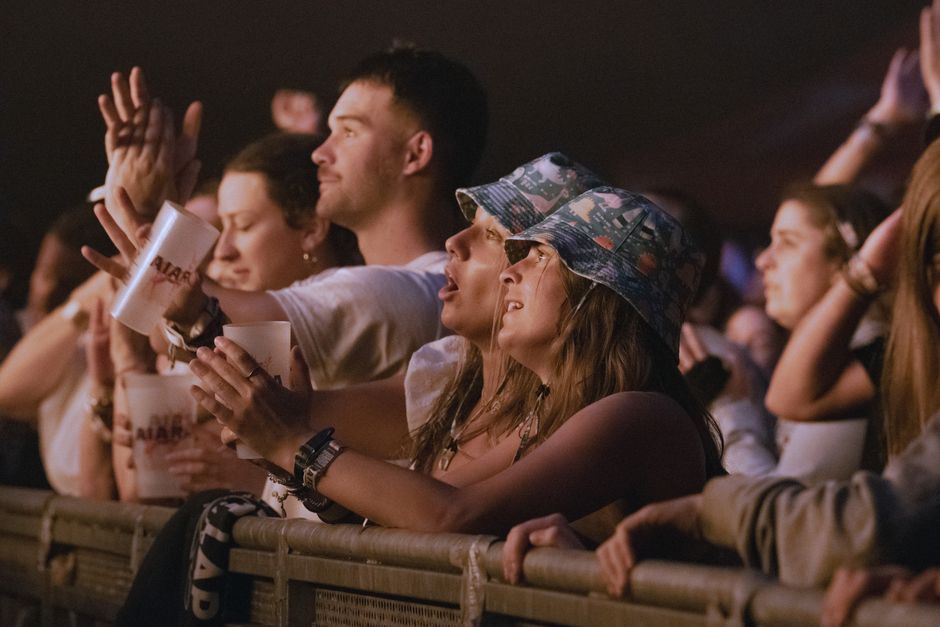
Excited concertgoers at a lively music event, soaking in the atmosphere.

You will not wake up one morning and casually buy Eras Tour tickets at face value. That’s not how this works. But if you do the following three things, your odds go from “basically zero” to “actually possible”:

  1. Register for Verified Fan on every date you can attend. Multiple cities, multiple nights. More codes = more chances.
  2. Check the Face Value Exchange at 10 a.m. venue time every day for two weeks before the show. Set a recurring phone alarm. This is the single highest-leverage action you can take.
  3. Walk up to the box office on show day. Bring your ID and a credit card. Ask what’s available. Be polite. This works more than any online guide will admit.

The resale market for Taylor Swift is a machine designed to extract maximum money from desperate fans. The face-value market is a quiet, persistent system that rewards preparation and punishes panic. In 2026, the fans who get in are the ones who treated the final 72 hours like a job interview, not a lottery.

Live music is getting more expensive, but it’s not gone. The Eras Tour’s final run will be the most in-demand concert event of the decade. Face-value tickets will exist. The only question is whether you’ll be there when they drop.
First Music Festival Tips: First Music Festival Mistakes: 7 Tips That Save Your Trip

Most people think a music festival is just a long concert. That assumption ruins weekends. A festival is a multi-day endurance event with sound bleed, portaloos, and weather that doesn’t care about your schedule. The people who have the best time aren’t the biggest fans of the headliner. They’re the ones who planned for the parts that aren’t music.

I’ve watched first-timers burn out by 6pm on day one. I’ve been the person who wore the wrong shoes and limped through a three-day ticket. This guide is the advice I wish someone had given me before I spent money on that first wristband.

1. The Ticket Tier Trap: Why “Cheapest” Costs More

Festival ticketing in 2026 follows the airline model. The base price is bait. By the time you add camping, early entry, parking, and the “convenience fee,” your $299 ticket is $480. Read the full breakdown before you click buy.

Here’s what a typical mid-size festival ticket actually costs this year:

Ticket Tier Advertised Price Actual Cost After Fees What You Actually Get
General Admission (3-day) $279 $342 Entry only. No camping. No parking.
GA + Camping $349 $428 Entry + one tent plot (usually 10×10 ft)
VIP $599 $712 Entry + separate toilets + shaded area + shorter bar lines
Payment plan +$40 fee Split over 4 months Same as GA, but you pay more for the privilege

The payment plan fee is the one that annoys me most. $40 to pay the same amount over four months. If you can afford the lump sum, pay it. If you can’t, the fee is still cheaper than a credit card’s 22% APR, so it’s not the worst option.

Bottom line: Buy GA + camping if you’re staying on-site. Skip VIP unless you’re over 35 or genuinely can’t handle portaloo lines. The VIP upcharge rarely pays for itself in saved time.

2. Your Phone Will Die. Plan for It.

Energetic crowd enjoying live music at an outdoor festival with vibrant ambiance.

This is the most predictable problem at every festival. You’ll use your phone for tickets, photos, finding friends, and checking set times. The battery will not last from noon to midnight. It won’t last from noon to 6pm if you’re filming everything.

Bring two things: a 20,000mAh power bank and a short cable. The Anker PowerCore 20K costs about $40 and gives you four full charges. The cheap gas-station power banks die after one charge and take forever to recharge. Don’t buy those.

Put your phone in airplane mode during sets. You don’t need notifications from Instagram while a band is playing. Turn off background refresh. Lower the brightness. These three steps stretch a single charge by 40%.

And write down your friends’ numbers on a piece of paper. If your phone dies and you’re separated, you need a backup that doesn’t require a screen. This is the tip everyone ignores until they’re standing alone at the main stage with 3% battery.

3. The Shoe Decision Matters More Than the Lineup

You will walk 15,000 to 25,000 steps per day. On grass, gravel, mud, and concrete. Your shoes are the single most important piece of gear you bring. More important than your outfit. More important than your glitter.

Wear broken-in running shoes or trail runners. The Hoka Clifton 9 ($145) and Brooks Ghost 16 ($140) are both solid. Do not wear new shoes. Do not wear Converse. Do not wear sandals. Do not wear Doc Martens unless you’ve worn them for months and your feet are already conditioned to them.

Bring two pairs. If it rains on day one and your shoes get soaked, you need a dry pair for day two. Wet shoes cause blisters. Blisters end festivals early. Pack a small blister kit: Compeed patches, athletic tape, and a needle. Yes, a needle. You’ll know why when you need it.

4. Hydration Is a Strategy, Not a Suggestion

A lively crowd enjoys an outdoor night concert with positive energy.

Most festivals let you bring an empty reusable bottle. Bring a 1-liter bottle. Fill it every time you pass a water station. Don’t wait until you’re thirsty. Thirst means you’re already behind.

Alcohol makes this worse. A beer in the sun at 2pm feels great. Three beers by 4pm and you’re dehydrated, tired, and missing the band you actually paid to see. Pace yourself. Alternate beer and water. Your future self at the 9pm headline set will thank you.

Electrolyte packets are cheap insurance. A box of Liquid I.V. costs about $25 for 16 packets. One packet in your water bottle each morning replaces what you lost the day before. This is the difference between feeling rough on day two and feeling functional.

5. Set Times Are a Puzzle. Solve It Before You Arrive.

You cannot see everything. Accept that now. The headliner you love and the small-stage act you love will overlap. The festival schedules them that way on purpose to split crowds. Decide your priorities before you’re standing in a field trying to choose.

Here’s a simple method:

  • Mark your three non-negotiable acts per day.
  • Everything else is a bonus.
  • If two non-negotiables overlap, pick the one less likely to tour near you next year.
  • Arrive at the stage 20 minutes early for non-negotiables. Good spots fill fast.
  • Leave 10 minutes before the end if you need to get to another stage. You’ll beat the crowd surge.

Stage-to-stage walking time is longer than you think. At a large festival like Primavera Sound Barcelona, the main stages are a 15-minute walk apart through dense crowds. Budget that time. Missing the first three songs of a set because you didn’t plan the walk is a rookie mistake.

6. Camping Gear: Buy Cheap, Regret It

Festival attendees joyfully capturing the live concert experience with smartphones.

If you’re camping, your tent is your home for three days. A $40 Walmart tent will collapse in wind, leak in rain, and cook you in the morning sun. You don’t need a $400 mountaineering tent, but you need something that won’t fail on night one.

The Coleman Sundome 4-person tent costs about $90 and has survived more festivals than most people. It’s not glamorous, but it’s waterproof enough and the poles don’t snap in moderate wind. Bring a tarp for underneath. That’s another $15 that prevents ground moisture from soaking your sleeping bag.

Sleeping: bring a foam pad and a sleeping bag rated for the overnight low. Check the weather. If nights drop to 10°C (50°F), a summer bag won’t cut it. Being cold at 4am is miserable. Earplugs are non-negotiable. The camp next to you will play music until 5am. You need sleep. Foam earplugs cost $5 for a pack of 20. Buy them.

7. The Food Budget Nobody Tells You About

Festival food is expensive. A meal inside the grounds runs $12 to $18. That’s $36 to $54 per day if you eat three meals. Over a three-day festival, you’re looking at $100 to $160 just for food. Most people don’t budget for this.

Bring your own breakfast. Instant oatmeal packets, protein bars, and fruit that doesn’t need refrigeration. That saves you $12 to $15 per day. Eat one meal inside the festival per day. Make it the one you’re actually excited about. The rest of your calories come from your own supplies.

If you’re not camping, eat before you arrive. A full meal outside the gates costs half what the same calories cost inside. The food vendors inside are fine. They’re not worth $18 for a mediocre burrito.

Cash is mostly dead at festivals in 2026. Everything runs on cards or wristband payment systems. But bring $40 in small bills anyway. When the card machines go down — and they will — cash still works.

The one thing to remember: a music festival is a marathon with a soundtrack. Plan for the marathon parts and the music takes care of itself.

Sold-Out Concert Tickets: 6 Ways to Actually Get In

You checked the date. You waited in the queue. You watched the blue bar crawl across your screen. Then the words every live music fan hates: “No tickets available.”

But sold out doesn’t mean gone. I’ve gotten into sold-out shows at the O2 Arena, Brooklyn Steel, and a 300-capacity basement club using the exact methods below. Some cost face value. Some cost less. One cost me nothing but an hour of standing outside a venue with a sign.

Here’s what actually works in 2026, ranked from most reliable to most desperate.

1. Fan-to-Fan Resale Platforms Beat Scalper Sites

Skip StubHub for now. The first place to check is a fan-to-fan exchange where sellers can’t price gouge. These platforms cap prices at face value or a small percentage above it.

Twickets is the big one in the UK and Europe. It’s built specifically for music fans. Sellers list tickets they can’t use, buyers pay face value plus a small fee (usually 10-15% of the ticket price). For US shows, CashorTrade does the same thing for jam bands, indie shows, and rock gigs. Both platforms verify tickets and hold payment until the buyer gets in the door.

Set up alerts on both platforms. Most listings go up 24-72 hours before the show when people get sick, have work emergencies, or their plans fall apart. The closer to doors, the more listings appear.

One thing to know: Twickets and CashorTrade don’t have inventory for every show. Huge arena tours, yes. Small club shows, hit or miss. But check before you pay double on a resale marketplace.

Why This Works

Fans who can’t go would rather sell to another fan at face value than deal with scalper sites that take 20% in fees and leave them waiting weeks for payout. The community aspect matters. CashorTrade even has a review system for buyers and sellers.

The Main Risk

Scarcity. You might refresh for three days and see nothing. That’s why you combine this method with the next one.

2. The Box Office Drop You’re Not Checking

Diverse group of people enjoying a vibrant outdoor festival, capturing joy and community spirit.

Venues hold tickets. Production holds, artist guest lists, credit card holds — all of these get released at the box office, usually 2-4 hours before doors. Sometimes minutes before the opener goes on.

Call the venue box office directly. Not Ticketmaster. Not the promoter. The actual venue. Ask: “Are you releasing any production holds today?” If they say no, ask when they typically release them. Some venues release at 5 PM sharp. Some release at doors. Some release the day before.

I’ve walked up to the box office at 3 PM for an 8 PM show and bought floor tickets at face value for a show that was “sold out” for months. The staff doesn’t advertise these. You have to ask.

For arenas and stadiums, this is less reliable. For theaters, clubs, and mid-size venues, it’s shockingly consistent.

3. Ticketmaster and AXS Official Resale — But Only at the Right Time

Official resale gets a bad reputation because sellers can list at whatever price they want. But here’s the thing nobody tells you: prices crash in the final 6 hours before showtime.

That $400 floor seat for a sold-out arena show? At 2 PM on show day, it’s often $180. At 5 PM, $120. At 7 PM, sometimes below face value.

The psychology is simple. Sellers who can’t go would rather get something than nothing. They drop prices as the deadline approaches. If you live near the venue or you’re willing to wait in a nearby bar, you can win big.

Set a budget before you start watching. Decide your max price. When a ticket drops below that number, buy it immediately. Don’t wait for it to drop further. Someone else is watching too.

What to Watch For

  • Instant download vs. mobile transfer: Mobile transfer is standard now. Make sure the listing says “instant” or “ready to transfer.”
  • Restricted view seats: Sometimes these aren’t actually restricted. Sometimes they’re behind a pillar. Read the seat notes carefully.
  • Platinum tickets disguised as resale: Ticketmaster’s “Official Platinum” is dynamic pricing, not resale. It’s the same ticket at an inflated price. Filter it out.

4. Wait Outside the Venue — The Old Way Still Works

Rows of empty, vibrant blue stadium seats create a striking pattern.

This is the method people forget about. It’s also the one that works when nothing else does.

Stand near the box office or the main entrance with a sign that says “Need 1 ticket” or “Looking for extra.” Hold your phone in your other hand with CashorTrade or Twickets open. Talk to people walking up. Ask if anyone has an extra.

Here’s what happens: someone’s friend cancels at the last minute. Someone bought four tickets and two people bailed. Someone won tickets from a radio station and doesn’t need both. These people are walking toward the venue holding extra tickets. They want to sell them. They just don’t know how to find a buyer.

You are the buyer. Be polite. Offer fair value. Have cash or instant transfer apps ready. Don’t be aggressive or desperate-looking. Just be present and visible.

I’ve seen this work at sold-out shows from Madison Square Garden to a 200-cap room in Manchester. It works more often than you’d think.

5. The Radio Station and Local Promoter Giveaway

Radio stations and local promoters get ticket allocations for every show in town. They give them away on air, on social media, and through email lists. Most people ignore these because they assume the odds are terrible.

They’re not terrible. A local station in a mid-size city might get 10-20 pairs for a sold-out show. They give away most of them in the 48 hours before the event. Call the station. Check their Instagram stories. Look for the promoter’s social accounts.

Promoters like Live Nation and AEG Presents run local venue accounts. Follow the venue’s social media. They post “last chance” giveaways the day of the show. Comment fast. Tag a friend. Some of these contests get fewer than 50 entries.

For rock and indie shows, check the promoter’s email list. Bowery Presents in New York, Jam Productions in Chicago, Goldenvoice in LA — they all send out ticket giveaways to subscribers.

6. When Nothing Works: The Honest Verdict

Energetic crowd enjoying a concert with dynamic lighting and smoke effects in an indoor venue.

Sometimes you won’t get in. That’s the truth. If you’re traveling from another city, don’t book a hotel based on a maybe. If you’re trying to see a once-in-a-lifetime reunion show, buy the resale ticket early and accept the price.

Here’s a quick breakdown of what to expect for different venue sizes:

Venue Size Best Method Realistic Success Rate Typical Price vs. Face Value
Club (under 500) Wait outside venue 40-50% Face value or less
Theater (500-3,000) Box office drop 30-40% Face value
Arena (10,000-20,000) Official resale, last 6 hours 60-70% 20-40% below original resale price
Stadium (40,000+) Fan-to-fan platforms 50-60% Face value to 20% above

The arena number surprises people. Big shows have more tickets in circulation, which means more last-minute drops. Small shows have fewer tickets but also fewer people looking.

If you try all six methods and still don’t get in, don’t buy from a random person on social media. That’s where scams live. A “screenshot of a ticket” is not a ticket. A “transfer after payment” is not a transfer. Use platforms with buyer protection or don’t buy at all.

Missing a show hurts. Getting scammed hurts more.