
Most people think a cheap USB mic will make them sound like they’re recording in a tin can. That was true in 2016. It’s not true in 2026. The gap between a $60 USB mic and a $400 XLR setup has collapsed to the point where most listeners can’t tell the difference on a compressed podcast stream.
What actually ruins budget recordings isn’t the mic. It’s the room. A bare wall behind you, a desk with no treatment, a ceiling fan humming overhead. Fix those and a $70 mic sounds better than a $500 mic in a bad room.
This guide covers what matters, what doesn’t, and which specific mics under $100 are worth your money in 2026.
The Only Two Specs That Actually Matter
USB mic marketing is full of nonsense. 24-bit/192kHz sample rates on a $50 mic? Irrelevant. Podcasts stream at 128kbps MP3 or 64kbps AAC. Your listeners hear about 10% of what the mic captures.
What actually changes your sound:
- Polar pattern — how much room sound the mic picks up. Cardioid is what you want for a single voice. It rejects sound from behind the mic. Supercardioid rejects even more but requires better mic placement.
- Self-noise — the hiss the mic’s electronics add. Anything under 20dB(A) is fine for spoken word. Most modern USB mics sit between 15-18dB(A). You won’t hear it under your voice.
- Max SPL — how loud you can be before distortion. Unless you’re screaming into the mic from 2 inches away, any mic over 110dB SPL is fine.
Everything else — frequency response curves, bit depth, included software suites — is secondary. A flat-ish frequency response with a slight presence boost around 3-5kHz helps voice cut through. That’s it.
Condenser vs Dynamic: What Actually Changes
Condenser mics are more sensitive. They pick up more detail, more room sound, more keyboard clicks. Dynamic mics are less sensitive but reject background noise better by nature. For a treated room, condenser wins on clarity. For an untreated apartment with a refrigerator humming in the next room, dynamic is the safer choice.
Under $100, you’re mostly looking at condensers. The few dynamics worth buying in this range are specific picks I’ll name below.
Five Mics Under $100 Worth Buying in 2026
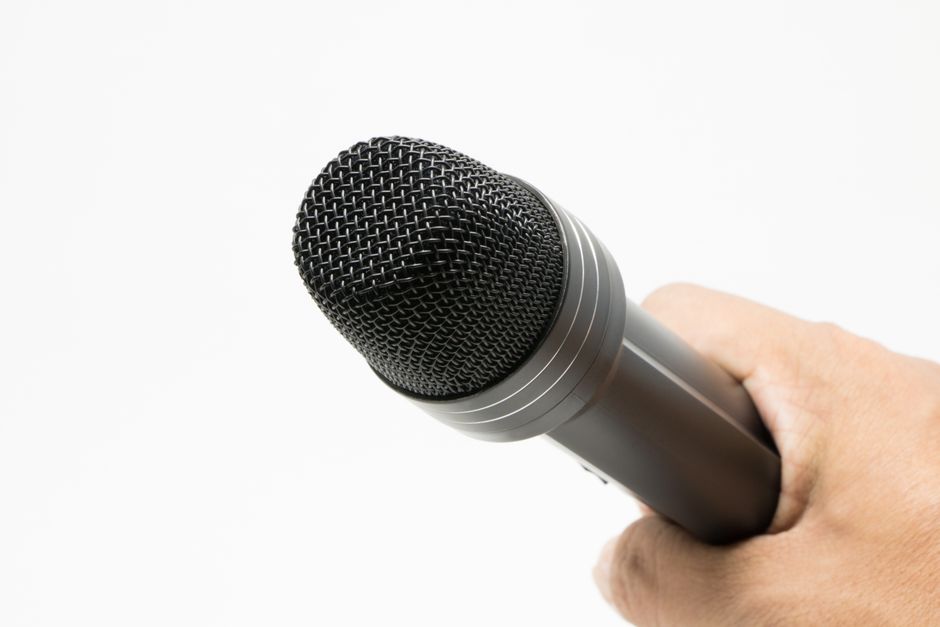
I’ve tested or heard side-by-side recordings from all of these. No sponsored picks. No affiliate links. Just what I’d tell a friend starting a podcast tomorrow.
| Mic | Type | Street Price | Best For | Weakness |
|---|---|---|---|---|
| Audio-Technica ATR2100x-USB | Dynamic | $79 | Untreated rooms, dual USB/XLR output | Darker tone, needs more gain |
| Samson Q2U | Dynamic | $69 | Budget XLR path, travel kits | Plasticky build, average headphone amp |
| FIFINE K688 | Dynamic | $59 | Cheapest usable dynamic, voice isolation | Muffled highs, no XLR |
| Audio-Technica AT2026USB-X | Condenser | $99 | Treated rooms, maximum vocal detail | Picks up everything in the room |
| Razer Seiren Mini | Condenser | $49 | Absolute cheapest decent option, small desks | No headphone jack, no gain control |
My pick for most podcasters: the Samson Q2U. It’s $69, has both USB and XLR, includes a desk stand and cables in the box, and sounds close enough to the ATR2100x that the $10 difference is pure savings. When you eventually upgrade to an audio interface, the Q2U still works as an XLR mic. That’s future-proofing no condenser in this range offers.
If your room is treated — acoustic panels, carpet, curtains, no hard parallel walls — the AT2026USB-X at $99 gives you noticeably more vocal detail and air. But it will expose every flaw in an untreated room. Keyboard clicks, chair squeaks, the neighbor’s dog. Treat the room first.
Where Budget Mics Actually Fail
I’ll be blunt: the mic is rarely the problem. The problems are:
- Mic placement. People put the mic two feet away and wonder why they sound distant. A USB mic should be 4-8 inches from your mouth, slightly off-axis to avoid plosives. This single fix matters more than any mic upgrade.
- No pop filter. P and B sounds create a blast of air that overloads the capsule. A $10 nylon pop filter or even a sock over a wire hanger fixes this. The included foam windscreens on budget mics are barely adequate.
- USB bus noise. Plugging a mic into a cheap USB hub or a front-panel port on a desktop PC can introduce a whine. Plug directly into a motherboard port on the back of the PC. On a laptop, use a powered USB hub if you hear noise.
- Recording in a bad room. A condenser in a bare-walled room sounds like you’re in a bathroom. Hang a blanket behind you. Put a rug on the floor. Anything soft breaks up reflections.
Fix these four things and a $49 Razer Seiren Mini will sound better than a $150 mic with none of them addressed.
When NOT to Buy a USB Mic
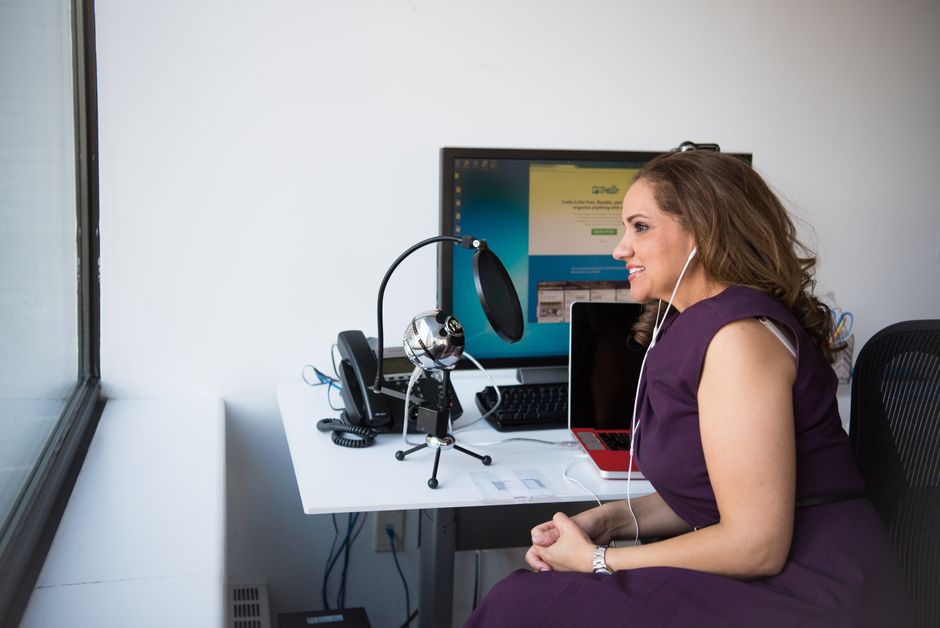
If you’re recording two or more people in the same room, skip USB entirely. Multi-USB-mic setups on one computer are a driver nightmare. Windows sees two USB audio devices as separate clocks and they drift out of sync over long recordings. You’ll spend hours fixing audio drift in post.
For two people, get a cheap 2-input audio interface like the Behringer UMC202HD ($79) and two XLR dynamic mics like the Behringer XM8500 ($25 each). Total cost: about $130. Slightly over budget, but it actually works reliably. Two USB mics on one PC is a support ticket, not a solution.
Also skip USB if you already own an audio interface. You’d be paying for a USB preamp and ADC you don’t need. A used Shure SM58 ($60-80) into your existing interface beats any USB mic under $100 for voice.
What Actually Matters in Post-Production
The biggest lie in budget audio is that the right mic means no editing. Wrong. Every podcast needs post-production, and the right chain does more than any mic upgrade.
Minimal signal chain for spoken word:
- High-pass filter at 80Hz. Removes rumble, desk bumps, AC hum. Takes 5 seconds.
- Light compression. 3-4dB of gain reduction at a 4:1 ratio. Evens out volume swings without sounding squashed.
- De-esser if needed. If your S sounds are harsh, a de-esser at 5-7kHz tames them. Not always necessary.
- Loudness normalization to -16 LUFS. This is the podcast standard. Your episode will match every other podcast in volume. Most DAWs and even Audacity do this in one click.
This chain, applied to a $49 mic, sounds more professional than a raw recording from a $300 mic. I’ve heard it. The processing matters more than the transducer once you’re past the “not garbage” threshold, and every mic on the table above clears that threshold.
Quick Answers to Questions I Get
Do I need an audio interface for a USB mic?
No. That’s the point. The mic has a built-in preamp and analog-to-digital converter. Plug it in, select it as your input, record.
Can I use a USB mic with my phone?
Some work with a USB-C to USB-A adapter, but phone power delivery is inconsistent. The Samson Q2U and ATR2100x-USB generally work on Android with an OTG adapter. iPhone support is less reliable. If you’re recording on a phone, test before you commit to a workflow.
What’s the difference between the ATR2100x and the old ATR2100?
The ATR2100x added USB-C and a better headphone output. The capsule is the same. If you find a used original ATR2100 for $40, buy it. It sounds identical.
Is 24-bit recording worth it?
For podcasting, no. 16-bit/48kHz is more than enough. The extra bits help when recording very quiet sources that you’ll boost heavily in post. A voice recording at normal speaking levels doesn’t need it.
The Verdict
Stop overthinking the mic. Buy the Samson Q2U for $69. Spend the remaining $30 of your $100 budget on a pop filter and some acoustic panels or a heavy blanket for the wall behind you. Record with the mic 6 inches from your mouth. Apply the four-step post chain. Your podcast will sound better than 80% of what’s out there.
If you have a treated room and want maximum vocal detail, the AT2026USB-X is the upgrade pick. If you’re on a strict budget, the Razer Seiren Mini at $49 is the floor — usable, but no headphone monitoring is a real limitation you’ll feel quickly.
The mic is not your bottleneck. The room is. Fix that first.