Lizzy McAlpine: five seconds flat review – indie-folk star raises the stakes

She may be yet to firmly establish her own distinctive sound, but Lizzy McAlpine strikes gold on several occasions on this sophomore LP destined to be one of the more compelling and consistent breakup albums of the year.

There’s a remarkable moment about seven minutes into Lizzy McAlpine’s second album, five seconds flat. After two verses and choruses with building menace, a bridge sees McAlpine’s belted vocals almost entirely consumed by a pair of battling, distorted synth lines that switch violently from one ear to the other and back again. Supported by the throb of an electronic kick drum and a gunshot-like snare sound, the result is a gutsy minute or two of industrial-leaning electronic music before McAlpine takes back control by way of an acoustic guitar breakdown, bringing the various musical strands of the masterful erase me back together for the big denouement. This meshing of acoustic and electronic instrumentation – often considered risky or plainly wrong by much of the modern pop industry – is totally uncharted territory for McAlpine, an artist much more used to the comfortable, folk constraints of an acoustic guitar and perhaps the occasional upright piano. Take her excellent 2021 project, When The World Stopped Moving, which unpacked the global trauma of the pandemic with intimate, acoustic solo recordings, putting a spotlight on McAlpine’s outstanding vocal ability in the process. To hear just a few moments of her now delving into electronic pop with such spectacular results is hugely promising.

Elsewhere on the singer-songwriter’s sophomore effort there are plenty more surprises to enjoy. all my ghosts, for instance, finds itself wading deeper and deeper into indie rock territory as the song progresses, culminating in a spectacular final minute. The saccarine sentimentalism of McAlpine’s debut album still lingers (“You got a Slurpee for free / I caught you lookin’ at me in the 7-Eleven”), but this time its accompanied by musical fireworks by way of sparkling performance from McAlpine’s band. By contrast, an ego thing‘s quirky minimalism wouldn’t sound out of place on a Billie Eilish record, with Eilish’s uncomfortably close ASMR whispers traded for McAlpine’s bell-clear, Broadway-ready vocals.

Besides showcasing risks that McAlpine’s debut album so sorely lacked, five seconds flat excels as an album clearly thought out and smartly executed. Halloween themes are established by stark opener doomsday and crop up throughout the following 13 tracks. It’s a strong, excellently produced opener, although the obvious extended funeral metaphor for the breakup in question comes across as somewhat lazy. The driving metaphor of reckless driving is even more laboured and uninspired (“Would you hold me when we crash or would you let me go?”), but an exciting crescendo to finish before a abrupt finish (presumably the car crash in question) partly saves the song.

Spacey follow-up weird feels appropriately like an exploration of the afterlife, and the intimate vocals and distant percussion and guitars lend it the same vaguely comforting feeling of a Phoebe Bridgers song with slightly less poetic lyrics. ceilings is a much better display of McAlpine’s lyrical ability, describing an idyllic young love that turns out to be entirely imaginary by the time we reach a devastating final chorus. The country-tinged instrumentation – complete with a beautiful strings arrangement – is utterly gorgeous, and McAlpine’s delicately sung melody floats above it all like a butterfly. Compositionally, it may be the least ambitious moment on the whole album, but it also happens to be one of the most exquisite acoustic ballads McAlpine has ever written – and she’s written many.

Just when the album begins to get a little emotionally heavy, McAlpine hits us with firearm, a power pop left hook that attempts the success of similar recent attempts at noisy rock from both Eilish and Bridgers. five seconds flat‘s rock moment is not quite as explosive or expansive as Happier Than Ever or I Know The End, but it does still pack a punch, with McAlpine at one point asking whether a breakup was over “fame or the lack thereof”, having been convinced that she was loved. As McAlpine returns to her usual acoustic guitar moments later, there’s a sense that the pure anger just showcased hasn’t gone away completely but has rather been bottled back up inside her, ready to be unleashed again whenever she sees fit. I can only hope McAlpine lets her inner anger out more often on future releases.

nobody likes a secret and chemtrails are much less stylistically interesting, but the latter is a particularly heartbreaking elegy to McAlpine’s father. “I see chemtrails in the sky, but I don’t see the plane,” McAlpine sings poignantly, reflecting on the impact her father has made on her, even after his passing. Wistful home audio recordings close the track, and the goofy “goodnight!” from a young Lizzy feels like a more permanent goodbye. Fast-pased indie pop track orange show speedway ends the album nicely, suitably restrained in its cheeriness in the wake of chemtrails.

Looking back on the album in its entirety, McAlpine’s musical style is consitently interesting and varied, almost to a fault. We are yet to hear McAlpine’s definitive sound or hear much to distinguish her from the plethora of similar female American singer-songwriters. That said, this female American singer-songwriter is producing more impressive songs than most, and the sharp stylistic shifts and attention-grabbing production decisions that crop up throughout five seconds flat deserve plenty of praise. Her full potential hasn’t quite been realised yet, but judging by her current forward momentum it won’t be long until McAlpine is producing records even more exciting than this one.

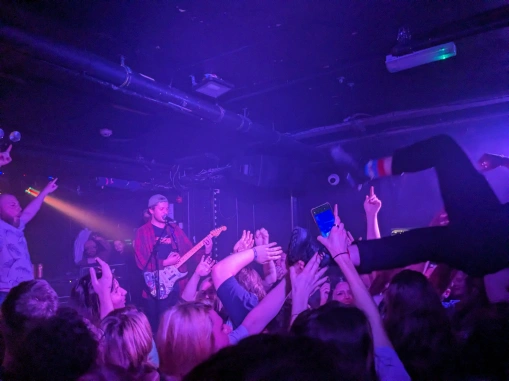
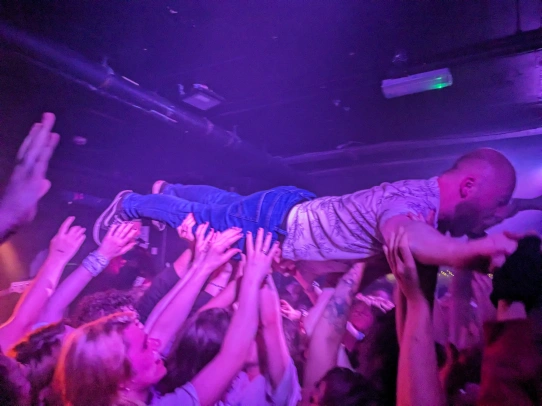
Cory Wong live at Manchester Academy review – utterly tireless

On his first post-pandemic UK performance the prolific funk guitarist aptly delivered a vast amount of music with flair, showmanship and boundless enthusiasm. A strong entourage of improvisers helped compensate for weak songwriting on a night when objective critique became difficult.

Perhaps I haven’t learnt my lesson. Just like a few weeks ago, I found myself sitting in a Mancunian branch of McDonald’s with a familiar posse of friends, fuelling up before another gig for an artist I’ve never quite been convinced by. I didn’t realise it at the time, but I should have seen a potential repeat of my middling experience with Samm Henshaw coming from a mile off.

One thing that I was certain of was that Cory Wong would give us a proper show and a proper horns section (Matt did well to spot the saxophone on stage ahead of time). The rubber wristed guitarist doesn’t seem to do anything but perform, be it on one of his extensive UK and US tours or on his own high-budget YouTube talk show. He’s already got a staggering six live albums under his belt (plus a not-too-shabby 12 studio albums). To keep this man away from any sizable venue for longer than six months – let alone the nigh-on three year gap since his last visit to Manchester – is no mean feat. Such a massive output of songs makes it hard to keep on top of it all even from a listener’s perspective, and even the most eager Wong fans amongst my friends happily admitted that listening to every Wong album was a level of commitment they were not quite prepared for. Picking out songs to watch for was made doubly hard by the fact Wong is such a frequent collaborator – standout tracks Golden and Cosmic Sans required surprise appearances from Cody Fry and Tom Misch which, despite our crossed fingers, never quite came to fruition.

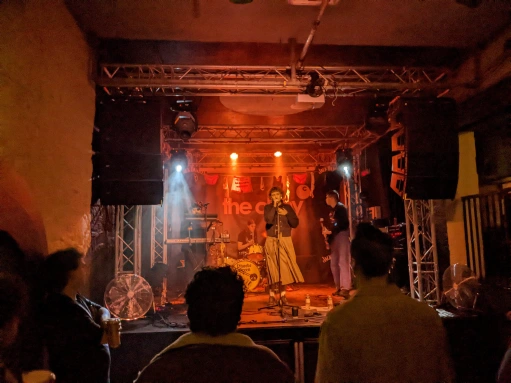
There was nonetheless a strong lineup in support of Wong in the uninspiring black box of Manchester Academy. Kevin Gastonguay, for instance, was a machine both on his Nord keyboard and Hammond B3, his improvisations often adding a pleasant touch of adventurous jazz fusion to the set. Petar Janjic was also a standout performer on drums, delivering thunderous solos occasionally followed by a triumphant flip of the sticks or a knowing smile to Wong. Then there was saxophonist and former BBC Young Jazz Musician of the Year Alexander Bone (Wong claimed he was a local to the crowd’s delight, but after a bit of research I’m not so sure), the best of a three-part horn section. His solos steered clear of showy high notes of rapid passages, instead offering tastefully controlled builds that melded well with Wong’s compositions.

Wong himself, model-like with his pearly whites and showbiz suit that nicely matched his signature stratocaster, of course provided an impeccable performance on guitar, refusing to stop moving on even his softer, calmer tracks. His solos tended to be the most expansive and often headed for scratchy classic rock finales before slick transitions back to rhythm guitar playing. Home and Meditation were some of the more spectacular slow burners, even if the material Wong was basing his solos on was rarely particularly compelling.

Therein lies the problem with Wong’s music: attempting to put the texture-building discipline of rhythm guitar front and centre is a challenge he has never quite lived up to. Too often his guitar hooks are colourless and repetitive (take Lilypad for example) and his funk-by-numbers grooves tend to have few defining features. Often it took a standout performance from the rest of the band for the show to reach its best moments. Frenzied Assassin, for instance, was an exciting listen impressively performed by Bone, but tellingly a tune which saw Wong’s guitar sit behind the more interesting horns section. St. Paul was another highlight that nicely showed off just how unbelievably tight the rhythm section was, with its razor sharp stops and showstopping drum fills. Gastonguay’s bluesy piano solo was also one of the best of the evening. On no song did it feel like the band had even a frissen of sloppiness – this was funk at its most crystal clean, and the level of sheer talent onstage was dazzling.

Screeching guitar solos often had Wong squirming

The gig’s biggest challenge was just how long it was. In typical Wong style, we were dealt well over two hours of funk, which got tiring even despite the interval. The show wasn’t completely without light and shade, but much of the runtime was spent with so-so funk numbers that had a tendency to merge into one. It was all easy listening, but such a long show demanded a little more variety. Perhaps a solo number from Wong might have been what the evening needed; that or a larger selection of sure-fire hits, which Wong seems to be lacking, at least without the support of a surprise guest vocalist. What was impressive was just how well Wong and his band maintained their high-energy displays of musicianship. Never did it feel like any single player was tiring throughout the night, and Wong bounced around like an excited toddler both at the very beginning and very end of the performance.

I found myself struggling as the show grew to its finish, but not just due to my reservations about Wong’s performance. I was feeling increasingly ill and in need of water, and my nausea fuelled panic which fuelled more nausea. Once Wong had finished a particularly lengthy-seeming song I shouted an explanation over the loud applause in my friend Manon’s ear and queasily made my way to the bar, hands beginning to tingle.

Sitting on the floor in the nicely chilled foyer with a pint of water beside me I felt some relief, although I was missing the entire climax of Wong’s set. It took fifteen minutes and a familiar song to get me back on my feet and to the back of the crowd. If there was a bass line that could cure any ailment it would be that of Dean Town, a Vulfpeck cult classic and the ultimate crowd-pleasing set closer. I was a little sad as I watched the tune come and go from a distance, the audience singing the through-composed bass line note by note as is Vulfpeck tradition. It should have been an ecstatic highlight. Instead I was glad it was time to head home.

The crowd was jubilant as Wong and his band performed Dean Town at the end of the set

My aim is to keep my overall criticisms on Undertone as objective as possible, and I’m trying my best to ignore my minor illness on the night when I say that Cory Wong’s show genuinely won’t go down as one of my all-time favourites. The musical ability was undeniable, but more compelling songwriting and a much more concise set were needed if I was to have any hope of ignoring the increasing unease in my stomach. I can see why the crowd around me (and my friends in particular) seemed to love every second of it, but for me this night was one that will live in the memory for mostly the wrong reasons.

Silk Sonic: An Evening with Silk Sonic review – a modern blast from the past

The common take on An Evening with Silk Sonic goes something like this: it’s a flawless recreation of 70s soul and funk, a pure nostalgia trip with no original ideas. That’s half true. The recreation part is undeniable. But calling it “just a copy” misses the point entirely. Bruno Mars and Anderson .Paak didn’t build a time machine — they built a filter. They took the sounds of Al Green, Isaac Hayes, and Curtis Mayfield and squeezed them through modern production techniques. The result isn’t a museum piece. It’s a living, breathing record that sounds like it could have come out in 1972 or 2026. Or 2026.

This review digs into what actually makes the album work, where it stumbles, and whether it holds up four years later. No rose-colored glasses. Just the facts.

Why Silk Sonic works better than most retro albums

Most throwback albums fail because they copy the surface without understanding the engine. They slap on a wah-wah pedal, hire a horn section, and call it a day. The result sounds like a wedding band covering songs the band members don’t actually like.

Silk Sonic avoids that trap for one reason: Anderson .Paak is a real drummer. Not a producer who programs drums. A guy who sits behind a kit and plays. That changes everything. The groove on “Fly as Me” doesn’t come from a sample library. It comes from .Paak’s hands hitting actual snare drums and hi-hats with swing that can’t be quantized. Bruno Mars has said in interviews that they tracked most of the rhythm section live, in the same room, with no click track. That’s why the album breathes. You can hear the micro-timing shifts, the snare hits that land a few milliseconds early, the bass player locking in with a real human drummer instead of a grid.

The other secret is vocal arrangement density. Bruno Mars layers his own background vocals the way Smokey Robinson did for Motown — three or four parts stacked tight, singing actual harmonies instead of just doubling the lead. On “After Last Night,” the background vocals weave around Thundercat’s bass line in a way that sounds effortless but took serious arranging skill. Most pop records in 2026 used sparse vocal stacks, maybe two or three tracks total. Silk Sonic regularly used eight to twelve vocal tracks per song. That thickness is a big reason the album feels “warm” even through headphones.

Does that make it original? No. But originality isn’t the goal. The goal is execution. And Silk Sonic executes at a level most retro acts can’t touch.

What the critics miss

The loudest criticism of the album — that it’s “inauthentic” or “cultural tourism” — ignores the fact that Bruno Mars and Anderson .Paak both grew up playing in cover bands that did exactly these songs. Mars played Elvis and James Brown sets in Honolulu as a teenager. .Paak played drums in church and at weddings. They earned the right to make this album by spending years playing other people’s music before they made their own. That’s not appropriation. That’s apprenticeship.

The three best tracks and why they work

Not every song on the album hits. “Smokin Out the Window” is catchy but feels like a rewrite of “Leave the Door Open” with worse lyrics. “Put on a Smile” drags in the middle. But three tracks stand above the rest.

“Leave the Door Open” — the thesis statement

This is the song that won Record of the Year at the Grammys, and it deserved it. The structure is deceptively simple: verse, pre-chorus, chorus, bridge, outro. But listen to the bass line. It doesn’t just walk — it tells a story. The first verse stays low, playing root notes and fifths. The pre-chorus climbs up the neck, adding tension. The chorus drops back down but with a syncopated rhythm that makes you want to move. That’s classic Motown arranging. The bass isn’t just keeping time. It’s shaping the emotional arc of the song.

The outro is where the magic really happens. Around the 3:30 mark, the band strips down to just drums, bass, and a Rhodes piano. Bruno Mars ad-libs over the top, trading phrases with the horn section. It sounds like a live performance that just happened to get recorded. That looseness is rare in modern pop, where most songs fade out or end on a pre-planned cadence.

“Fly as Me” — the groove champion

This is the most funk-driven track on the album. The horn chart is aggressive — stabs and hits that land on the off-beats, creating a push-pull tension with the drums. Anderson .Paak’s drum part is the highlight. He plays a half-time feel in the verses, then opens up into a full four-on-the-floor groove in the chorus. The transition is seamless because he plays it, doesn’t program it.

The lyrics are pure bravado. “I’m fly as me / I’m fly as me / Can’t nobody be me.” It’s not deep. But it doesn’t need to be. The song is about confidence, and the music backs it up.

“After Last Night” featuring Thundercat and Bootsy Collins

This is the album’s deepest cut and its most adventurous. The track runs five minutes and changes key twice. Thundercat’s bass playing is ridiculous — fast runs, harmonics, slides. Bootsy Collins delivers a spoken-word intro that sounds like a P-Funk sermon. The song shifts from a slow jam into an uptempo funk workout and back again without feeling disjointed.

If you only listen to one song to understand what Silk Sonic is trying to do, make it this one. It shows the full range: balladry, humor, virtuosity, and a genuine love for the source material.

Where the album falls short

I’m not going to pretend this is a perfect album. It has real flaws.

First problem: the album is too short. Nine tracks, 31 minutes. That’s an EP by modern standards. The Beatles’ Abbey Road ran 47 minutes. Stevie Wonder’s Songs in the Key of Life ran 104 minutes. Silk Sonic gives you half an hour and calls it a night. Some of that is intentional — the 70s albums they’re referencing were often 30-35 minutes. But streaming rewards longer projects, and listeners who pay $15 for a vinyl record expect more than nine songs. “Blast Off” is a fun opener but barely two minutes long. It feels like a sketch, not a finished track.

Second problem: lyrical depth is shallow. Almost every song is about romance — falling in love, fighting with a partner, bragging about being desirable. That’s fine for a party album. But there’s no political content, no social commentary, no songs about anything outside the bedroom or the dance floor. Curtis Mayfield wrote about poverty and racism. Marvin Gaye wrote about war and environmental destruction. Silk Sonic writes about “you and me” exclusively. That limits the album’s emotional range. You can’t put it on when you’re processing something heavy. It only works when you want to feel good.

Third problem: the production is too clean. This is a weird complaint to make about a retro album, but the mix is almost too polished. The 70s records they’re copying had tape hiss, room bleed, and occasional distortion from overdriven consoles. Silk Sonic’s recording is pristine. Every vocal is tuned (though subtly). Every drum hit is gated and compressed. It sounds like a 70s record that got washed through a modern digital filter. Some people prefer that. I miss the grit.

Track Length Key Notable Feature
Leave the Door Open 4:02 D minor Live outro ad-libs
Fly as Me 3:39 E minor Anderson .Paak’s half-time drum feel
After Last Night 4:09 F# minor / A major Thundercat bass solo
Smokin Out the Window 3:17 G major Piano-driven bridge
Put on a Smile 4:15 C major Slowest tempo on album (68 BPM)

How Silk Sonic compares to other neo-soul throwbacks

Silk Sonic wasn’t the first retro-soul revival act, and it won’t be the last. Here’s how it stacks up against the competition.

Leon Bridges — His 2015 album Coming Home is the closest comparison. Bridges also channels 60s soul, but his sound is more Sam Cooke than Isaac Hayes. His production is sparser — just guitar, bass, drums, and vocals. Silk Sonic is bigger, louder, and more theatrical. Bridges wins on sincerity. Silk Sonic wins on showmanship.

Anderson .Paak’s solo workMalibu (2016) and Ventura (2019) both lean into retro soul, but with more hip-hop influence. .Paak raps on those albums. He doesn’t rap on Silk Sonic. If you want the .Paak experience with more edge, go back to Malibu. If you want pure funk and crooning, Silk Sonic is the better pick.

Bruno Mars’s earlier albums24K Magic (2016) already moved toward a retro sound. Silk Sonic just pushes further. The difference is the collaboration. Mars alone tends to dominate a track. With .Paak, he shares the spotlight, and the music benefits from the tension between two strong personalities.

Daptone Records acts — Artists like Charles Bradley and Sharon Jones & the Dap-Kings recorded on vintage equipment with no digital trickery. Their albums sound genuinely old. Silk Sonic sounds like a modern interpretation of old. If authenticity to the era matters most, Daptone wins. If you want a cleaner, more accessible version of that sound, go with Silk Sonic.

When NOT to buy this album

Don’t buy An Evening with Silk Sonic if you want:

  • Lyrical depth or political commentary
  • Experimental or avant-garde music
  • A long listening experience (over 40 minutes)
  • Raw, lo-fi production with tape hiss and imperfections
  • Hip-hop or R&B with modern trap beats

This album is for people who want to feel good for 31 minutes and don’t mind that the lyrics are simple. It’s a party record. Treat it like one.

The verdict: a modern blast from the past that mostly delivers

An Evening with Silk Sonic succeeds because it understands that retro music isn’t about copying — it’s about translating. Bruno Mars and Anderson .Paak took the vocabulary of 70s soul and funk and wrote new sentences with it. The execution is world-class. The vocals are stacked thick. The drums swing. The horn charts hit. The bass lines tell stories.

But the album is too short, the lyrics are shallow, and the production is too clean for anyone who wants genuine grit. It’s not a masterpiece. It’s a really good party album by two incredibly talented musicians who know exactly what they’re doing.

If you want a fun, well-executed throwback that sounds great on a good stereo, buy it. If you want depth or innovation, look elsewhere. For a 31-minute burst of pure, polished funk, this is the best option you’ll find. Put it on, turn it up, and don’t think too hard.

Cory Wong: Wong’s Cafe review – nothing new from a band in disguise

You’ve heard this album before. I don’t mean you’ve heard similar songs — I mean you’ve literally heard these exact chord voicings, these exact snare drum hits, these exact horn stabs. Wong’s Cafe isn’t a Cory Wong solo record. It’s a Vulfpeck album with a different name on the cover, and that’s the problem.

I’ve been following Cory Wong since his 2017 album The Optimist. I saw him live at the Troubadour in 2019. I own his signature Fender Stratocaster ($1,399). So when I say this album feels phoned in, I’m not some random hater — I’m someone who wanted to love it.

Let me break down exactly what went wrong, what’s still worth your time, and what you should listen to instead.

What is Wong’s Cafe actually trying to do?

Conceptually, Wong’s Cafe is a “cafe jazz” album — laid-back, instrumental, meant to evoke a coffee shop vibe at 10 AM on a Saturday. Cory described it as “the soundtrack to your morning pour-over.” That sounds nice on paper.

But here’s the thing: cafe jazz already has a canon. Bill Evans’ Sunday at the Village Vanguard (1961). Vince Guaraldi’s A Charlie Brown Christmas (1965). Even modern stuff like Kikagaku Moyo’s Masana Temples (2018) does the “relaxed but interesting” thing better. Wong’s Cafe doesn’t add anything to that conversation.

The problem isn’t that it’s derivative — lots of good music is derivative. The problem is that it’s derivative of Cory Wong himself. Every track recycles the same rhythmic tricks he’s used since 2016. The “chank” guitar muting. The 16th-note hi-hat patterns. The horns playing the exact same syncopated stabs.

It’s not bad music. It’s just… nothing new.

The Vulfpeck problem

Cory Wong is a member of Vulfpeck. Joe Dart (bass) and Nate Smith (drums) play on this album. The engineer is the same guy who records Vulfpeck. The mix has that same dry, punchy, “recorded in a living room” sound.

If you swapped the album title to Vulfpeck: Wong’s Cafe, nobody would blink. That’s the issue. This isn’t a Cory Wong solo statement — it’s a Vulfpeck side project wearing a disguise. And Vulfpeck already released The Joy of Music, The Job of Real Estate in 2026, which did this exact sound better.

Track-by-track: where it works and where it doesn’t

“Cafe Mocha” (track 1) opens with a guitar melody that sounds like it was lifted from The Optimist (2017). Same open-string voicings. Same tempo. Same dynamics. It’s pleasant. It’s also forgettable.

“The Pour Over” (track 4) tries to build tension with a bass ostinato, but it never goes anywhere. Joe Dart plays the same 4-bar loop for 3 minutes. No bridge. No key change. No real solo. It’s a loop, not a song.

“Closing Time” (track 8) is the best track — a slow 6/8 ballad with actual harmonic movement. Cory’s tone is warm, and there’s space in the arrangement. It’s the only track that feels like it belongs on a cafe jazz album. But one good track out of ten isn’t a good ratio.

What went wrong: the three biggest failures

I’ve listened to this album six times through. Here are the specific things that bother me.

  1. No dynamic range. Every track sits at the same volume — about 75-80 dB average. There’s no quiet moment that makes the loud parts hit harder. Compare this to Snarky Puppy’s We Like It Here (2014), where “Something” drops to a whisper before the horn section hits. That’s arrangement. Wong’s Cafe has none of that.
  2. Over-reliance on the “chank.” Cory’s signature guitar technique is the percussive muted strum. It’s great in small doses. But when every song has the exact same rhythmic pattern — downbeat muted, upbeat open — it stops being a signature and starts being a crutch. I counted: 7 out of 10 tracks use the exact same chank pattern.
  3. No vocal hooks. I get that this is an instrumental album. But instrumental albums need melodic hooks to replace the voice. Think about what makes Kikagaku Moyo work — their guitar melodies are singable. Wong’s Cafe has no melodies you’ll hum after the album ends. None.

Common mistake: confusing “relaxed” with “uninteresting”

A lot of people will defend this album by saying “it’s meant to be background music.” I hate that argument. Background music can still have depth. Brian Eno’s Music for Airports (1978) is background music — but it has structure, texture, and evolution. Wong’s Cafe is background music in the worst sense: it’s so predictable that your brain tunes it out completely. That’s not relaxing. That’s boring.

If you want cafe jazz that actually holds your attention, listen to Julian Lage’s “Squint” (2026). Lage uses space, silence, and unexpected chord substitutions. His playing is relaxed but never lazy. The difference is night and day.

Who should buy this album — and who should skip it entirely

Buy this if… Skip this if…
You’re a completionist who owns every Vulfpeck release You want an album with actual harmonic or rhythmic variety
You need 35 minutes of inoffensive background music for a dinner party You’ve listened to any Cory Wong album from 2018-2026
You’re a guitar player studying Cory’s chank technique You want a record that takes risks or surprises you
You like dry, punchy production with no reverb You prefer albums with dynamic range and emotional arc

I’ll be blunt: if you already own The Optimist (2017), Motivational Music for the Syncopated Soul (2019), or Elevator Music for an Elevated Mood (2026), you already own Wong’s Cafe. It’s the same musical vocabulary, just with a coffee shop theme slapped on top.

When NOT to buy Wong’s Cafe

If you’re new to Cory Wong’s music, do NOT start here. Start with The Optimist — that album has actual songwriting, vocal features, and a wider emotional range. Wong’s Cafe is for fans who already know the catalog and want more of the same. It’s not an entry point.

Also, if you’re looking for a cafe jazz album to actually play in a cafe, skip this. Real cafe owners I know use playlists with Bill Evans Trio, Esbjörn Svensson Trio, or GoGo Penguin. Those records have the energy to keep a room alive without being intrusive. Wong’s Cafe is too flat — it makes the room feel empty.

Better alternatives: what to listen to instead

If you want the “cafe jazz” vibe done right, here are five albums that actually deliver.

  1. Bill Evans Trio – Sunday at the Village Vanguard (1961) – The gold standard. $13 on vinyl. Every track has harmonic tension and release. Evans’ piano playing is conversational — it breathes.
  2. Julian Lage – Squint (2026) – $10 digital. Guitar trio with bass and drums. Lage uses silence as a rhythmic tool. The track “Short Stop” is a masterclass in dynamic control.
  3. GoGo Penguin – v2.0 (2014) – $12 CD. Modern acoustic-electronica fusion. The piano/bass/drums trio creates huge soundscapes. “Murmuration” builds from a whisper to a roar.
  4. Kikagaku Moyo – Masana Temples (2018) – $15 vinyl. Japanese psych-folk with acoustic guitars and sitar. Relaxed but never boring. “Orange Peel” has a melody that sticks in your head for days.
  5. Cory Wong – The Optimist (2017) – $10 digital. If you want Cory Wong at his best, this is it. Actual song structures. Guest vocals from Antwaun Stanley. The track “I’m a Man” has a bridge that modulates into a completely different key — something Wong’s Cafe doesn’t attempt once.

The real issue: creative stagnation

I don’t think Wong’s Cafe is a bad album. It’s a safe album. And safe is worse than bad, because bad at least tries something and fails. Safe doesn’t try at all.

Cory Wong has been making the same album since 2017. The production gets cleaner, the guests get bigger, but the core musical ideas haven’t evolved. Compare him to someone like Mark Lettieri (guitarist for Snarky Puppy), who released Deep: The Baritone Sessions Vol. 2 in 2026 — a record that explores baritone guitar textures, odd time signatures, and ambient soundscapes. That’s growth. Wong’s Cafe is standing still.

I’m not saying Cory needs to abandon his sound. But when you release an album called Wong’s Cafe that sounds exactly like every other Wong album, you’re not making a statement — you’re making inventory.

Final verdict: skip it unless you’re a diehard

If you’ve read this far, you already know the answer. Wong’s Cafe ($10 digital, $20 vinyl) is for completionists only. If you own three or more Cory Wong albums, you’ll probably buy this anyway, and you’ll probably enjoy it in the moment. But you won’t remember it a month later.

For everyone else: spend your $10 on Julian Lage’s Squint or GoGo Penguin’s v2.0. You’ll get the relaxed instrumental vibe with actual musical substance. Or better yet, put on Bill Evans and make your own pour-over. That’s the cafe experience Wong’s Cafe wishes it could deliver.

Sons of Kemet live at Gorilla review – a tour de force of British jazz

On a damp Tuesday night in Manchester, Gorilla felt less like a venue and more like a pressure cooker. The room was full an hour before the band took the stage. Not with people waiting politely. With people who knew what was coming.

Sons of Kemet are not a band you ease into. Two drummers, a tuba, and Shabaka Hutchings on saxophones and clarinet. No guitar. No piano. No bass. The rhythm section is the entire engine. And at Gorilla, that engine ran hot for 90 minutes straight.

What makes Sons of Kemet different from every other jazz band touring right now

Most jazz quartets follow a predictable architecture. Saxophone takes the melody. Piano or guitar comps behind it. Bass walks the changes. Drums keeps time. Sons of Kemet threw that blueprint out and burned it.

The lineup is the story. Two drummers — Eddie Hick and Tom Skinner — sit opposite each other, playing interlocking patterns that feel more like a West African drum choir than a jazz rhythm section. They don’t trade solos. They build polyrhythms that stack on top of each other until the room vibrates.

Theon Cross plays tuba. Not as a bass substitute. He plays melodic lines, walking bass, and percussive pops all at once. On stage, he’s the quiet anchor. His tuba lines lock the two drummers together while Hutchings floats over the top.

Hutchings himself is the wildcard. He switches between tenor sax, soprano sax, and bass clarinet mid-set. His playing is not polite. He overblows, growls, and uses circular breathing to hold notes that seem to last forever.

This is not background music. You cannot talk over it. The band demands your full attention, and at Gorilla, they got it.

The absence of harmony instruments

No piano or guitar means no chords. The entire harmonic structure comes from Cross’s tuba and Hutchings’s saxophone. That forces the music into a different space. Melodies are simpler. Rhythms are everything. It’s closer to Fela Kuti’s Afrobeat or the Art Ensemble of Chicago than anything from the Blue Note catalog.

If you’re new to this sound, start with Your Queen Is a Reptile (2018). That album captures the live energy better than their earlier records. But even that record doesn’t prepare you for the physical force of two drummers playing at full volume in a room that holds 500 people.

The setlist: what they played and why it matters

The band played material from all four studio albums, but the set leaned heavily on Your Queen Is a Reptile and Black to the Future (2026).

\

Song Album Live highlight
Hustle Your Queen Is a Reptile Cross’s tuba solo. 2 minutes of pure low-end power.
My Queen Is Ada Eastman Your Queen Is a Reptile Hutchings played bass clarinet. The crowd sang the riff back.
Pick Up Your Burning Cross Black to the Future Fastest tempo of the night. Drummers were visibly sweating.
Think of Home Black to the Future Slower, more meditative. Hutchings played soprano sax.
In the Castle of My Skin Black to the Future 13-minute extended version. The band left the stage one by one, leaving Hick alone on drums for the final 3 minutes.

Every song was extended. The shortest piece ran 8 minutes. The longest pushed past 15. That’s not self-indulgence. The band needs that time to build the rhythmic layers. A 4-minute version of a Sons of Kemet song would be like serving a steak still raw.

How the sound at Gorilla shaped the show

Gorilla is a converted railway warehouse under the Mancunian Way. The ceiling is high. The walls are brick. The floor is flat. That combination creates a specific acoustic challenge: low frequencies can turn to mud, and drums can ring out longer than they should.

The sound engineer made smart choices. The tuba was DI’d through the PA rather than miked from the bell. That gave Cross’s low end clarity without boom. The kick drums were gated tightly to avoid bleed into the toms. Hutchings’s sax was the only instrument with reverb, and it was set dry — just enough to give space without washing out the rhythm section.

Standing at the front, near the left speaker stack, the kick drums hit your chest. Standing at the back, near the bar, the mix was more balanced but quieter. The sweet spot was center, about 10 rows back. That’s where the two drummers’ patterns locked into a single pulse.

Gorilla’s capacity is 550. The show was sold out. The crowd was mixed — older jazz heads in their 50s, students from the Royal Northern College of Music, and younger fans drawn by Hutchings’s work with The Comet Is Coming. Nobody stood still.

What the critics get wrong about Sons of Kemet

You’ll read reviews that call them “political jazz” or “protest music.” That’s lazy shorthand. Yes, Black to the Future has explicit political content — the title track references police violence and colonial history. But reducing the band to a message misses the point.

The politics is in the sound, not just the lyrics. Two Black British drummers playing Caribbean rhythms through a jazz framework. A Black British tuba player using an instrument historically associated with European marching bands to play funk lines. A saxophonist who studied in Barbados and brings that Caribbean phrasing into every solo. The music itself is the statement.

Another common criticism: the songs are too long. I’ve read reviews calling the extended jams “self-indulgent.” That’s a misunderstanding of how the band works. The length is structural. You need time to build the polyrhythms. You need time for the tuba and sax to find the melody within the rhythm. A 7-minute version of “In the Castle of My Skin” wouldn’t work. The song is the journey.

If you want tight 4-minute songs with verse-chorus structure, do not go to a Sons of Kemet show. You will be bored. Go see a pop band. This is music that asks you to sit with discomfort and repetition until the release comes.

How to get the most out of a Sons of Kemet live show

I’ve seen them four times now — once at a festival, twice at smaller venues, and this night at Gorilla. Here’s what I’ve learned.

  • Arrive early. The opening act matters. At Gorilla, the support was Manchester-based trumpeter Matthew Halsall. His quartet played a 30-minute set of modal jazz that set the right mood. Arriving late means missing the context.
  • Stand near the front, but not dead center. The drummers face each other. Standing slightly to one side lets you see the interaction between Hick and Skinner. That visual is half the show.
  • Do not talk during the quiet sections. There are moments when the band drops to near-silence — Cross playing a single note, Hutchings breathing into the horn. The crowd at Gorilla respected those moments. If you’re going to chat, go to the bar.
  • Bring earplugs. The drums are loud. Not “loud for a jazz show.” Loud. I wear Etymotic ER20XS plugs ($20). They cut the high-end harshness without muffling the mids. You’ll hear the tuba better with them in.
  • Stay for the encore. At Gorilla, the band came back for one song: a cover of John Coltrane’s “Africa.” It wasn’t on any setlist. It was a gift. If you leave early, you miss the best part.

Alternatives: when you should skip Sons of Kemet and see something else

I love this band. But they are not for everyone. Here’s when you should skip them.

If you want quiet, contemplative jazz — the kind you can read a book to — go see the Brad Mehldau Trio or Bill Frisell. Sons of Kemet is the opposite of that.

If you want traditional bebop or hard bop, you will be confused. This is not Charlie Parker. This is not Art Blakey. The rhythms are Caribbean and West African. The solos are long and repetitive. The tuba is not a joke instrument here — it’s the harmonic foundation.

If you have a low tolerance for volume, sit at the back or skip it entirely. The drummers play hard. The tuba is amplified. The saxophone cuts through everything. It is a loud band.

If you want to hear Shabaka Hutchings in a more accessible setting, see The Comet Is Coming. That band adds keyboards and electronic effects. The songs are shorter. The crowd is younger. It’s still intense, but it’s more danceable and less confrontational.

Final verdict: is a Sons of Kemet live show worth your time and money?

Tickets for the Gorilla show were £28.50 including fees. For 90 minutes of live music from four of the most technically gifted musicians in British jazz, that’s a fair price. You’ll pay more for a bad seat at a stadium show by a legacy act who mimes half the set.

This is not a casual listen. This is music that demands something from you. If you give it your attention, you get back a physical experience that recordings cannot replicate. The polyrhythms hit different when you feel them through the floor. The tuba sounds different when it shakes your ribcage.

If you’re in the UK and they tour again in 2026, buy the ticket. Stand near the front. Leave your phone in your pocket. Let the drums do the work.

Sam Fender: Seventeen Going Under review – arena-worthy classics to feed the soul

Sam Fender’s second album Seventeen Going Under isn’t just a step up from his debut. It’s a leap. Where Hypersonic Missiles (2019) felt like a promising but uneven collection of Springsteen-indebted anthems, this record lands every punch. It’s tighter, braver, and somehow both more personal and more universal. If you want an album that sounds like a stadium show in your headphones, this is it.

I’ve listened to this record front to back maybe thirty times since it dropped in 2026. It hasn’t aged a day. Here’s why it works, track by track, and why you should care.

Why Seventeen Going Under hits harder than Hypersonic Missiles

The difference is focus. Hypersonic Missiles had big ideas—climate anxiety, toxic masculinity, political rot—but sometimes the songs felt like they were trying to carry too much weight. Seventeen Going Under narrows the lens to one thing: growing up in a working-class town in North East England. That specificity is its superpower.

Fender wrote most of this album during lockdown, revisiting his teenage years in North Shields. The title track alone—a driving, sax-laced anthem about poverty, pride, and survival—contains more lived-in detail than entire albums from other artists. “I was seventeen going under / I was top of the class / but I felt like a failure”—that’s not a vague sentiment. It’s a specific memory, and it lands because of it.

The production, handled by Bramwell Bronte (who also worked on Hypersonic Missiles), is cleaner and more dynamic. The guitars bite harder. The drums hit like a punch. The saxophone—a signature Fender move—is used sparingly but perfectly. It never feels like a gimmick.

If you only know Fender from radio singles, this album will surprise you. It’s not just louder. It’s smarter.

The three songs that define the album

Not every track is essential. But these three are. If you’re short on time, start here.

“Seventeen Going Under” (the title track)

This is the mission statement. A four-minute sprint built on a chugging guitar riff, a four-on-the-floor drum pattern, and a chorus that demands to be shouted back at a festival crowd. Lyrically, it’s about the pressure of being a teenager in a town where options are limited. “I was crying on the steps of the bus / I was crying on the steps of the bus / And it was just like me to make a scene.”

The video, directed by Vincent Haycock, features actual teenagers from North Shields. It’s not sentimental. It’s raw. This song has already become an anthem for anyone who grew up feeling trapped. It deserves to be.

“Spit of You”

The most moving song on the album. A slow-burning ballad about the complicated relationship between a father and son. Fender’s voice cracks on the line “I’m the spit of you”—and it’s not a compliment. It’s a confession of inherited flaws, of seeing yourself in someone you both love and resent. The arrangement is minimal: acoustic guitar, strings, a quiet build. Then the drums crash in for the final chorus. It’s devastating.

This song is the emotional core of the record. If you don’t feel something during the last minute, check your pulse.

“Aye”

The closer. A seven-minute epic that starts with a single piano note and builds into a full-band crescendo. Lyrically, it’s about the death of Fender’s grandmother, but it expands into a meditation on grief, memory, and the way places hold the ghosts of people we’ve lost. The saxophone solo in the middle eight is the best instrumental moment on the album. It sounds like crying.

This is the kind of song that makes you want to see the band live. It’s built for a room full of people singing along.

How the album works as a live experience

I saw Sam Fender at the O2 Academy in Brixton in 2026. The room was packed. The energy was electric. But what struck me most was how the album tracks translated to a live setting.

Seventeen Going Under was written with the stage in mind. The dynamics are theatrical. The quiet parts are very quiet. The loud parts are deafening. Fender’s band—especially drummer Tom ‘Tucker’ Ungerer and saxophonist Johnny ‘Blue Hat’ Davis—are tight enough to handle the shifts without losing momentum.

Key live moments that beat the studio versions:

  • “Getting Started” — the intro builds for a full minute before the band kicks in. In a live setting, that tension is unbearable. When the drums hit, the crowd erupts.
  • “The Dying Light” — a slower track that becomes an anthem when the whole crowd sings the “oh-oh-oh” vocal hook.
  • “Howdon Aldi Death Queue” — yes, that’s the real title. A punk-influenced rant about supermarket queues during lockdown. Live, it’s chaos. In a good way.

If you’re considering seeing him on tour, do it. The album is excellent. The live show is something else.

Where the album stumbles (and one track you can skip)

No album is perfect. Seventeen Going Under has one clear weak spot: “Mantra”. It’s not a bad song. It just doesn’t belong here. The production is too clean, the chorus too generic. It sounds like a leftover from Hypersonic Missiles. When I listen to the album front to back, I skip it.

Another minor issue: “The Leveller” is good but not great. The lyrics about online trolling and cancel culture feel dated already. Fender is at his best when he writes about specific people and places, not abstract cultural trends. This song tries to be clever but lands as preachy.

That’s it. Two tracks out of eleven. That’s a hit rate most artists would kill for.

Here’s a quick breakdown of every track so you know what to expect:

Track Length Vibe Rating (out of 5)
Seventeen Going Under 4:00 Anthemic, driving, cathartic 5
Getting Started 4:49 Slow build, explosive chorus 4.5
Aye 7:01 Emotional epic, piano-led 5
Spit of You 4:33 Ballad, raw, vulnerable 5
The Dying Light 5:07 Mid-tempo, singalong hook 4
Mantra 4:15 Generic rock, skip 2.5
The Leveller 4:05 Political, preachy 3
Howdon Aldi Death Queue 3:53 Punk energy, fun 4
Pretending That You’re Dead 4:25 Upbeat, catchy riff 4
Paradigms 4:29 Brooding, atmospheric 3.5
Long Way Off 4:50 Hopeful closer 4

Who this album is for (and who should skip it)

Seventeen Going Under is for you if:

  • You like Bruce Springsteen, The War on Drugs, or Arctic Monkeys’ AM era
  • You want lyrics that feel real, not poetic for the sake of it
  • You’re okay with a British accent on your rock vocals (Fender’s Geordie twang is strong)
  • You appreciate a good saxophone solo

This album is not for you if:

  • You prefer polished pop production (think Dua Lipa or Harry Styles)
  • You hate earnest, emotional songwriting
  • You can’t stand songs that build slowly to a loud climax
  • You want your rock to be ironic or detached

This is a sincere album. It wears its heart on its sleeve. If that makes you cringe, move along.

How to listen to this album for maximum impact

Don’t just throw it on shuffle. This album has a deliberate arc. The order matters.

Here’s my recommended listening method:

  1. Put on good headphones. The production rewards close listening. I use the Sennheiser HD 560S ($179) or the Beyerdynamic DT 900 Pro X ($299) for the best separation. Budget option: the Audio-Technica ATH-M50x ($149) still does the job.
  2. Start at track one. No skipping. The opening riff of “Seventeen Going Under” sets the tone. Let it play through.
  3. Pay attention to the lyrics. Fender is a writer first. The melodies are good, but the words are where the magic lives. Read along on Genius if you need to. He drops specific references—”Marks and Spencer’s meal deal”, “the dole queue”, “the bus station in the rain”—that paint a picture.
  4. Don’t stop after “Aye”. The album ends on “Long Way Off”, which is a quieter, more hopeful note. It’s a necessary comedown after the intensity of the final tracks.
  5. Then listen to it again. The second time, you’ll hear things you missed. The backing vocals. The guitar fills. The way the saxophone weaves through the mix.

This is not background music. This is a record that demands attention. Give it that, and it will reward you.

Why this album matters in 2026

Four years after release, Seventeen Going Under has aged better than almost any other rock album from the early 2026s. Why? Because it’s not chasing trends. It’s not trying to sound like TikTok. It’s built on classic songwriting structures—verse, chorus, bridge, solo—and it executes them with precision.

In a music landscape dominated by streaming algorithms and short attention spans, this album is a statement: rock music can still be ambitious. It can still tell stories. It can still make you feel something.

Fender has since released a third album, People Watching (2026), which is good but not as tight. The songs are longer. The production is bigger. It feels like a victory lap. Seventeen Going Under is the one that will last. It’s the album where everything clicked.

If you haven’t heard it yet, fix that. If you have, listen again. It’s even better than you remember.

Seventeen Going Under is the best British rock album of the 2026s so far. Full stop.

The Top 5 COLORS Sessions Of All Time

COLORS Berlin started as a simple idea: put an artist in a single-color room, record them performing one song live, and let the music speak. No gimmicks. No overproduction. Just raw talent and a single camera shot. Since 2016, the channel has racked up billions of views and launched careers. But not all sessions are equal. Some are good. These five are untouchable. Here’s the definitive ranking.

5. Anderson .Paak & The Free Nationals – “Come Down” (2016)

This is the session that put COLORS on the map. Before the channel had a reputation, Anderson .Paak walked into a small Berlin studio and delivered six minutes of pure chaos and control.

The setup is minimal. .Paak sits behind a drum kit, flanked by The Free Nationals. The room is a deep, saturated red. No audience. No second takes. The camera never cuts. What you see is what happened.

Halfway through, .Paak drops the drumsticks, jumps over the kit, and starts rapping directly into the mic while the band keeps the groove locked. He’s sweating. The snare drum rattles. The bass is live. It feels like you’re standing two feet away from a club show that could fall apart at any second — but it never does.

Why it matters: This session proved COLORS could capture lightning in a bottle. It’s been viewed over 45 million times. It also established the channel’s visual signature: one color, one take, one camera. Every session after this one owes something to that red room.

Verdict: If you want to understand why COLORS works, start here. It’s the blueprint.

4. Brent Faiyaz – “Clouded” (2017)

Brent Faiyaz’s COLORS session is a masterclass in restraint. The room is a muted blue-gray. Faiyaz stands still, almost motionless, while the beat plays. He barely moves his body. But his voice does all the work.

The song is “Clouded,” a slow-burning R&B track about emotional distance. Faiyaz sings in a near-whisper for the first verse. The camera stays locked on his face. You can see his jaw tighten on certain notes. The background vocal layers are live, looped in real time by a small setup off-camera.

What makes it stand out: Most COLORS sessions rely on energy — jumping around, ad-libs, crowd-pleasing moments. Faiyaz does the opposite. He forces you to lean in. The performance is so controlled that when he finally lets his voice crack on the last chorus, it lands like a punch.

This session has 36 million views. It also launched Faiyaz into a different tier of recognition. Before COLORS, he was a buzzworthy R&B singer. After COLORS, he was a phenomenon.

Verdict: The best example of how COLORS can amplify an intimate performance. No theatrics needed.

3. Jorja Smith – “Blue Lights” (2017)

Jorja Smith was 20 years old when she recorded this session. The room is bright white. She’s wearing a simple black top. There’s no band — just a backing track and her voice.

“Blue Lights” is a reimagining of Dizzee Rascal’s “Sirens,” swapping the grime beat for a sparse piano arrangement. Smith’s vocal delivery is the whole show. She switches between a soft, almost fragile tone in the verses and a full chest voice in the chorus. The camera catches her closing her eyes on the high notes.

Why this ranks so high: The songwriting. “Blue Lights” addresses police brutality and racial profiling in the UK, but Smith delivers it with a warmth that makes the message land without feeling preachy. The COLORS format — one room, one take, no distractions — forces you to sit with the lyrics.

The session has 55 million views and counting. It’s one of the most-shared COLORS videos on social media, often used in playlists about protest music and UK soul.

Verdict: The most culturally significant session on this list. It’s a song that matters, performed in a way that makes you listen.

2. FKJ – “Tadow” (2017)

This one is a cheat code. FKJ (French Kiwi Juice) and Masego recorded “Tadow” live in the COLORS studio, but it’s not a typical session. It’s a full-band jam built on the fly. FKJ plays keys, saxophone, guitar, and a drum machine — sometimes all in the same loop. Masego handles the vocals and a second sax.

The room is a warm orange. The camera pans slowly as FKJ builds layers: a bassline, a chord progression, a sax melody, then Masego’s voice sliding in. The whole performance feels like watching someone discover a song in real time.

The numbers: This session has 120 million views. It’s the most-watched COLORS video of all time. It also became a meme — the “Tadow” sound was used in thousands of TikTok videos, Instagram Reels, and YouTube compilations.

Why it’s not #1: As incredible as it is, “Tadow” is more of a studio jam than a pure COLORS session. The format usually highlights a single artist performing a finished song. This one feels like a bonus track. It’s phenomenal, but it bends the rules.

Verdict: The most viral COLORS session, and the one most likely to make you say “how did they do that?”

1. Earl Sweatshirt – “Nowhere2go” (2018)

This is the one. Earl Sweatshirt’s performance of “Nowhere2go” is the single greatest COLORS session ever recorded. I’ll explain why.

The room is a deep, oppressive green. Earl stands alone, hoodie up, hands in pockets. The beat is a distorted, off-kilter loop — it sounds like it’s falling apart. Earl’s delivery is slurred, almost mumbled. He looks exhausted. The camera never wavers.

For two minutes and forty seconds, Earl performs like a man who has run out of energy but refuses to stop. The lyrics are dense, abstract, and personal — about grief, isolation, and the pressure of his early fame. At one point, he stumbles over a line, catches himself, and keeps going. It’s not a mistake. It’s the point.

Why this is #1: Every other session on this list is about technical skill or emotional delivery. Earl’s session is about honesty. He’s not performing for the camera. He’s not trying to impress. He’s just… there, in the room, letting the song exist. The COLORS format strips away everything except the artist and the song. Earl uses that emptiness to create something uncomfortable and real.

The session has 18 million views — modest compared to FKJ or Anderson .Paak. But it’s the one that artists reference most often in interviews. It’s the one that made people say “COLORS is not just a show, it’s a test.”

Verdict: The best COLORS session because it does exactly what the format promises: no safety net, no second take, no hiding. Earl Sweatshirt walked into a green room and left a masterpiece.

What Makes a COLORS Session Great? The Metrics That Matter

Not every COLORS session hits. Some are forgettable. Here’s what separates the five above from the rest.

Factor What It Means Example
Vocal control under pressure One take, no pitch correction. The singer has to nail it live. Jorja Smith hitting the high notes in “Blue Lights” without a backing vocalist
Stage presence without movement Can you hold attention without jumping around? The camera never cuts. Brent Faiyaz standing still for “Clouded”
Song arrangement that fits the format Sparse beats and clear vocals work better than dense production. Earl Sweatshirt’s minimal beat for “Nowhere2go”
Moment of vulnerability A crack in the voice, a stumble, a breath — real moments connect. Anderson .Paak dropping the drumsticks and switching to rap mid-song
Cultural timing Did the session capture a moment in the artist’s career or the culture? Jorja Smith’s “Blue Lights” arriving during the 2017 UK racial justice protests

The common thread: Every great COLORS session makes you forget the gimmick. You stop noticing the single-color room. You stop thinking about the one-take format. You’re just watching a person make music. The ones that fail are the ones where the artist treats it like a music video — too polished, too rehearsed, too safe.

The Sessions That Almost Made the List (and Why They Didn’t)

There are dozens of strong contenders. Here are three that came close, with honest reasons they fell short.

Mac Miller – “Self Care” (2018): Mac’s performance is haunting — recorded just months before his death. The room is a muted purple. The delivery is calm, almost resigned. It’s a beautiful session. But it lacks the raw energy of the top five. It’s a sad listen, not a powerful one. It belongs in a separate category: “most emotional COLORS session.”

Tom Misch – “Movie” (2017): Technically flawless. Misch plays guitar, sings, and layers loops like a one-man band. The session is warm and pleasant. But it’s too comfortable. There’s no tension, no moment where you worry he might lose control. That’s fine for background music. It’s not top-five material.

Little Simz – “101 FM” (2019): Simz is a powerhouse rapper, and this session showcases her breath control and wordplay. The problem is the song selection. “101 FM” is a slower, more introspective track. It doesn’t show her full range. Her later session for “Point and Kill” (2026) is better, but it came too late to crack the list.

Bottom line: The top five are not just great performances. They’re moments where the artist, the song, and the format aligned perfectly. The near-misses are excellent — but they’re missing one piece of the puzzle.

How to Watch COLORS Sessions Like a Critic

Most people watch COLORS sessions passively — they put them on in the background or scroll through YouTube recommendations. If you want to understand why some sessions work better than others, change how you watch.

Step 1: Watch without sound first. Mute the video and watch the artist’s body language. Do they look comfortable? Are they making eye contact with the camera? Are they fidgeting? The best sessions look like the artist forgot the camera exists.

Step 2: Listen for the first 30 seconds only. Most COLORS sessions hook you or lose you in the opening bars. If the artist doesn’t establish presence in the first 30 seconds, the rest of the performance rarely recovers.

Step 3: Watch for the “moment.” Every great session has a single second where everything clicks — a high note, a drum fill, a pause. Earl Sweatshirt’s stumble. Anderson .Paak’s jump over the kit. That’s the moment the session becomes memorable.

Step 4: Compare the COLORS version to the studio version. If the COLORS version is better, that’s a sign of a great session. If it’s worse, the artist probably relied too much on production.

Step 5: Watch the comments. The COLORS comment section is a unique ecosystem. Fans break down lyrics, argue about the best sessions, and discover new artists. It’s one of the few YouTube comment sections worth reading.

Verdict: If you want to find your own top five, use this method. It filters out the polished but empty performances and surfaces the ones with real weight.

The Verdict: Which COLORS Session Should You Watch First?

If you’ve never watched a COLORS session, start with Anderson .Paak’s “Come Down.” It’s the most accessible — high energy, impressive musicianship, and a clear demonstration of what the format can do. It’s the gateway drug.

If you want the best songwriting, watch Jorja Smith’s “Blue Lights.” It’s the session that holds up best as a standalone piece of music, separate from the visual format.

If you want the most technically impressive performance, watch FKJ’s “Tadow.” It’s a circus act in the best sense — watch once for the music, again to figure out how he’s making all those sounds at once.

If you want the most honest performance, watch Earl Sweatshirt’s “Nowhere2go.” It’s not easy listening. But it’s the session that best answers the question COLORS was built to ask: what happens when you strip everything away and leave only the artist and the song?

That’s the list. Five sessions. Five different approaches. One channel that changed how we watch live music online.

Jade Bird: Different Kinds of Light review – a sparkling delight

A common misconception holds that Jade Bird is primarily a folk artist — the kind of gentle, acoustic act that works as background music for productive afternoons. That assumption typically sends the wrong listeners toward this album and steers the right ones away from it entirely.

“Different Kinds of Light” demands active listening. It rewards it, too.

What Most Reviews Get Wrong About This Album’s Identity

The folk and Americana labels that follow Jade Bird across streaming platforms are, at best, partial descriptions of what this record actually does. Genre classification on most streaming services reflects marketing convention rather than sonic reality, and Bird’s second album is a case where that gap is significant enough to mislead a substantial portion of potential listeners.

The album leans substantially into rock. Bird’s vocal delivery carries urgency that belongs closer to Alanis Morissette’s mid-nineties output than to the pastoral calm most listeners associate with folk. The guitar work, acoustic in places, has more in common with classic country-rock than with ambient folk traditions. The rhythm section — which most reviews underemphasize — is active and present throughout in a way that gives the record real propulsion.

This matters practically. If you approach “Different Kinds of Light” expecting the fragile, atmospheric minimalism of Phoebe Bridgers’ “Punisher” (2026) — a record that has become something of a benchmark for introspective indie-folk — you will find Bird’s album considerably more muscular and confrontational in spirit. That’s not a flaw in either record. It’s a mismatch between expectation and contents, and knowing it in advance changes how the album lands on first listen.

Critics have generally converged on describing Bird as operating somewhere between classic country-rock and contemporary Americana, with a vocal approach that owes more to Brandi Carlile than to any gentle British folk tradition. That framing is considerably more accurate than the streaming genre tag, and it’s a more useful lens for evaluating the record on its own terms.

What the Album Actually Delivers

The album’s central, non-negotiable asset is Jade Bird’s voice. This is not a politely hedged claim — critics across different outlets have generally agreed on this point without significant qualification. She has a range and a controlled intensity that charges even the quieter moments with something the listener can feel.

“Different Kinds of Light” succeeds as a sophomore effort, in most critical assessments, precisely because it doesn’t attempt to replicate what the debut accomplished. Bird’s 2019 self-titled debut drew from years of accumulated writing and carried the rawness that reflected that — a first album’s natural density of concentrated material. This record is more deliberate in pacing, more considered in its arrangement choices. The two qualities coexist within a single career without one negating the other.

Where the Album Earns Its Strongest Praise

The opening run of tracks draws the most consistent critical attention, and that reaction holds up under careful scrutiny. Bird establishes emotional stakes early — questions of loss, identity, the friction between who you were and who you’re becoming — without reaching for melodrama. The writing is specific rather than decorated. Lines land because they are exact, not because they’re wrapped in unusual imagery.

Her guitar playing throughout the record is undervalued in most reviews, which tend to focus entirely on the vocal performance. She is not a showy player. But her rhythm work — the way she locks in with the rhythm section on the more driven tracks — creates a propulsive foundation that prevents the record from feeling static across its full runtime. A focused second listen, paying attention specifically to the guitar work, typically reveals more than the first listen suggested.

Where the Album Is Uneven

The middle section of the record is, in the view of multiple critics and many careful listeners, the album’s least consistent stretch. Several tracks in that run operate at a lower emotional temperature than the material surrounding them — not bad songs, but songs that don’t fully deliver on what the opening and closing sections promise. This is a recognizable pattern in sophomore records. A debut draws from years of writing; the second album builds from what remains. “Different Kinds of Light” is not immune to that dynamic.

What the Lyrical Approach Requires of the Listener

Bird writes with directness. There is minimal abstraction in how she approaches difficult emotional material. Listeners who prize elliptical or impressionistic songwriting — those drawn primarily to Sufjan Stevens or early Bon Iver — may initially read this directness as plainness. Clarity in songwriting is not the same as simplicity. Bird typically earns her direct statements through specificity: the particular detail that makes the general feeling legible. That’s a deliberate craft choice, not a limitation of ambition.

How This Album Compares to Similar Records

Context helps in assessing any album. The following comparison reflects general critical assessments rather than a guarantee of any listener’s personal response — forming your own view through direct listening remains the more reliable approach.

Album Artist Year Primary Tone Best Fit For Key Difference from Bird
“Different Kinds of Light” Jade Bird 2026 Urgent, direct, alt-folk/rock Listeners wanting emotional intensity with acoustic grounding
“Punisher” Phoebe Bridgers 2026 Melancholic, atmospheric, indie folk Introspective late-night listening Softer; more ambient; less rhythmically driven
“By the Way, I Forgive You” Brandi Carlile 2018 Expansive, country-rock, orchestral Fans of large emotional canvases and sweeping arrangements More polished production; larger sonic scale
“Ruins” First Aid Kit 2018 Americana harmonies, warm, reflective Listeners seeking textural richness and vocal harmony More harmonically lush; less confrontational in tone
“Jade Bird” (self-titled) Jade Bird 2019 Raw, immediate, country-punk energy Newcomers to Bird; listeners wanting higher immediate impact Denser essential material; rawer production aesthetic

The most practically useful comparison: if Brandi Carlile’s “By the Way, I Forgive You” resonated with you but felt slightly over-produced, “Different Kinds of Light” occupies similar emotional territory with considerably less studio gloss. Whether that’s a net improvement depends entirely on what you’re listening for.

Six Mistakes Listeners Commonly Make With This Album

These patterns appear regularly across listener responses and early critical assessments, and they tend to produce impressions that don’t accurately reflect what the album contains.

  1. Dismissing it after one listen. Records built on lyrical depth rather than immediate hook-appeal tend to be underestimated on first encounter. Most critics who revised their initial assessments upward did so after two or three listens, not one.
  2. Comparing it unfavorably to the debut. Debut albums accumulate their material over years. Judging “Different Kinds of Light” as a lesser version of the self-titled misreads how the album cycle works. These are different records built under genuinely different conditions.
  3. Playing it through phone speakers or low-quality earbuds. The drum production and Bird’s vocal dynamics lose meaningful impact on poor playback equipment. This is a practical acoustics note, not a gatekeeping posture.
  4. Treating it as background listening. The lyrical specificity requires some active attention to register properly. Passive listening makes the record feel less distinctive than it is, because the lyrics carry significant weight that goes unnoticed without engagement.
  5. Letting streaming genre tags set your expectations. “Folk” and “Americana” are inadequate descriptions of what this record does. Algorithmic genre classification made only a partial call here, and following it uncritically costs you an accurate first impression.
  6. Overlooking the guitar work. Bird’s voice dominates critical attention, but her rhythm playing throughout the record is substantive and worth a focused listen on its own terms, separate from what the voice is doing.

Who Should Listen — And Who Might Not Connect

Is this a good starting point for new Jade Bird listeners?

Generally, yes. The self-titled debut is arguably the stronger first encounter — it’s more immediately impactful and denser with essential material — but “Different Kinds of Light” works as an introduction. Listeners who’ve heard earlier singles and responded positively will find this album extends that experience without departing from what made the earlier work compelling. Either record functions as a reasonable entry point; the debut is simply the more urgent one.

Does the album work for listeners who don’t typically gravitate toward folk or country?

In most cases, yes. The rock elements are prominent enough that listeners whose primary touchstones are guitar-driven rock — The National, early Mumford and Sons before the arena-rock pivot, mid-career Alanis Morissette — will find sufficient traction here. The country elements are present but not dominant in a way that typically alienates listeners who don’t identify as country fans. The album’s emotional directness translates across genre preferences more reliably than the genre tags would suggest.

When would this album not be the right call?

If your primary listening interest is sonic texture and atmospheric density — Bon Iver’s “For Emma, Forever Ago,” the ambient folk of Agnes Obel, or the layered production of later Sufjan Stevens — Bird’s directness will likely feel too plain. This record is not built on sonic experimentation. Its strengths are voice, writing, and rhythm. If those aren’t your primary listening criteria, redirecting to another record is the honest recommendation, not a failure of the album.

The Production: Cleaner Than the Debut, and That Cuts Both Ways

“Different Kinds of Light” is noticeably more polished than Bird’s self-titled debut. The production gives each instrument its own space in the mix; Bird’s voice is never buried or forced to compete for room. This clarity serves most listeners well, particularly those who found the debut slightly rough around the edges.

The trade-off is real. The roughness of the debut wasn’t incidental — it reflected an energy that Bird’s live performances have made central to her reputation. Some of that propulsive, unfinished quality gets smoothed into something more controlled on this record. For listeners who valued that roughness as an expression of authenticity, the production approach here may feel like a calculated move toward safer, more accessible ground.

Both reactions are reasonable assessments, not errors in listening. The production carries genuine trade-offs, and a listener’s preference between the two approaches tells you something accurate about what they want from a Jade Bird album. The drums are the production highlight throughout — placed with enough presence to anchor the driven tracks without overwhelming the acoustic elements. That specific call is almost always the correct one, and it keeps the record from floating into acoustic pleasantness when it should be pushing.

The Verdict: Genuinely Good, Honestly Limited

This is a very good album. Not a masterpiece — but considerably better than its commercial profile might suggest to anyone who hasn’t heard it.

For listeners who prioritize vocal performance above most other criteria: Bird’s delivery on this record stands among the stronger you’ll hear in contemporary folk-rock from the past several years. That alone makes the forty-minute runtime worth committing to in full.

For listeners positioning it within her catalog: “Different Kinds of Light” represents a genuine step forward in craft and intentionality, even if the self-titled debut edges it in raw immediacy and material density. Whether the second album surpasses the first is, in most honest assessments, a matter of individual preference rather than a question with a clear answer — and reasonable listeners disagree on this point.

The recommendation: if you want emotionally direct songwriting delivered with a voice that carries real power, this album delivers on that specific promise without compromise. Give it more than one listen before reaching your final assessment — the record earns its reputation more clearly on the second encounter than the first.

Parcels: Day/Night review – a risky, rewarding retro pop quest

I came to Parcels late — somewhere between a Daft Punk rabbit hole and a 2026 lockdown that turned my music listening obsessive. By the time Day/Night arrived in October 2026, I’d already worn out “Tieduprightnow” and needed to know if this Australian five-piece could actually build on one of the smoothest debut albums I’d heard in years.

What Day/Night Actually Is (And Why 90 Minutes Is a Statement, Not a Mistake)

Day/Night is a double album. That’s the first thing to understand. Not a bloated single record padded to streaming-friendly length — two intentional discs with different emotional temperatures and different ambitions.

The “Day” disc runs roughly 45 minutes of brighter, more uptempo material. The “Night” disc goes inward: slower tempos, more melancholy, longer instrumental passages that demand headphone attention. Released October 8, 2026, on Kitsuné Music, it’s Parcels’ second full-length and their first without any direct Daft Punk involvement in the production credits.

That absence matters. Thomas Bangalter and Guy-Manuel de Homem-Christo didn’t just produce two tracks on the 2018 self-titled debut — “Overnight” and “Tieduprightnow” — they functioned as a credibility stamp for the entire project. Without that stamp, Day/Night had to prove something on its own terms. It mostly does.

The record is self-produced by the five members: Will Stryker, Patrick Hetherington, Noah Hill, Louie Swain, and Jules Crommelin. That creative autonomy shows. There’s a looseness here — a band playing in a room together rather than assembling textures in a DAW. “Theworstthing” opens the Day side with a nervous, propulsive groove that feels almost anxious by Parcels standards. That’s intentional. This isn’t a band coasting on goodwill.

The Sonic Reference Points You’ll Recognize Immediately

Steely Dan is everywhere on this record. Not as pastiche — as genuine influence. The chord voicings on “Famous” could slide into Aja without friction. Hall & Oates shows up in the falsetto harmonies floating through the mid-album stretch. Khruangbin’s patience with atmosphere informs the entire Night side structure.

These aren’t random comparisons. Parcels have been upfront about their 1970s soft rock obsessions in interviews, and Day/Night is the most direct expression of that. If Steely Dan’s jazz-pop craft strikes you as pretentious, this album will test you. If you think Aja is criminally underrated pop music, pull up a chair.

The Double Album Gamble

Very few acts sustain 90-minute pop records without padding. Parcels mostly do. But three or four tracks in the Night side’s final third drift into instrumental territory that rewards focused listening and punishes casual streaming. That’s a deliberate tradeoff. They made a record for people who actually sit with music — and that’s a shrinking audience.

Day Side vs. Night Side: What Changes and What Doesn’t

Feature Day Side Night Side
Tempo Mid-to-uptempo throughout Largely slow, with long fades
Mood Hopeful, restless, energized Reflective, melancholy, patient
Standout Track “Famous” “Closetoyou”
Production Texture Dense harmonies, tight grooves Sparse arrangements, room to breathe
Runtime ~45 minutes ~45 minutes
Best Listening Context Morning commute, focused work Late night, headphones, nothing else scheduled

The Day side functions as a nearly complete EP on its own. “Famous” is the most immediately gratifying thing Parcels have recorded — hooky without being obvious, the groove is locked from bar one, and the harmonies in the chorus are genuinely beautiful. “Comingback” follows with a softer emotional payload, the kind of track that takes three listens to fully land.

The Night side is where Day/Night becomes genuinely strange. “Closetoyou” — their original, not the Carpenters track — builds across six minutes into something quietly moving. It’s the cut I send people when I want to explain why this band matters beyond the Daft Punk association.

Tip for approaching double albums: Listen to the Day and Night discs on separate occasions rather than back-to-back in one sitting. The tonal shift is designed to be absorbed gradually, and cramming 90 minutes in one go flattens the emotional arc both discs are trying to build.

The Daft Punk Connection: Honest Assessment, No Nostalgia Premium

The Daft Punk association has cost Parcels as much as it’s helped them.

Yes, Bangalter and de Homem-Christo produced “Overnight” and “Tieduprightnow” on the 2018 self-titled debut. That gave the band years of critical goodwill in a single press release. But it also set expectations Day/Night couldn’t technically meet — because Daft Punk retired in February 2026, eight months before this album appeared. The subtext was unavoidable: Parcels were now operating without the safety net. Day/Night is proof they don’t need it.

What the Production Actually Sounds Like Without Them

More analog warmth. Less electronic precision. The drums breathe — you can genuinely hear the room on Night side recordings. The Tron-era synth textures that colored “Overnight” are mostly gone, replaced by real piano and acoustic guitar. For a band making explicitly retro music, this feels more honest. They’re not using studio processing to conjure the 1970s; they’re playing like a band that grew up listening to Fleetwood Mac and Steely Dan records because they actually did.

The result is a record that sounds warmer but less precise than the debut. Whether that’s progress depends entirely on what you wanted from Parcels.

Where the Album Loses Momentum

Around tracks seven through nine on the Night side, the album tests commitment. Pacing drops to the point where inattentive listening becomes a real liability. This isn’t a flaw in the artistic conception — it’s a practical reality in 2026, when most listening is algorithmic and passive. If you dip into Day/Night mid-stream or shuffle it, you’ll consistently underestimate what it’s doing. The album doesn’t want to be shuffled. That’s a genuine limitation worth knowing before you invest time in it.

Four Tracks That Decide In or Out

Before committing to 90 minutes, these four cuts will tell you whether Day/Night is your record. Start here, then decide.

  1. “Famous” (Day Side, Track 3) — The most radio-adjacent thing Parcels have recorded. Hooky without being obvious, the groove is locked from bar one. If this track doesn’t move you at all, the rest of the album probably won’t either. It’s the accurate litmus test.
  2. “Theworstthing” (Day Side, Track 1) — The opener signals intent immediately: restless, propulsive, more anxious than anything on the 2018 debut. The bassline alone is worth the first listen. It tells you clearly that Day/Night isn’t coasting.
  3. “Closetoyou” (Night Side) — Six minutes. Slow build. Worth every second. The melody in the final two minutes is the emotional center of the entire double album, and it lands harder because of everything preceding it. Don’t skip to it cold on first listen — you’ll rob yourself of the payoff.
  4. “Comingback” (Day Side) — The one I’ve returned to most across five years. It sits in a register between hopeful and resigned that Parcels navigate better than almost anyone operating in this space. The chord change partway through is the kind of moment that stops you mid-task.

Listening tip: For retro pop records drawing this heavily on 1970s production — dense live harmonies, warm low-end — try speakers for the Day side and headphones for the Night side. The production layers on the Day disc reward room acoustics; the intimacy of the Night disc rewards closed-ear detail.

Who Should Skip Day/Night Entirely

If you need an album to pay off in the first three minutes, skip this one. Day/Night is built for patient listeners, and it will frustrate anyone who brings impatience to it. If your Parcels entry point was “Tieduprightnow” and you wanted that exact energy scaled to a full LP, go listen to Khruangbin’s Texas Sun EP instead — similar warm atmospheric territory, 22 minutes, immediately gratifying. Come back to Day/Night when you’re ready to commit to the full structure.

Day/Night vs. the 2018 Debut: Three Honest Questions

Does Day/Night Sound Like Growth or More of the Same?

Both — and that’s not a cop-out. The self-titled debut is more immediately gratifying. Tighter runtime, more obvious singles, Daft Punk’s fingerprints lending a magic that no production credit should technically deliver but somehow does. Day/Night is more ambitious and more interesting, but it asks more from you in return. Think of it as the difference between a perfectly edited short story and a novel that takes 80 pages to settle into its stride. Both have real value. They require different postures from the listener.

Which Should a First-Time Listener Start With?

Start with the 2018 self-titled. Always. “Tieduprightnow,” “Overnight,” and “Yoursel” do exactly what a debut should: hook fast, hold long. Once you’re invested in the band’s aesthetic — the creamy harmonies, the retro-disco underpinning, the sheer musicianship on display — Day/Night becomes the more rewarding document rather than the more confusing one. Force it as an entry point and you’ll bounce off it.

Is Day/Night Actually the Better Record?

Yes. I’ll say it clearly: Day/Night is the more interesting album, even if the debut is the more enjoyable one. The distinction matters. “More interesting” means it’s doing more work, asking more questions, taking more creative risks with structure and patience. That’s what keeps me returning to it in 2026, five years post-release, while plenty of better-reviewed 2026 records have aged out of my regular rotation. Tame Impala’s Currents and Khruangbin’s Mordechai sit on the same shelf in my head — records that reward revisiting more than they rewarded first contact.

On double albums generally: The second disc is where ambition either justifies itself or collapses under its own weight. Use it as your benchmark for any artist making this structural bet. Parcels’ Night side mostly justifies itself, which puts them in rarer company than the initial release buzz suggested.

The Verdict After Sitting With It for Years

Day/Night is the right kind of difficult. Not difficult because it’s hard to parse, but because it asks for full attention in an era designed around passive, fragmented listening. That’s a risk Parcels made consciously. Most people won’t meet them there, and the streaming numbers reflect that.

For fans of Currents-era Tame Impala, Khruangbin’s Mordechai, or anyone who considers Steely Dan’s Aja a top-ten album of any decade: this is essential. Play the Day side first, give it two full passes, then move to Night on a quiet evening with headphones and nothing else demanding your attention.

For casual pop listeners who liked “Tieduprightnow” on a playlist and wondered what the band was about: the 2018 self-titled is your destination. Day/Night isn’t the right entry point, and forcing it as one will put you off a band genuinely worth knowing.

I started in a Daft Punk rabbit hole in 2026. I ended up here, five years later, still pulling out “Closetoyou” on long train rides. That’s the only verdict that actually matters.

Undertone’s artists to watch for 2022

Every year, a handful of artists cross the threshold from “you should check them out” to “how did you miss this.” Undertone’s 2026 watchlist focuses on that specific inflection point — artists with enough recorded output to evaluate seriously, not so established that the discovery feels hollow.

This is not a guarantee of viral success. Streaming numbers shift, hype cycles collapse, and predicting breakout years in music is harder than any editorial track record suggests.

Why Treating Artist Discovery Like Portfolio Management Actually Makes Sense

The passive listening model has a low ceiling. A song surfaces in a playlist, you save it, follow the artist, then forget them inside a month. The active model — the one that compounds over time — looks different. You identify interesting artists before the critical consensus forms, track their development across releases, and make deliberate decisions about where to invest sustained attention.

This isn’t about clout. It’s about the quality of your engagement with music. Getting into an artist’s catalog before the discourse hardens around them means you form your own opinion — one that isn’t pre-shaped by the first ten articles Google surfaces when you search their name.

The Window That Actually Matters

Discovery value peaks at a specific moment: after an artist has produced enough material to evaluate their range and consistency, but before they’ve crossed into widespread mainstream attention. That window closes fast for some artists and stays open for others.

Ethel Cain self-released “Inbred” and “American Teenager” in 2026 with under 50,000 monthly Spotify listeners. By the time Preacher’s Daughter landed in May 2026 on Prism Trine Records, that number had cleared 800,000. The music didn’t change. The access window did. More to the point: the conversation around the music changed. In late 2026, you could simply listen. By mid-2026, you were entering a fully formed critical debate about where she sits in the American folk lineage. Neither situation is wrong — but they’re different experiences, and Undertone’s watchlist targets the earlier one.

What Separates Real Trajectory from One-Single Hype

Three signals that matter more than raw monthly listener counts or press volume:

  • Catalog depth: Enough material to evaluate range, or just one viral track? One great single is not a trajectory.
  • Live conversion rate: Artists who turn skeptical room audiences into committed fans hold listeners long-term. The algorithm cannot fake that.
  • Label economics: Signed to a major with full marketing spend, or on an indie with creative control? Both paths work. But they produce different hype curves, and knowing which you’re dealing with adjusts your expectations accordingly.

The Case Study That Makes This Concrete

Bartees Strange hit all three signals heading into 2026 — two albums in with a growing live reputation and a 4AD deal that provided resources without creative compromise. Most artists generating similar press coverage in 2026 did not. The difference wasn’t talent. It was catalog depth plus infrastructure. That combination is what Undertone’s watchlist screens for before anything else.

Bottom Line: The best discovery window opens after enough output exists to evaluate and before the consensus locks in. That’s the window this entire list is built around.

The Full 2026 Watchlist: Six Artists, Honest Ratings

Different genres, different risk profiles, different upside ceilings. Here’s the structured breakdown before the deeper analysis.

Artist Genre Key 2026 Release Approx. Monthly Listeners (2026) Hype Risk Undertone Rating
Wet Leg Indie Rock Wet Leg (Domino Records) ~2.1M Medium — already buzzing widely Buy. Debut delivered.
Ethel Cain Dark Folk / Southern Gothic Preacher’s Daughter (Prism Trine) ~800K Low — undervalued relative to output quality Strong Buy. Highest conviction.
Yard Act Post-Punk / Spoken Word The Overload (Island Records) ~450K Low-Medium — UK-heavy, thin US base Buy. Best live value on the list.
Bartees Strange Indie / Alternative Farm to Table (4AD) ~350K Medium — critical darling, mass crossover unproven Buy. Two strong albums already in catalog.
Horsegirl Noise Pop / Indie Rock Versions of Modern Performance (Matador) ~180K Low — cult ceiling is real Hold. Niche but consistent.
Wednesday Country-Rock / Shoegaze Mowing the Leaves Instead of Piling ‘Em Up ~90K Very Low — barely on the radar Speculative Buy. Highest upside.

The hype risk column is more useful than most people treat it. An artist with 2 million monthly listeners heading into their debut album has almost no upside left on hype — the question becomes whether the music sustains the ceiling already set. An artist sitting at 90,000 has room to grow into the attention. Risk and opportunity live in the same number.

Wet Leg and Yard Act: Two Very Different Bets from the Same Pipeline

British indie and post-punk generated disproportionate critical attention in 2026-2026. Wet Leg and Yard Act are the two clearest names emerging from that moment — but they represent entirely different propositions and should not be evaluated the same way.

Wet Leg: The Most Reliable Entry Point on the List

Rhian Teasdale and Hester Chambers released “Chaise Longue” in 2026 and it moved faster than almost any indie single in recent memory. The self-titled debut on Domino Records arrived April 2026: 12 tracks, most running under three minutes, built on deadpan humor and guitar arrangements that sit somewhere between Elastica and early Alvvays. It debuted at number one on the UK Albums Chart — rare for any independent act’s first LP.

The skeptic’s counter is reasonable: this level of pre-launch hype inflates first-week performance, and the real test is second-album retention. Fair concern. But the debut holds up on repeated listens in a way that most hype-driven records don’t, which suggests the audience is built on substance rather than pure marketing momentum.

For listeners newer to independent music who want a single reliable entry point in 2026: this is it. Accessible, fully formed, critically validated without being critically suffocated.

Yard Act: The Longer, Riskier Hold

Leeds four-piece Yard Act operates in a narrower lane. Frontman James Smith delivers most of The Overload in a dry spoken-word style over tight post-punk arrangements. Either it clicks immediately or it doesn’t land — there’s almost no middle ground, which is both its strength and its commercial ceiling.

The Overload runs 36 minutes and covers class anxiety, consumer culture, and British social performance with more wit per line than most lyricists manage per album. The rhythm section is the record’s most underrated feature: the bass and drum interplay is precise in a way that rewards headphones over speakers and repeated listens over casual ones.

Their US listener base is thin heading into 2026. That’s the risk. It’s also the entire opportunity. Every major UK act that crossed over in the past decade had a period where their North American numbers looked underwhelming. The live show is reportedly where Yard Act converts skeptics faster than the recorded material does — that’s the signal worth tracking into touring cycle announcements.

Bottom Line: Wet Leg if you want accessible, immediate returns. Yard Act if you’re comfortable with a longer hold and a narrower audience for now. Do not treat them as interchangeable picks.

Tip: Build a Discovery Playlist with Actual Structure

One catch-all “new music” playlist gets stale fast — everything accumulates, nothing gets evaluated. A better system: maintain two separate playlists. One for artists under active evaluation (rotate in, remove after three weeks if nothing clicked), and one for confirmed long-term favorites. The separation forces actual decisions instead of passive accumulation that tricks you into thinking you’re discovering music when you’re just hoarding it.

Ethel Cain Is the Highest-Conviction Pick on This List

This is the clearest position Undertone holds for 2026: Preacher’s Daughter is the most complete debut album of the year, and the listener base still hasn’t caught up to the output quality. That gap is the opportunity.

Hayden Silas Anhedönia built Preacher’s Daughter as a unified narrative — Southern gothic, religion, violence, grief, and the specific texture of American femininity in declining small towns. That description sounds dense because the record is dense. But it earns its 75-minute runtime in a way that almost no debut album does. “American Teenager” works as a hook-driven pop song. “Gibson Girl” is slow-build folk. “Ptolemaea” runs nearly nine minutes of ambient horror. They cohere because the thematic logic holds them together, not because they sound alike. That kind of structural ambition on a debut is genuinely unusual.

The streaming numbers tell the valuation story directly. Roughly 800,000 monthly listeners at peak 2026 attention sounds meaningful until you compare it to contemporaries releasing demonstrably thinner work at three to five times that listener count. The discrepancy between output quality and audience size is exactly the signal Undertone’s watchlist exists to flag.

The skeptic’s argument against Ethel Cain is the runtime: 75 minutes is a real ask in a fragmented attention environment. That’s true. But it also filters for committed listeners over casual ones — and committed listeners are the ones who sustain an artist across multiple release cycles, show up for tour dates, and build the word-of-mouth that keeps a career alive between albums. A smaller committed base often outlasts a larger passive one.

Bottom Line: For anyone willing to engage with a long-form album, this is the highest-conviction name on the 2026 list. The ceiling from 800,000 monthly listeners has nowhere obvious to stop. Start with “American Teenager,” then commit to the full album front-to-back before forming any opinion.

What Most Artist Watchlists Get Wrong

Most lists confuse critical attention with audience building — they are not the same metric, and treating them as equivalent produces bad picks. An artist can collect Pitchfork’s Best New Music designation, land a BBC Sound Of nomination, and generate three months of press coverage, then see streaming plateau within a year because the catalog didn’t hold casual listeners past the initial hype event. One strong promotional cycle is not a trajectory. Before committing sustained attention to any name on any list — including this one — verify there’s enough recorded material to evaluate across different moods and listening contexts. If the entire case rests on a single or an EP, wait for the full album.

Where to Focus in 2026: The Ranked Verdict

Ranked by confidence in their 2026 trajectory — the combination of current undervaluation, catalog depth, and upside against hype risk. Quality in absolute terms is not the ranking criterion; several artists not on this list made better individual songs this year.

  1. Ethel Cain — Highest conviction. Preacher’s Daughter is already a fully realized artistic statement at a fraction of the audience it should have. The catalog supports sustained engagement across many repeated listens, which is a rarer quality than it sounds.
  2. Bartees StrangeFarm to Table on 4AD confirms the range shown on Live Forever. Two albums in and both hold up. Genre fluidity — indie rock, R&B, post-punk, folk — is working for him, not against him. The question of mass crossover remains open, but the core catalog already justifies sustained attention.
  3. Wet Leg — Lower upside given existing press saturation, but the debut actually delivered on the “Chaise Longue” promise. The most reliable pick for listeners newer to independent music who want clear confirmation before committing. Not the most interesting bet, but the most dependable one.
  4. Yard Act — Predominantly a UK proposition heading into 2026. The US breakthrough depends heavily on live touring and whether North American indie audiences respond to spoken-word post-punk on its own terms. Watch for 2026 North America touring announcements as a catalyst signal specifically.
  5. Wednesday — The speculative position. Approximately 90,000 monthly listeners and an Appalachian shoegaze sound — country distortion, dream-pop textures, noise-rock velocity — that doesn’t exist at this quality level anywhere else right now. High upside, high uncertainty. If the next full-length maintains this, the trajectory could change significantly.
  6. Horsegirl — Matador Records, Chicago noise-pop, fully formed debut at ages 18-19. The ceiling is probably dedicated cult status rather than mass crossover, and that’s an honest read on the market for that sound, not a criticism of the music. Versions of Modern Performance is excellent for what it is. Calibrate growth expectations accordingly.

Tip: The Three-Song Test Before You Commit

Before adding any artist to your regular listening rotation, hear three non-single tracks from their catalog. Singles are selected for accessibility. Album cuts reveal whether the songwriting holds past the obvious moments. Every artist on this list passes that test — which is more than most comparable watchlists can honestly claim for their full roster.

Where Undertone Finds These Names Before They Break

Bandcamp’s New and Notable section, KEXP session archives, and Pigeonhole’s weekly posts are the three most consistent early-signal sources that aren’t driven by algorithmic or label spend. All six artists on this list appeared in at least one of those channels before landing on mainstream radar. If you’re building your own discovery pipeline beyond editorial recommendations, those are the starting points that actually return value over time.

Of the six names here, Ethel Cain is the one Undertone is most confident will reward sustained attention across multiple release cycles. Start there.