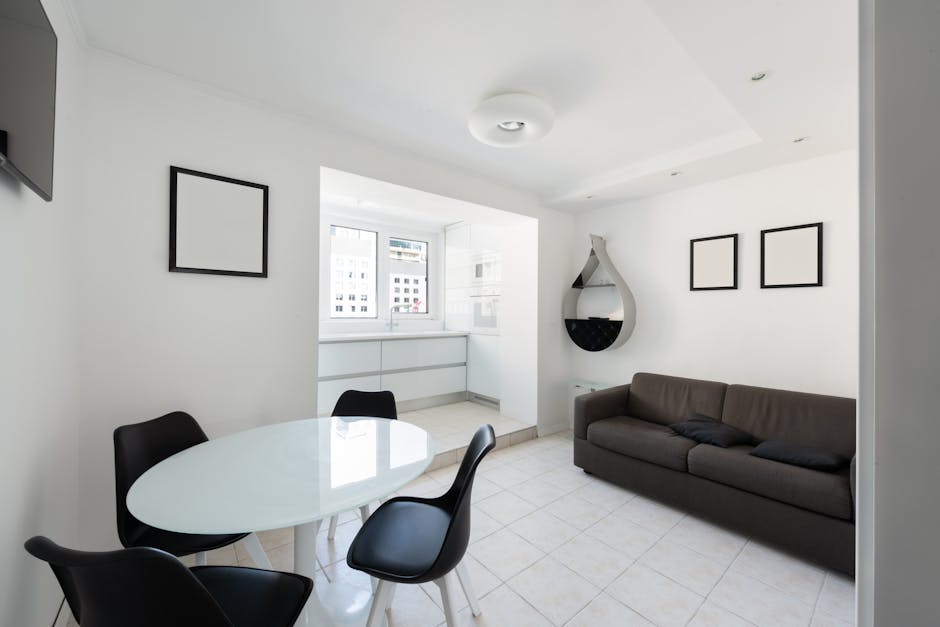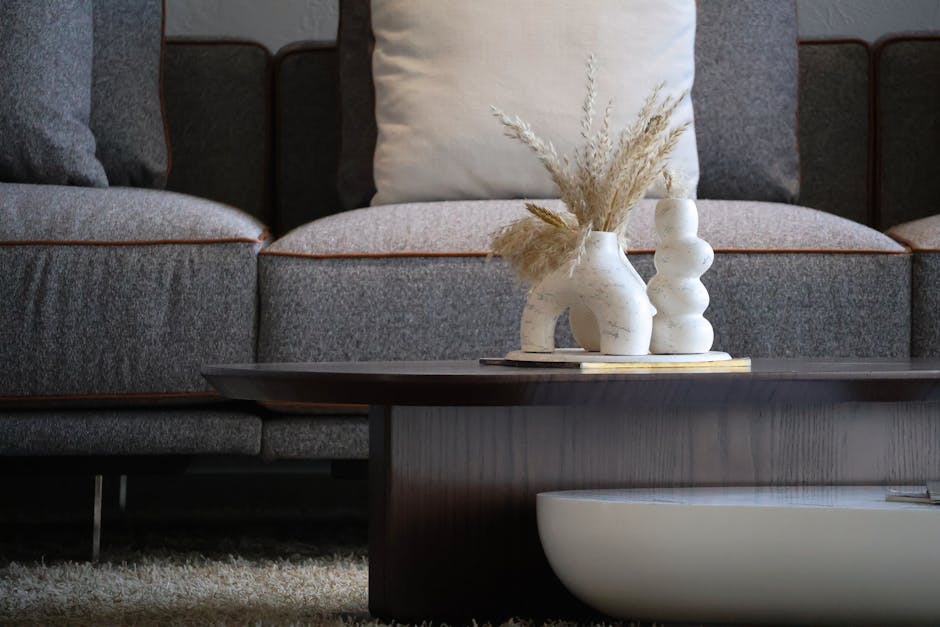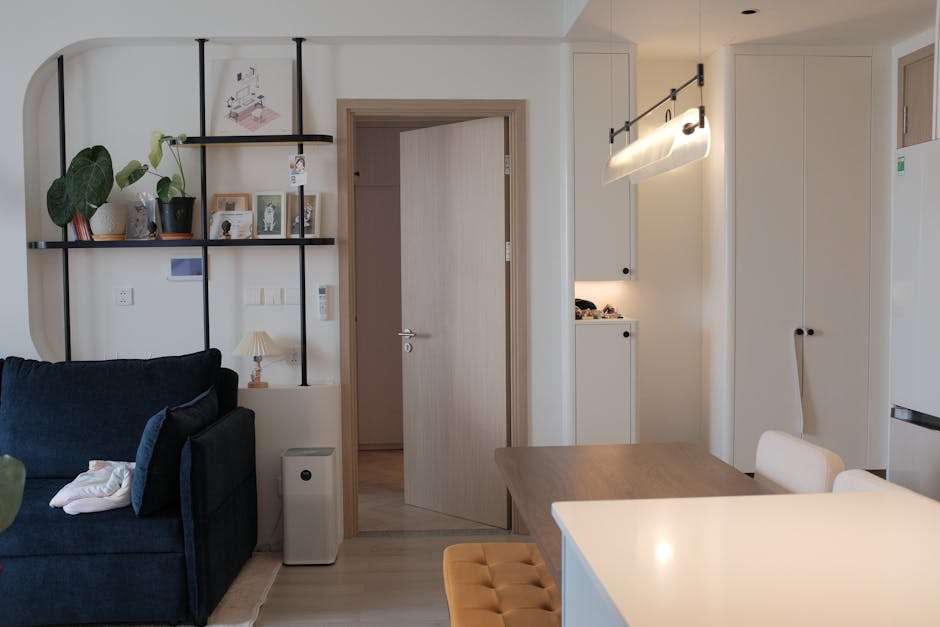
The floor plan is your first decision. Not the sofa color. Not the rug size. Before you buy a single piece of furniture, you need to know where people walk, where they stop, and where the eye lands when someone enters the room. Every minimalist living hall that actually works starts here — with movement, not objects.
This guide covers exactly what to keep, what to cut, and which specific products are worth the money at each stage.
Floor Plan Rules That Determine Everything Else
Minimalism in a living hall is not about owning less. It is about placing less so the space reads clearly. Two sofas arranged correctly feel lighter than one sofa pushed against a wall at the wrong angle.
The single most important measurement: 36 inches of clear circulation path between any piece of furniture and a wall or another piece. Below that threshold, the room feels crowded regardless of how few objects are in it. Most designers use 42 inches for primary walking routes and 24 inches for secondary clearances around chairs and side tables.
Anchor everything around one focal point — either a fireplace, a large window, or a media wall. In a minimalist hall, that focal point does the work that decorative objects do in busier design styles. The HAY Mags Soft sofa (starting around £2,800) faces the focal point. Everything else is secondary or removed.
How to Test Your Layout Before Moving Anything
Use painter’s tape on the floor to map out furniture footprints before committing. A 3-seat sofa typically runs 220–240cm wide. A coffee table at 120x60cm is the right scale for most residential living halls. Tape both outlines and walk the paths. If you have to angle your body to move between furniture, the layout fails the minimalist test — regardless of what the furniture looks like.
The Scale Problem Most People Get Wrong
Buying furniture too small for the room is just as common as buying furniture too large. A 2-seat sofa in a 5×6 metre hall looks like a mistake. The BoConcept Osaka sofa (200cm wide, from £1,499) is often the better call in a medium-to-large living hall because it holds visual weight without requiring additional pieces. One well-scaled sofa reads as minimalist. Two undersized sofas read as cluttered, even when the room is otherwise empty.
The Furniture Shortlist: What a Minimalist Hall Actually Needs
Here is a direct comparison of what works and what adds noise. This is not a checklist to fill — it is a menu to edit down from.
| Furniture Type | Keep or Cut? | What to Buy | Why It Works |
|---|---|---|---|
| Primary sofa | Keep | Muuto Outline Sofa (from £2,200) or IKEA ÄPPLARYD (from £750) | Low back, clean silhouette — does not chop the room visually |
| Second sofa or loveseat | Cut (usually) | Replace with 1–2 accent chairs if extra seating is needed | Two full sofas double the visual mass instantly |
| Coffee table | Keep one | IKEA VITTSJÖ (£65) or Muuto Around side table | Glass or open-frame tables reduce visual weight significantly |
| TV unit or media console | Keep — wall-mounted preferred | IKEA BESTÅ wall-mounted configuration (from £125) | Visible floor space makes the room read larger |
| Freestanding bookcase | Cut or replace | String Shelving System wall-mounted (from £350) | Freestanding units block the floor line and anchor mass to the wrong spots |
| Armchair | One only, if needed | HAY AAC 22 Chair (£580) or IKEA POÄNG (£120) | A single accent chair adds function without adding mass |
| Side tables | One or two small ones | IKEA GLADOM (£25) or Ferm Living Sector side table | Round forms soften rectilinear sofa layouts |
| Floor lamp | One only | Flos Arco Floor Lamp (£1,450) or IKEA HEKTAR (£69) | One statement lamp beats three mediocre ones every time |
| Decorative objects | Strictly limited | Max 3 surfaces with objects — leave the rest completely bare | Empty surfaces = visual rest, not waste |
The Muuto Outline Sofa is the best pick for most minimalist halls. The back is low enough that it does not split the room in half visually, and the leg height keeps floor space visible underneath. If the budget does not stretch to Muuto, the IKEA ÄPPLARYD is the closest equivalent under £1,000 — same silhouette logic, different price point.
Vertical Space: The Most Underused Tool in Minimalist Hall Design
Most people designing a minimalist living hall think horizontally — they edit the furniture on the floor and call it done. Vertical space is where the real work happens, and it is consistently ignored.
Here is why this matters: a room with bare walls and cluttered surfaces looks unfinished. A room with thoughtfully used vertical surfaces and clear floors looks designed. The difference is not subtraction — it is redistribution.
Wall-Mounted Storage Versus Freestanding Units
The String Shelving System (designed in 1949, still produced, starting around £350 for a starter kit) is the benchmark for minimalist wall-mounted storage. The open wire frame reads as almost invisible — your eye sees the objects resting on it, not the shelving structure itself. Compare that to a freestanding bookcase, where the unit itself becomes the dominant visual object in the room.
IKEA BILLY bookcases (from £50) are not wrong by default, but in a minimalist hall they only work floor-to-ceiling and styled sparsely. A half-height BILLY unit sitting on the floor is exactly the kind of visual interruption that makes a space read as untidy rather than considered. If you go BILLY, go full height or do not go at all.
How Much Wall to Cover
A reliable rule: cover no more than 40% of any single wall with objects or furniture. This includes art, shelves, mirrors, and wall-mounted units. In a 4-metre wall, that is 1.6 metres of covered space. The remaining 2.4 metres of bare wall does active work — it gives the covered portions room to breathe and creates the visual silence that minimalism depends on.
Large-format art on one wall is nearly always more effective than distributed art on three walls. A single 100x140cm canvas reads as intentional. Three 30x40cm prints scattered across a wall reads as undecided. Pick one wall, make one strong choice.
Shelf Styling: The Rule of Odd Numbers
Style shelves in groups of three or five objects — never two, never four. Group by height variation: one tall item, one medium, one low object. Leave 30–40% of the shelf surface completely bare. Ceramics from HAY or Ferm Living (typically £15–£80 per piece) work better than mixed collections because visual coherence — same material family, similar tone — matters more than the individual objects themselves. Variety on a shelf is clutter by another name.
The Color Decision
Warm whites over cool whites. Every time. Farrow & Ball’s Dimity (No. 2008) or Elephant’s Breath are the go-to recommendations because they read as neutral without the clinical edge that pure whites bring under artificial light. Cool whites look grey and flat by evening. Warm off-whites with a yellow or pink undertone stay soft across every lighting condition throughout the day.
Add one material accent — natural oak, raw linen, or matte concrete — to prevent the space from reading as sterile. One material thread running through the room. Not four competing textures pulling against each other.
Lighting Setup That Makes the Layout Work
Lighting is the most consistently botched element in minimalist living hall design. The typical mistake: one overhead pendant, too bright, positioned dead center. This flattens the space and highlights every ceiling imperfection. Here is the correct setup, in priority order:
- Demote the center overhead to fill light only. Put it on a dimmer and run it at 20–40% maximum. Use 2700K bulbs throughout — warmer than standard warm white CFLs, which typically run 3000K and feel harsh in low-ceiling rooms.
- Install one arc or floor lamp as the primary task light. The Flos Arco Floor Lamp (£1,450) is the designer standard for a reason — the arc positions light over seating without needing a hard-wired ceiling connection. The IKEA HEKTAR (£69) delivers the same silhouette logic at a fraction of the cost.
- Add low-level lighting at two points in the room. Table lamps, not uplighters. One near the sofa, one near a shelf or sideboard. Target 25–40W equivalent at 2700K.
- Consider wall sconces if the layout allows. The Ferm Living Vuelta Wall Lamp (£195) creates layered light without consuming floor space — which in a minimalist hall is exactly the tradeoff you want to make.
- Avoid recessed downlights as your only source. They produce harsh downward pools with dark zones between them. In a minimalist hall, this patchwork effect works directly against the clean visual you are building everywhere else.
Total lighting spend for a medium-sized living hall done correctly sits around £200–£600. Spending £50 on lighting while spending £2,000 on a sofa is the single most common budget allocation error in this style.
Mistakes That Break the Minimalist Look
Why Does the Room Feel Cold Rather Than Calm?
Because you edited objects but did not add warmth. Minimalism without texture reads as clinical.
The fix is tactile layering within a tight color range: a jute or wool rug (the HAY Teppich Check Rug from £180, or a Beni Ourain-style rug for £300–£800 depending on size), linen cushions in the same tone family as the sofa, and one soft throw draped — not folded — over an arm. These additions do not add visual clutter if they stay within the same color family. They add the warmth that separates an edited room from a showroom.
Why Does It Look Empty Instead of Minimal?
Empty and minimal are different states. A minimal room has considered objects in considered positions with intentional negative space around them. An empty room has objects in default positions with accidental gaps. The difference comes down almost entirely to furniture scale and placement.
If your sofa is too small and pushed against the wall, the space looks abandoned. Pull the sofa 40–60cm off the wall. Scale up the rug so it sits under the front legs of both the sofa and the coffee table simultaneously. These two moves alone close the gap between empty and minimal for most living halls.
Is One Rug Enough?
Yes. One rug, correctly sized, always beats two rugs. The rug should extend at least 60cm beyond the sofa on both sides — for a standard 3-seat sofa, that means a minimum 240x170cm rug. The Hem Loom rug (from £450) comes in proportions that work for this and stays within a minimalist palette. Buying smaller to save money is the mistake — an undersized rug makes furniture float disconnectedly on bare floor, which is the opposite of the grounded, anchored feel minimalism aims for.
When Minimalist Hall Design Does Not Work
Families With Young Children
Minimalist halls require surfaces to stay clear. With young children, that is a daily maintenance burden that creates constant friction between the design and how the household actually functions. A more practical direction is concealed-storage-first design — everything behind closed doors, multi-functional furniture like the IKEA HEMNES daybed with storage drawers (£450) or large storage ottomans. The aesthetic sits closer to neutral Scandinavian than strict minimalist, but it meets the functional demands without requiring a daily reset of the room.
Rentals Where You Cannot Fix to Walls
Wall-mounted storage and fixed lighting are core tools in minimalist hall design. Remove them from the toolkit and the approach becomes significantly harder. In a rental, the more achievable direction is curated Scandinavian — similar color palette and furniture choices, but with freestanding storage that moves with you. The IKEA KALLAX unit (from £69) in a color that matches the wall reads as intentional rather than temporary, which is the best outcome available within rental constraints.
Halls Under 20 Square Metres
In a genuinely small living hall, strict minimalism can make the space feel more constrained, not less. There is simply not enough room to create the breathing distances between furniture that make minimalism read correctly. Multi-functional pieces — a sofa with built-in storage, a IKEA BRIMNES coffee table with storage (£130) — give better results than chasing the minimal aesthetic at the expense of function. Prioritize function first; the visual clarity follows naturally once storage is solved.
A rug that fits and furniture pulled off the walls will do more for any minimalist living hall than any individual object you add or remove.