
Three years ago I moved into a smaller apartment and had to cut my furniture list in half. I expected to feel cramped. Instead, the space felt bigger, calmer, and more deliberate than anything I’d lived in before.
That forced edit turned into an obsession — and a lot of money spent learning what minimalist living decor actually requires versus what social media calls minimalism. Here’s what stuck.
The Three Furniture Pieces That Define a Minimalist Living Room
Every minimalist living room lives or dies by three decisions: the sofa, the storage, and the lighting. Get those right and everything else fills in naturally. Get them wrong and no amount of decluttering saves the room.
The Sofa: Low Profile, Clean Lines
The sofa occupies more visual real estate than anything else. In a minimalist setup it needs to disappear into the room rather than dominate it. That means: low to the ground, straight seams, no tufting, no rolled arms that fight with everything else in the space.
The Article Sven sofa ($1,499 in charcoal or cream boucle) is the one I recommend most often. It sits at 29 inches height, runs 89 inches wide, and the tight-weave fabric doesn’t collect lint the way velvet alternatives do. The silhouette reads as intentional without being precious.
If budget is a real constraint, the IKEA SÖDERHAMN (from $899 in modular configurations) is genuinely good. Not as elegant, but the low depth works in smaller spaces and the modular system lets you reshape the footprint when you move. Avoid oversized sectionals. The visual mass they create destroys the breathing room that makes minimalist spaces feel calm in the first place.
Storage: The BESTÅ System Is Worth the Hype
The IKEA BESTÅ wall-mounted storage combination — specifically with push-open flush doors — is the single best-value piece in minimalist living decor right now. A full setup with two wall-mounted units at 120x42x38cm each runs $300–450 depending on configuration. Doors close flush. Nothing sits on top. The TV mounts directly above on the wall.
Three surfaces of clutter become one clean horizontal line. That’s the trade.
The alternative worth knowing: the String shelving system (Swedish origin, from $400 per panel). More flexible, more visible, better for books and objects you actually want to display. But it demands you genuinely curate what lives there. BESTÅ hides everything. String requires you to choose.
Lighting: This Is Where People Chronically Underspend
Overhead lighting is the enemy of a warm minimalist room. A single ceiling fixture creates flat, even illumination with no depth. The room ends up looking like a doctor’s waiting area.
The Flos Arco floor lamp (~$1,800) is the gold standard — one arc of focused light transforms a reading corner without adding any surface clutter. Too expensive? The IKEA HEKTAR floor lamp ($80) is a credible version at a fraction of the price. Point it toward the wall instead of straight down and the bounce light softens the whole space considerably.
My rule: no more than three light sources in a living room, and none overhead if you can help it.
The Visual Difference Between Minimalist and Just Empty
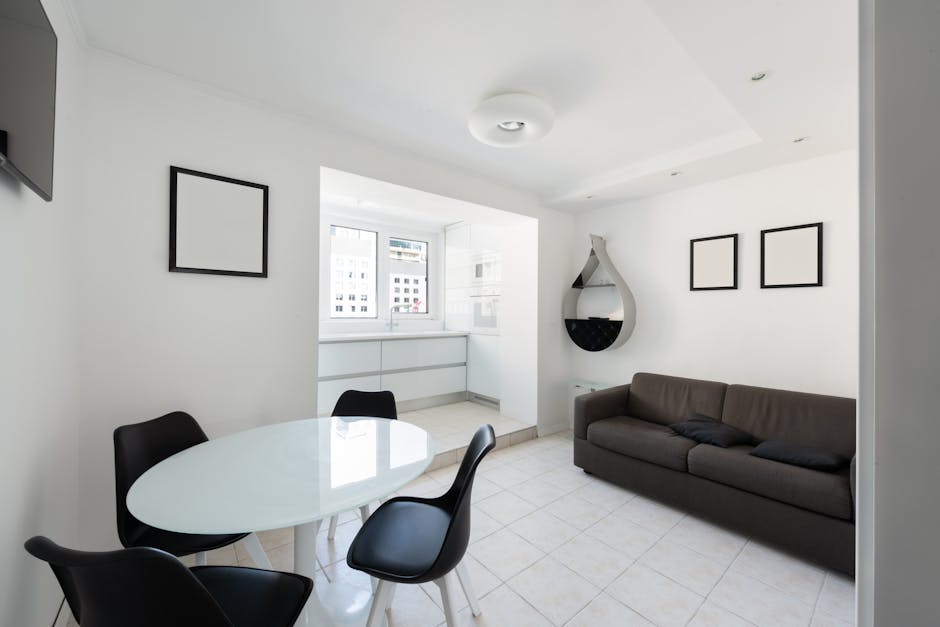
Bare walls and empty floors are not minimalism. They’re absence.
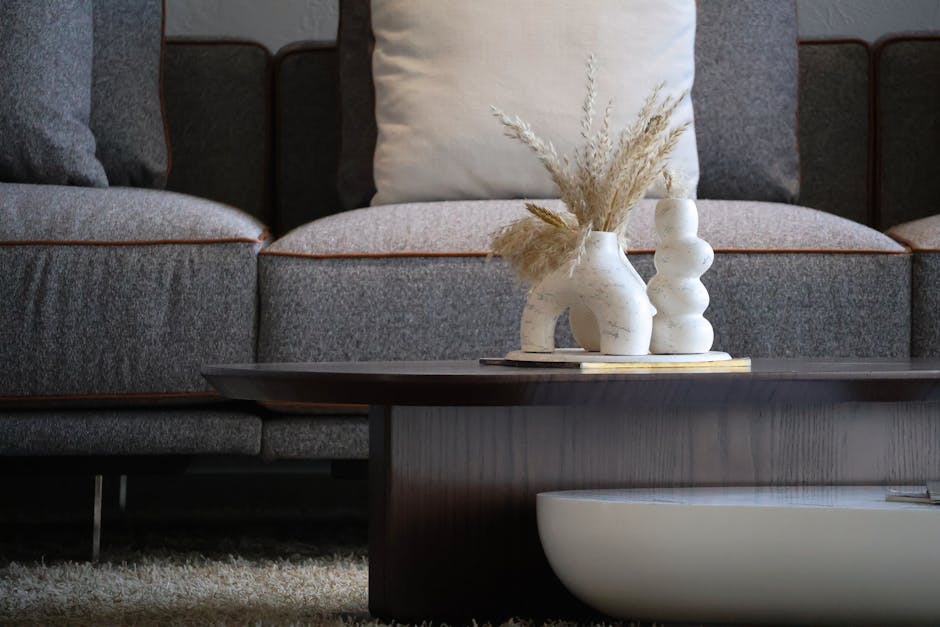
Real minimalist decor has intentional texture variation. A linen sofa reads differently from concrete flooring, which reads differently from a wool rug, which reads differently from a plastered wall. That contrast is what gives the eye somewhere to land without introducing visual clutter. Strip out all texture variation and you get a space that looks like a show apartment — technically clean, completely uncomfortable to spend time in.
The interiors that actually work — from Japanese interior studios, from Scandinavian design photographers — always contain at least four different material textures in a single frame. Smooth, rough, soft, hard. Matte, reflective, woven, solid. You don’t need more objects. You need more material contrast in the ones you already own.
One practical swap with outsized impact: replace a polyester throw blanket with a Faribault Woolen Mill wool blanket (~$120). Same surface area, completely different texture density. That single change reads as more deliberate than buying three new decorative items combined.
The mistake I see most often: someone strips a room down, then panics at how cold it feels and starts adding objects back. What they actually need is softer, warmer materials in what’s already there. Raw wood tray on a coffee table. Linen cushion cover instead of polyester. Unglazed ceramic instead of painted. These are material decisions, not quantity decisions. The number of objects stays the same; the sensory experience changes completely.
How Color Actually Works in a Minimalist Space (Not All Beige)
The all-white minimalist room peaked around 2014 and fell off for a reason: it’s cold, it shows every mark, and it reads as sterile rather than calm. The rooms that actually work use warm neutrals as a base, not clinical whites.
Wall Color: Warm Over Cool
Benjamin Moore Pale Oak (OC-20) is the most-cited warm greige in minimalist interiors for good reason — it adapts well in both north- and south-facing rooms without pushing yellow. Farrow & Ball Elephant’s Breath is another reliable option: photographs well, ages well, doesn’t compete with furniture. Both read as genuinely neutral but with warmth built in.
Cool whites and blue-toned grays make furniture look like it’s floating in a void. That might photograph well for Instagram. It does not feel like a room you want to spend an evening in.
The One Accent Color Rule
Pick one accent color. Use it in exactly three places. A dusty terracotta cushion, a ceramic vase in the same family, and one art print with that tone. Done. The moment you add a fourth instance it shifts from accent to collection, and collections undermine everything else.
Colors that age best as minimalist accents: burnt terracotta, sage green, deep navy, warm rust. Colors that fight: bright yellow, coral, anything that needs its own statement moment to land.
Floors and Rugs
Pale oak or light ash floors extend the sense of space by reflecting light upward. Dark floors ground the room but make it feel heavier and smaller. If your floors aren’t changeable, a Beni Ourain rug (Moroccan, hand-knotted, $300–600 for a 5×8) adds warmth through texture without introducing color competition. The irregular natural pattern reads as organic rather than decorative, which fits a minimalist palette better than any geometric flatweave.
Five Minimalist Decor Mistakes Worth Knowing Before You Start
- Buying minimalist-looking things to replace regular things. Swapping a normal bookshelf for a floating shelf system, then filling both equally. The shelf changed; the clutter didn’t. Minimalism is an edit, not a furniture style.
- Choosing furniture that’s too small for the space. A tiny coffee table in a large room doesn’t look minimalist — it looks unfinished. Scale matters more than quantity. One properly proportioned piece reads better than two undersized ones.
- Ignoring acoustics entirely. Hard floors, bare walls, minimal textiles. Sound bounces everywhere. People spend time in the room and feel uneasy without understanding why. A rug and one textile wall piece fix this in under an hour.
- Using open shelving for everything. Open shelves look perfect in photos for about three weeks. Then daily life happens. Closed storage with a few deliberate open displays is the sustainable version. All-open shelving requires constant daily curation to look intentional.
- Counting plants as decor-neutral. Plants are decor. One or two large ones — a fiddle-leaf fig, a mature monstera, an olive tree — work well in a minimalist space. Twelve small ones across every available surface is a collection, and collections work against everything minimalism is trying to do.
Storage That Disappears Into the Room
The biggest lever in any minimalist living room isn’t buying less. It’s storing better. Specifically: closed horizontal storage at or below eye level, with a designated home for everything that lives in the room.
Remotes, cables, books not currently being read, seasonal throws — if any of these doesn’t have a closed home, it ends up on a surface. And surfaces accumulate fast.
What Actually Works at Each Price Point
The Muji polypropylene storage range ($15–45 per unit) handles inside-drawer and inside-cupboard organization. Stackable, translucent, consistent sizing across the entire range. They go inside cabinets and you stop hunting for things because the system is predictable.
For visible storage that also looks considered, the HAY Colour Cabinet (small version, ~$600) justifies the price — solid doors, clean internal shelf, and the color palette means it reads as an intentional design choice rather than just a box you needed somewhere.
Together, IKEA BESTÅ handles bulk media storage, Muji handles internal organization, and HAY fills the gap where something needs to be both functional and visible. That combination covers 90% of the storage problem in a standard living room without requiring a renovation.
The Cable Problem Has a $15 Solution
IKEA SIGNUM cable management ($15) mounts under any media unit or desk and runs cables along the underside of the surface, completely out of sightlines. Installation takes 20 minutes. The visual difference in the room is significant — visible cables undo clean spaces faster than almost any other single factor.
Japandi, Scandinavian, and Classic Minimalism Compared Side by Side
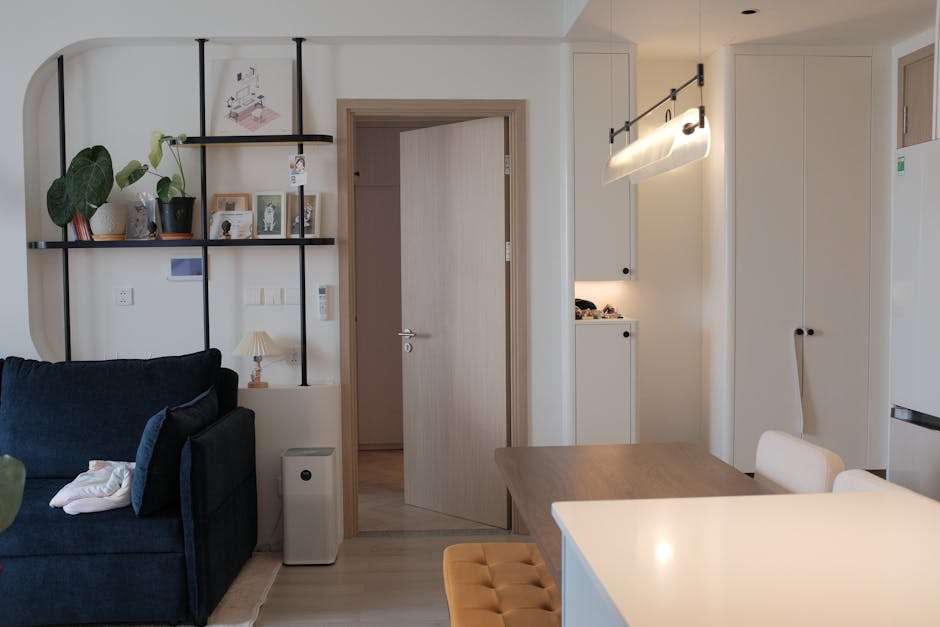
These three aesthetics get used interchangeably online. The material requirements, color logic, and realistic budgets involved are genuinely different:
| Style | Core Materials | Color Range | Representative Brands | Works Best In |
|---|---|---|---|---|
| Japandi | Natural wood, linen, bamboo, washi paper | Warm earth tones, muted sage, soft grays | Muji, Ferm Living, Audo Copenhagen | Small apartments, north-facing rooms |
| Scandinavian Minimalism | Light oak, wool, brushed steel | White base, pale grays, black accents | HAY, String, Muuto | Light-filled rooms, modern architecture |
| Classic Minimalism | Concrete, glass, leather | Monochrome, cool neutrals | Vipp, Knoll, Cassina | Loft spaces, high ceilings, larger budgets |
Japandi is the most forgiving for imperfect spaces. The warmth of natural materials compensates for rooms that aren’t architecturally remarkable. Scandinavian minimalism needs good natural light — without it, white walls and pale oak read as flat gray and cold rather than airy and clean. Classic minimalism needs real bones. A Knoll Barcelona Chair costs $4,000 for a reason and it looks exactly like what it is. Trying to replicate that aesthetic on a mid-range budget shows immediately — the proportions are wrong, the materials feel thin, the whole effect collapses.
My default recommendation for anyone starting a minimalist living room without strong architectural features: Japandi. It’s the warmest, most achievable on a realistic budget, and the most forgiving of the objects that actual daily life requires you to keep around.
When Minimalist Decor Is the Wrong Direction for Your Space
Is a small room too limited for minimalism to read well?
Minimalism works better in smaller spaces, not worse. The problem appears when people go too bare — no rug, no warm textiles, nothing soft anywhere — and the room ends up feeling like a cell. The fix isn’t adding more objects back. It’s adding softer, warmer textures to what’s already there. A properly sized rug, adequate layered lighting, and one textile piece are often the entire solution.
What if kids or pets make clean surfaces genuinely unrealistic?
Then stop fighting your household. The functional version of minimalism for families is closed storage everywhere, fewer objects at child height, and accepting that the room will look lived-in. That’s not a failure. A home should look like people live in it.
The IKEA BESTÅ with soft-close doors becomes more useful, not less, when kids are involved. Objects vanish behind doors in seconds and the room resets. That is a more honest version of minimalism than chasing a showroom look that requires constant upkeep.
Should I purge the room completely before buying anything new?
Yes. Always. The pattern I’ve watched repeatedly: someone buys furniture with clean minimalist lines, installs it next to everything they already owned, and wonders why the room still looks cluttered. New purchases don’t create minimalism. Removal does.
Pull everything out of the space. Put back only what you would actively miss. Then look at what gaps remain. Most people find they need to buy almost nothing — they need to remove nearly everything they already have.