Why Certain Choruses Stick: Hook Writing Explained

You hear the chorus once in a crowded bar, forget most of the verse, and still find yourself singing the main line on the train home. That is the basic business of a hook: it survives distraction. A sticky chorus does not need the most complex chord change, the highest vocal note, or the loudest production. It needs a clear shape that the brain can predict, remember, and repeat with very little effort.

Should a Hook Be Simple, Clever, or Both?

Musician playing acoustic guitar while recording in a home studio setting with headphones

My verdict: start simple, then spend your complexity on one line. A chorus that tries to prove its intelligence in every bar usually loses the room. Listeners need to understand the main motion before they can enjoy the finer details.

Simple does not mean bland

Simple means the listener can follow the sentence, rhythm, and melodic direction on the first pass. It does not mean the lyric has to be obvious. Fleetwood Mac’s The Chain uses plain words, but the emotional pressure comes from how those words sit inside the arrangement. The Killers’ Mr. Brightside keeps its central situation easy to grasp while the vocal rhythm creates urgency.

Clever lines need a clear home

A surprising phrase works best when the chorus gives it a stable frame. Place the unusual image after a repeated title, at the end of a four-bar unit, or on the longest note. The listener hears the familiar structure first and then remembers the detail that breaks the pattern.

For a writer, the practical rule is blunt: if the audience cannot hum the shape after one listen, the chorus has too much information. Keep the melody easy to catch. Let the lyric provide the second listen.

How to Write a Chorus That Earns Its Repetition

Woman in a music studio singing into a microphone, wearing headphones

Hook writing begins before the chorus. The verse creates a problem, question, image, or emotional pressure. The pre-chorus tightens that pressure. The chorus gives the listener the sentence they were waiting to hear. When the chorus arrives without a setup, repetition feels like padding because the song has not created a reason to return to the line.

1. Write the emotional answer first

Before choosing chords, write one sentence that answers the verse. If the verse asks why someone keeps returning to a bad relationship, the chorus might answer with surrender, anger, denial, or relief. Pick one. A chorus loses force when it tries to express all four.

2. Build the title around the strongest mouth shape

Sing the possible title on a loop using nonsense syllables. Notice which vowels stay clear on the target note. Long open vowels such as ah, oh, and ay can carry a sustained melody, while tighter sounds such as ee and ih create a sharper rhythmic edge. Consonants still matter, but too many hard stops can make a high-energy chorus feel cramped.

3. Map the melody before polishing the lyric

Record three rough versions of the chorus using the same words. In the first, keep the melody narrow. In the second, raise the final phrase. In the third, change the rhythm instead of the pitch. Compare the recordings the next day. The best version is often the one that makes the title easiest to remember, not the one with the widest range.

4. Leave room around the main phrase

A hook needs air. If every beat contains a new lyric, the listener has nowhere to store the central idea. Remove one line and listen again. If the chorus becomes easier to sing without losing the emotional point, keep the shorter version.

5. Test it without the production

Play the chorus on one instrument or sing it without accompaniment. This exposes weak rhythm, awkward syllable stress, and melodies that only seem memorable because of a large drum sound. A good hook can survive a stripped version. It may sound less impressive, but its identity remains.

Common failure starts with writing a chorus that summarizes the entire song. That creates a paragraph, not a hook. Another failure is saving the strongest phrase for a bridge because it feels too direct for the chorus. The chorus is exactly where directness earns its place. A third failure is changing the title every time it repeats. Variation can help later, but the first chorus needs a stable center.

Bottom Line: Write the emotional answer, sing the title before refining it, test the melody without production, and cut any line that competes with the central phrase.

Which Songwriting Tools Are Worth Paying For?

The software will not invent a chorus with a point of view, but the right tool can make testing faster. My clear pick for most writers is Logic Pro for Mac because the one-time $199.99 price includes a full recording and editing environment, a large sound library, Flex Time, Flex Pitch, and stem separation. It gives a songwriter enough room to test ideas without adding a subscription.

This is not financial advice. Treat music software as a creative expense, set a firm budget, and do not buy a larger package to solve a writing problem that needs a better lyric.

  • Logic Pro for Mac, $199.99: Best value for an Apple-based songwriter who wants recording, arrangement, vocal editing, and a large library in one purchase. It requires macOS 15.6 or later and Apple silicon for the current Mac version.
  • Ableton Live 12 Standard, $349: Best for writers who discover hooks through loops, live performance, and fast arrangement changes. It includes more than 38 GB of sounds and makes it easy to capture a vocal or instrumental idea before the moment disappears.
  • Ableton Live 12 Intro, $99: Best low-cost choice for testing the workflow. Its 16-track limit is enough for chorus sketches, but writers building full band arrangements may hit that ceiling quickly.
  • Melodyne 5 Assistant, $299 suggested retail: Best for careful vocal editing after the hook already works. It handles pitch, timing, vibrato, phrasing, formants, and dynamics. It cannot turn a forgettable melody into a memorable one, so buy it for control, not inspiration.
Tool Listed price Best use Skip it if
Logic Pro for Mac $199.99 Complete songwriting and production on Mac You use Windows
Ableton Live 12 Intro $99 Low-cost sketches and loop-based ideas You need large arrangements
Ableton Live 12 Standard $349 Fast arranging and live idea capture You prefer a traditional linear timeline
Melodyne 5 Assistant $299 suggested retail Detailed vocal pitch and timing edits The chorus is not written yet

The main buying mistake is paying for correction tools before solving the song. A perfectly tuned vocal still carries a weak hook if the rhythm, title, and emotional answer do not work. For a first purchase, Logic Pro wins on cost and range. For loop-based writers, Ableton Live 12 Standard is the better fit. Melodyne belongs later in the chain.

Why Do Some Hooks Fail Even When the Song Sounds Good?
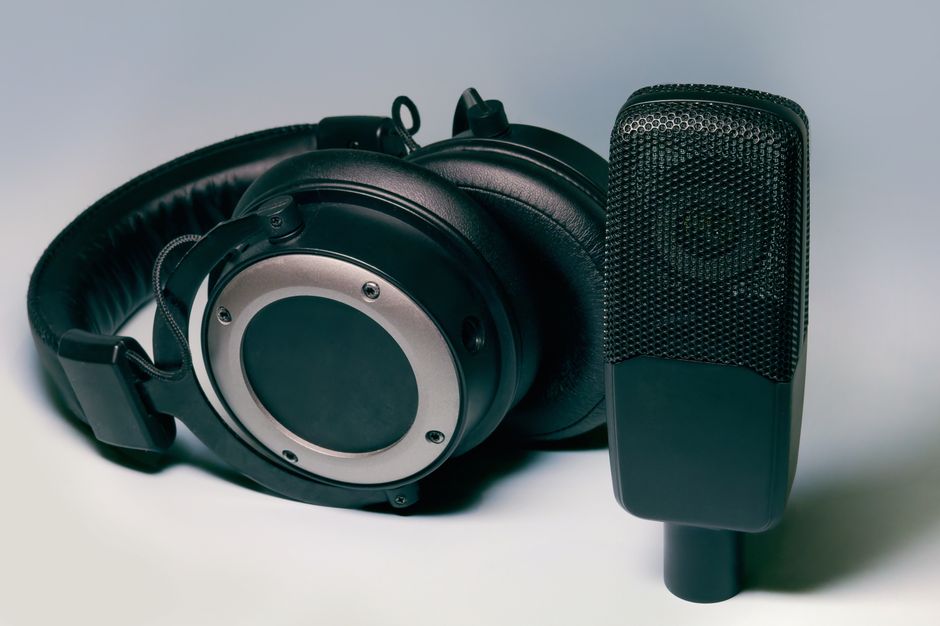
High-quality studio headphones and microphone for professional audio setups

Why does a chorus disappear after the song ends?

Usually, the chorus has no dominant phrase. Several lines may be pleasant, but none has the rhythm, pitch, or wording that tells the listener what to remember. Circle one line and remove anything that competes with it. The chorus should have a clear center of gravity.

Why does repetition start sounding annoying?

Repetition becomes irritating when every repeat has the same energy and no new context. Keep the core phrase stable, then change one surrounding element: add a harmony, remove the drums, extend the final word, or place the line in a different emotional setting. The audience should recognize the hook while feeling that the song has moved.

When should a writer avoid a big chorus?

Skip the oversized chorus when the song’s strength is intimacy, tension, or conversational detail. A quiet repeated line can stick harder than a stadium chant if the lyric exposes something specific. Louder is not the same as more memorable.

The final test is practical. Play the song once, wait ten minutes, and write down the phrase you remember. If you remember only the drum sound or the singer’s vocal run, the hook needs another pass. If you remember a short line and can reproduce its rhythm, the chorus has done its job. The best hook is not the one that displays the most technique. It is the one that gives the listener a shape worth carrying away.

Board Game Night Music: How to Build a Playlist That Doesn’t Kill the Table Talk

You’ve spent an hour setting up the board, sorting the tokens, and reading the rulebook twice. Then someone puts on a playlist with lyrics. Ten minutes later, nobody can remember whether the red cards trigger before or after the trading phase. Music at a board game night isn’t wallpaper. It’s a functional piece of the event, and most hosts get it wrong.

This guide is for hosts who want the right sonic backdrop — music that fills silence, keeps energy moving, and never competes with the person explaining how combat works in Gloomhaven. I’ll cover what works, what fails, and what to play based on the type of game you’re running.

Why Background Music Fails at Board Game Night

The core problem is cognitive. Board games demand active listening. Someone at the table is almost always talking — explaining a rule, negotiating a trade in Catan, or bluffing through a round of Coup. Music with lyrics adds a second language channel. Your brain tries to parse both. The result: missed rules, repeated explanations, and a slower game.

It’s the same reason coffee shops play instrumental music. Vocals pull attention. Wordless tracks don’t. And it’s not just lyrics. Music with sudden dynamic shifts — think a soft ambient track that suddenly drops into a loud synth riff — yanks focus at exactly the wrong moment. The best board game music stays in a narrow dynamic range, keeps the tempo under control, and never calls attention to itself.

One more failure mode: playlist variety. If you shuffle from lo-fi hip-hop to classical to jazz to video game soundtracks, every transition creates a tiny interruption. People notice the change, look up, lose their place. A consistent sonic palette matters more than your personal eclecticism.

What to Look For in Board Game Night Music

Chess pieces lit dramatically on a black background, evoking strategy and focus.

This is a buyer’s guide for a category most people don’t realize they’re buying. You’re not picking songs. You’re picking a mood. Here’s what separates a functional board game playlist from a distraction.

Instrumental First, Always

No vocals. This is the non-negotiable rule. Instrumental music keeps the language-processing part of the brain free for rule explanations and table banter. If you must have vocals, treat them like a rare accent — one or two tracks per hour, max.

Tempo Between 60 and 100 BPM

Faster than 100 BPM raises the room’s energy, which sounds good until someone has to read a paragraph of rules out loud. Slower than 60 BPM puts people to sleep during a three-hour Twilight Imperium session. The sweet spot is 70–90 BPM. It keeps people awake without making them jittery.

Consistent Dynamic Range

Avoid tracks that build to big crescendos. Avoid orchestral scores with sudden horn blasts. You want music that sits at a steady volume and stays there. This rules out a lot of film scores, which are written to match on-screen drama, not tabletop concentration.

Album-Length Cohesion

Play full albums, not shuffled singles. An album has a consistent production style, key range, and mood. Shuffling breaks that. Brian Eno’s Music for Airports works because it was designed as a continuous piece. A shuffled playlist of random lo-fi beats doesn’t have that coherence.

Three Albums That Actually Work

I’ve tested enough board game nights to know what holds up over three hours. These are my picks, with specific reasons for each.

Album Artist Best For Why It Works
Music for Airports Brian Eno Heavy strategy games (Gloomhaven, Terraforming Mars) Designed as ambient background music. No vocals, no dynamics, 48 minutes of steady texture.
Kind of Blue Miles Davis Social deduction and party games (Coup, Avalon) Modal jazz with a relaxed tempo. The band never overplays. It adds sophistication without demanding attention.
Random Access Memories (Instrumental Cuts) Daft Punk Engine-building and eurogames (Catan, Wingspan) Skip the vocal tracks. The instrumental sections are warm, rhythmic, and keep energy up without lyrics.

For a heavier, darker table — think Nemesis or Betrayal at House on the Hill — try the Disco Elysium soundtrack by British Sea Power. It’s moody, atmospheric, and entirely instrumental. The band wrote it to be listened to for hours while reading dialogue, which is basically what board game night is.

Rules Explanations Deserve Their Own Soundtrack

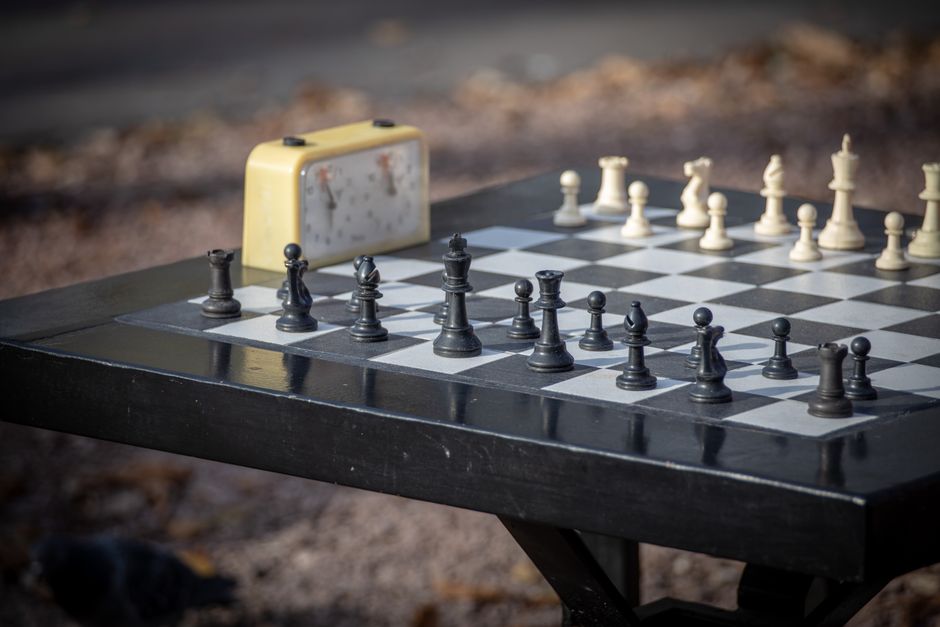
Detailed close-up of chessboard with pieces and timer outdoors, capturing strategy and focus.

This is the section most hosts skip. When someone is explaining rules, the music should be at its lowest possible volume. Not off — silence makes people self-conscious — but low enough that the explainer’s voice is the only thing anyone hears clearly.

Here’s the practical execution. Before the first game, turn the music down to about 25% of your normal listening volume. Run the rules explanation. Ask the table if anyone missed a detail. If someone asks for a repeat, turn the music down another notch. The music is not the point during this phase. It’s a cushion against awkward silence, nothing more.

Once the game starts and people are taking turns, you can nudge the volume up slightly. Not much. Maybe 10% higher. The goal is to fill the gaps between turns, not to soundtrack the whole game.

Common Mistakes and When to Break the Rules

The biggest mistake is treating board game night like a dinner party. Dinner parties want lively music with personality. Board game nights want music that disappears. If your playlist makes someone say, “Oh, I love this song,” it’s already failed. That moment of recognition pulled them out of the game.

Another mistake: using video game soundtracks from games people know. The Skyrim soundtrack is beautiful, but if three people at the table have played the game, they’ll start talking about it. The music becomes a topic instead of a backdrop. Use soundtracks from games nobody has played, or better, use original ambient music.

There is one exception to the no-lyrics rule. If the group is playing a light party game — something like Just One or Wavelength — the cognitive load is low. No one is memorizing rules. In that case, a playlist with vocals at low volume can work. But keep it familiar. New music with lyrics is a distraction. Familiar music with lyrics fades into the background.

Final Verdict: Build the Playlist Like a Setlist

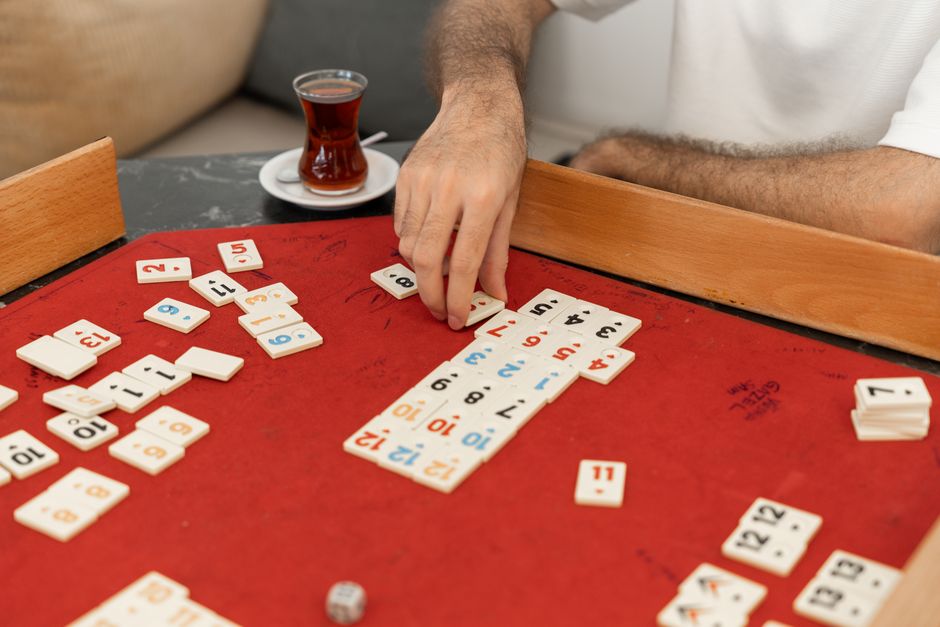
Man playing Rummikub in a cozy indoor setting with tea.

Here’s the thing most people don’t think about: a board game night playlist is a setlist, not a radio station. It has a beginning, a middle, and an end. The first hour should be the quietest — that’s when rules are being explained and people are settling in. The middle hours can have slightly more energy. The last hour, when people are tired and the game is dragging, needs a small boost in tempo to keep the table alive.

For most hosts, the easiest solution is a single Brian Eno album on repeat with the volume low. It works for every game type, never distracts, and requires zero curation. If you want more variety, build a three-hour playlist from the albums above and don’t shuffle it. Put the calmest tracks first, the most rhythmic tracks in the middle, and the warmest tracks at the end.

Board game night music isn’t about showing off your taste. It’s about creating a room where people can think, talk, and play for three hours without once noticing the music. That’s the win. The moment someone says “great playlist,” you’ve actually failed. The moment nobody mentions the music at all, you’ve nailed it.

Declutter House In A Weekend: Declutter Your House in a Weekend: The Music Lover’s 48-Hour Reset

The average American home contains over 300,000 items. Most of them are not being used. You don’t need a storage unit. You need a system with a tempo.

I’ve watched musicians finish albums in 48 hours. Not because they had more time. Because they had constraints. Deadlines force decisions. Your cluttered house is just an album with too many unfinished tracks. This weekend, you’re cutting the filler and keeping the hits.

The Core Problem: Your House Is a Record With Too Many B-Sides

Clutter is not a storage problem. It’s a decision problem. Every item you own is a song you haven’t decided to release or delete. The pile of cables in the drawer? That’s a demo tape from 2015. The stack of old magazines? Unreleased tracks that will never make the album.

Musicians understand this intuitively. A great record has maybe 10 or 12 songs. The rest get cut. Not because they’re bad. Because they don’t serve the whole. Your living room should work the same way.

Here’s the first principle: Every room is a tracklist. You’re not “cleaning.” You’re sequencing. You’re deciding what makes the cut and what goes to the vault. If you wouldn’t put it on the album, it doesn’t stay in the room.

The Three-Question Filter

Before you touch anything, memorize this filter. It works faster than any Marie Kondo joy check:

  • Have I used this in the last 12 months?
  • Would I buy this again today for full price?
  • Does this item have a specific, assigned home that isn’t “the floor”?

Two “no” answers and it leaves. Not to a “maybe” box. It leaves the house. Maybe boxes are how clutter survives. They’re the extended outro that should have been faded out.

The 48-Hour Schedule: Treat It Like a Recording Session

Woman sits in a cardboard box surrounded by moving boxes, symbolizing a new home journey.

Studios book time in blocks. You should too. Here’s the exact schedule. Follow it or don’t. But if you don’t, you’ll be decluttering the same corner next month.

Time Block Saturday Sunday
8:00 AM – 10:00 AM Kitchen countertops and cabinets Bedroom closet (everything on the bed)
10:00 AM – 12:00 PM Living room surfaces and media Bathroom drawers and medicine cabinet
12:00 PM – 1:00 PM Lunch break (no scrolling) Lunch break (no scrolling)
1:00 PM – 3:00 PM Paper piles and mail Garage or storage closet
3:00 PM – 5:00 PM Books, CDs, vinyl, and media Final sweep and donation run
5:00 PM – 6:00 PM Trash out, boxes to car Celebrate with a record you kept

Total active decluttering time: roughly 16 hours. That’s two full workdays. You can do anything for two days if the tempo is set.

Use Music as a Timer, Not a Distraction

Most decluttering advice says “put on a podcast.” Wrong. Podcasts require language processing. That’s the same brain region you need for deciding whether to keep the 2017 tax returns. Music occupies the emotional brain, not the decision brain.

Here’s the rule: One album per room. When the album ends, you move to the next room. No pausing. No “just one more song.” The album is the clock.

For high-focus sorting work, use instrumental records. Brian Eno’s Music for Airports is the classic choice. It’s designed to be ignored. It holds space without demanding attention. For faster, more physical work like hauling boxes or sweeping the garage, put on something with momentum. LCD Soundsystem’s Sound of Silver or anything by Four Tet keeps a steady pulse without lyrical interference.

What you should NOT play: anything you love too much. If you stop to air-drum during “In the Air Tonight,” you’ve lost the room. Save the favorites for the celebration record at the end.

The Vinyl and CD Problem: A Special Circle of Hell

From below of young slim woman carrying stack of heavy carton boxes with kitchen stuff and looking away while moving out of old house

Music fans have a unique clutter problem. We attach identity to physical media. A shelf of vinyl is not just objects. It’s a biography. But here’s the hard truth: If you haven’t played it in two years, you’re not a collector. You’re a warehouse.

I’ll be direct. You do not need three copies of Rumours. You do not need the CD version of an album you own on vinyl. You do not need the vinyl version of an album you stream daily. Pick the format you actually use. Let the rest go.

The 20-Minute Media Sort

Pull every CD, record, and tape off the shelf. All of it. Put it in one pile. Set a timer for 20 minutes. Go through the pile and make three stacks: Keep, Donate, Sell.

The Keep stack goes back on the shelf. The Donate stack goes in a box by the door. The Sell stack goes to your local record store. Most stores will give you cash or store credit same-day. If the store won’t take it, it’s not worth selling. Donate it.

Do not create a “maybe” stack. That’s the clutter’s survival mechanism. You’re smarter than a pile of jewel cases.

Failure Modes: How People Botch a Weekend Declutter

Here’s where it goes wrong. Every time. Avoid these or don’t start.

Failure #1: The sentimental detour. You find a box of concert tickets from 2011. You sit on the floor and relive the show. Thirty minutes gone. The fix: put all sentimental items in a single shoebox. Deal with it AFTER the weekend. Not during.

Failure #2: Buying organizing supplies before decluttering. You don’t need new bins. You need fewer things. Bins are for after. If you buy bins first, you’re just building nicer storage for junk.

Failure #3: The “I’ll sell it later” pile. Unless it’s worth over $50 and you’ve already listed it, it’s not a sale item. It’s a donation item with extra steps. List it now or let it go.

Failure #4: Recruiting a helper who argues. Your partner wants to keep the bread maker. You want it gone. This is not a negotiation. Whoever uses the item gets the veto. If neither of you has used it in a year, it leaves. End of discussion.

What Actually Stays: The Compression Principle

Father and daughter enjoying playful moment in stylish living room setting, highlighting family bonding.

Musicians understand compression. It reduces the dynamic range so the important parts hit harder. Decluttering is compression. You’re reducing the visual noise so the things you actually care about stand out.

After 48 hours, your house should feel like a well-mixed record. Nothing fighting for attention. Every surface intentional. The lamp on the side table. The framed poster on the wall. The single stack of books you’re actually reading. These things become visible because the clutter is gone.

You won’t miss the stuff. You’ll forget you owned most of it within a week. What you’ll notice is the space. The silence. The way it feels to walk into a room that isn’t shouting at you.

That’s the whole point. A decluttered house is not an empty house. It’s a house where the good tracks finally get heard.

Set the timer, put on the record, and cut the filler.