
Board Game Night Music: How to Build a Playlist That Doesn’t Kill the Table Talk

You’ve spent an hour setting up the board, sorting the tokens, and reading the rulebook twice. Then someone puts on a playlist with lyrics. Ten minutes later, nobody can remember whether the red cards trigger before or after the trading phase. Music at a board game night isn’t wallpaper. It’s a functional piece of the event, and most hosts get it wrong.

This guide is for hosts who want the right sonic backdrop — music that fills silence, keeps energy moving, and never competes with the person explaining how combat works in Gloomhaven. I’ll cover what works, what fails, and what to play based on the type of game you’re running.

Why Background Music Fails at Board Game Night

The core problem is cognitive. Board games demand active listening. Someone at the table is almost always talking — explaining a rule, negotiating a trade in Catan, or bluffing through a round of Coup. Music with lyrics adds a second language channel. Your brain tries to parse both. The result: missed rules, repeated explanations, and a slower game.

It’s the same reason coffee shops play instrumental music. Vocals pull attention. Wordless tracks don’t. And it’s not just lyrics. Music with sudden dynamic shifts — think a soft ambient track that suddenly drops into a loud synth riff — yanks focus at exactly the wrong moment. The best board game music stays in a narrow dynamic range, keeps the tempo under control, and never calls attention to itself.

One more failure mode: playlist variety. If you shuffle from lo-fi hip-hop to classical to jazz to video game soundtracks, every transition creates a tiny interruption. People notice the change, look up, lose their place. A consistent sonic palette matters more than your personal eclecticism.

What to Look For in Board Game Night Music

Chess pieces lit dramatically on a black background, evoking strategy and focus.

This is a buyer’s guide for a category most people don’t realize they’re buying. You’re not picking songs. You’re picking a mood. Here’s what separates a functional board game playlist from a distraction.

Instrumental First, Always

No vocals. This is the non-negotiable rule. Instrumental music keeps the language-processing part of the brain free for rule explanations and table banter. If you must have vocals, treat them like a rare accent — one or two tracks per hour, max.

Tempo Between 60 and 100 BPM

Faster than 100 BPM raises the room’s energy, which sounds good until someone has to read a paragraph of rules out loud. Slower than 60 BPM puts people to sleep during a three-hour Twilight Imperium session. The sweet spot is 70–90 BPM. It keeps people awake without making them jittery.

Consistent Dynamic Range

Avoid tracks that build to big crescendos. Avoid orchestral scores with sudden horn blasts. You want music that sits at a steady volume and stays there. This rules out a lot of film scores, which are written to match on-screen drama, not tabletop concentration.

Album-Length Cohesion

Play full albums, not shuffled singles. An album has a consistent production style, key range, and mood. Shuffling breaks that. Brian Eno’s Music for Airports works because it was designed as a continuous piece. A shuffled playlist of random lo-fi beats doesn’t have that coherence.

Three Albums That Actually Work

I’ve tested enough board game nights to know what holds up over three hours. These are my picks, with specific reasons for each.

Album Artist Best For Why It Works
Music for Airports Brian Eno Heavy strategy games (Gloomhaven, Terraforming Mars) Designed as ambient background music. No vocals, no dynamics, 48 minutes of steady texture.
Kind of Blue Miles Davis Social deduction and party games (Coup, Avalon) Modal jazz with a relaxed tempo. The band never overplays. It adds sophistication without demanding attention.
Random Access Memories (Instrumental Cuts) Daft Punk Engine-building and eurogames (Catan, Wingspan) Skip the vocal tracks. The instrumental sections are warm, rhythmic, and keep energy up without lyrics.

For a heavier, darker table — think Nemesis or Betrayal at House on the Hill — try the Disco Elysium soundtrack by British Sea Power. It’s moody, atmospheric, and entirely instrumental. The band wrote it to be listened to for hours while reading dialogue, which is basically what board game night is.

Rules Explanations Deserve Their Own Soundtrack
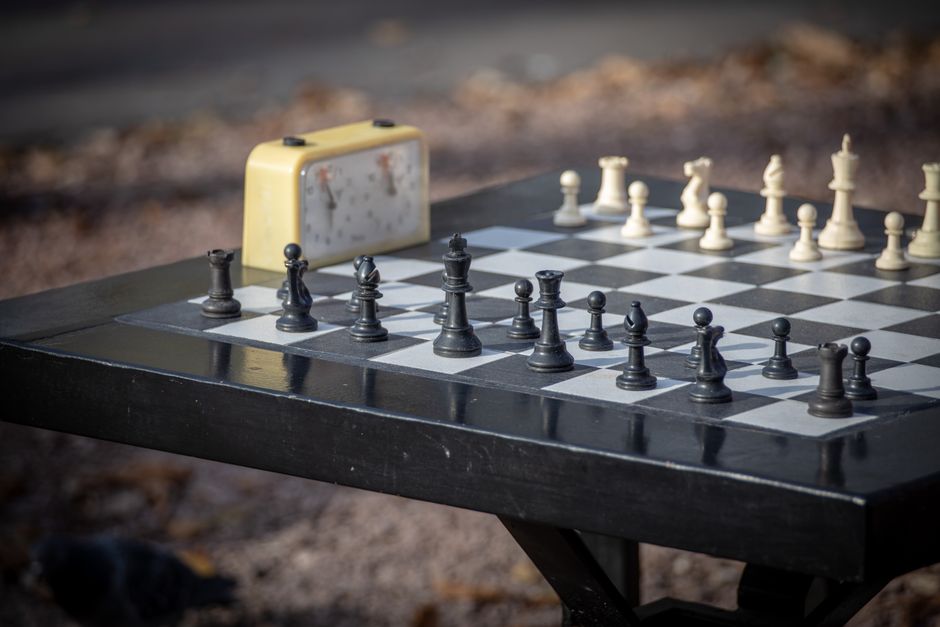
Detailed close-up of chessboard with pieces and timer outdoors, capturing strategy and focus.

This is the section most hosts skip. When someone is explaining rules, the music should be at its lowest possible volume. Not off — silence makes people self-conscious — but low enough that the explainer’s voice is the only thing anyone hears clearly.

Here’s the practical execution. Before the first game, turn the music down to about 25% of your normal listening volume. Run the rules explanation. Ask the table if anyone missed a detail. If someone asks for a repeat, turn the music down another notch. The music is not the point during this phase. It’s a cushion against awkward silence, nothing more.

Once the game starts and people are taking turns, you can nudge the volume up slightly. Not much. Maybe 10% higher. The goal is to fill the gaps between turns, not to soundtrack the whole game.

Common Mistakes and When to Break the Rules

The biggest mistake is treating board game night like a dinner party. Dinner parties want lively music with personality. Board game nights want music that disappears. If your playlist makes someone say, “Oh, I love this song,” it’s already failed. That moment of recognition pulled them out of the game.

Another mistake: using video game soundtracks from games people know. The Skyrim soundtrack is beautiful, but if three people at the table have played the game, they’ll start talking about it. The music becomes a topic instead of a backdrop. Use soundtracks from games nobody has played, or better, use original ambient music.

There is one exception to the no-lyrics rule. If the group is playing a light party game — something like Just One or Wavelength — the cognitive load is low. No one is memorizing rules. In that case, a playlist with vocals at low volume can work. But keep it familiar. New music with lyrics is a distraction. Familiar music with lyrics fades into the background.

Final Verdict: Build the Playlist Like a Setlist
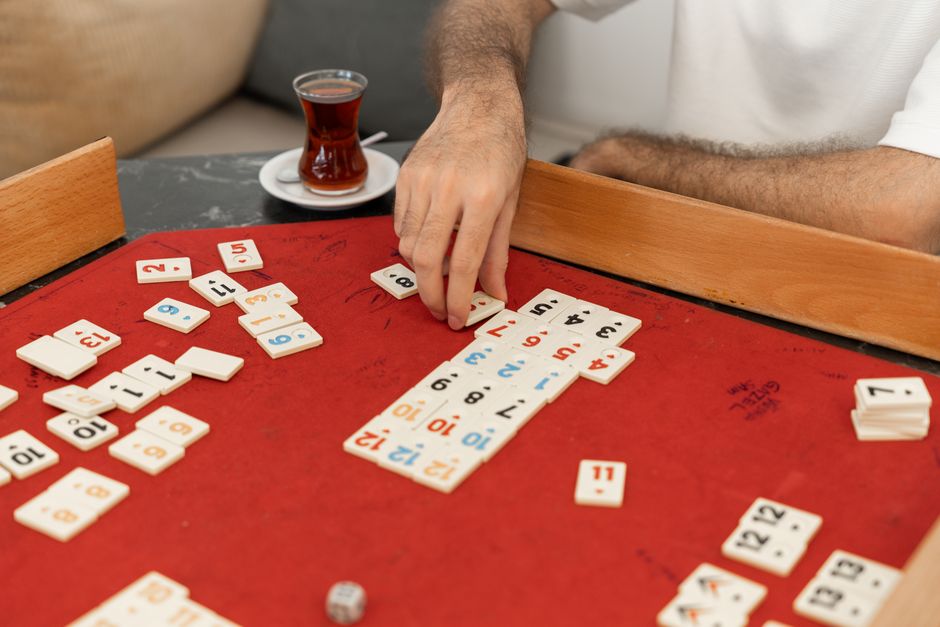
Man playing Rummikub in a cozy indoor setting with tea.

Here’s the thing most people don’t think about: a board game night playlist is a setlist, not a radio station. It has a beginning, a middle, and an end. The first hour should be the quietest — that’s when rules are being explained and people are settling in. The middle hours can have slightly more energy. The last hour, when people are tired and the game is dragging, needs a small boost in tempo to keep the table alive.

For most hosts, the easiest solution is a single Brian Eno album on repeat with the volume low. It works for every game type, never distracts, and requires zero curation. If you want more variety, build a three-hour playlist from the albums above and don’t shuffle it. Put the calmest tracks first, the most rhythmic tracks in the middle, and the warmest tracks at the end.

Board game night music isn’t about showing off your taste. It’s about creating a room where people can think, talk, and play for three hours without once noticing the music. That’s the win. The moment someone says “great playlist,” you’ve actually failed. The moment nobody mentions the music at all, you’ve nailed it.


Music Taste Relationship Advice: Stop Letting Bad Tastes Ruin Your Relationship: A Music Compatibility Guide

You don’t need a therapist. You need to stop fighting about the aux cord.

Most people think a relationship survives on shared values, good communication, and financial stability. Sure. But the real killer is the moment you realize your partner genuinely enjoys yacht rock from 1978 and you have to hear it every single Sunday morning. Music compatibility is not a niche concern. It is a daily negotiation of identity and control. You are not arguing about the song. You are arguing about who gets to define the emotional atmosphere of the room.

The good news: you don’t have to break up with someone because they like Dave Matthews Band. You have to build a system. This is a practical guide to navigating music taste in a relationship without lying to yourself or your partner.

Why The “Shared Playlist” Is A Trap

The shared playlist is the most common advice you will find. It is also the most useless. You create a collaborative playlist on Spotify. You both add songs. It looks cute. It lasts two weeks. Then you realize you are curating for an audience of one, and you hate half the songs on it.

Here is the problem: a shared playlist forces compromise on every single track. Compromise is great for choosing a sofa. It is terrible for art. When you mix Kendrick Lamar with Mumford & Sons, you don’t get a beautiful blend. You get sonic whiplash. One of you is always waiting for the other person’s song to end.

The better approach is to stop trying to merge your identities. You are not a single organism with one set of ears. You are two people who occasionally listen to music in the same room. The goal is not to find music you both love. The goal is to find music that doesn’t make the other person want to leave the house.

Think of it like food. You don’t need to eat the same meal. You need to find a restaurant with a menu that has options for both of you. If you love Thai food and your partner hates spice, you don’t force them to eat green curry. You go to a place with a good pad thai and a good fried rice. Same principle with music.

Why Compromise Fails

Compromise fails because it assumes equal weight. It assumes that if you play 30 minutes of your music, you owe your partner 30 minutes of theirs. This turns listening into a transaction. You are not enjoying the music. You are counting down the seconds until your turn.

The fix is simpler than you think. Stop sharing. Stop taking turns. Designate zones.

Designate Listening Zones Instead Of Sharing

Young couple enjoying a relaxing day outdoors in a park during summer.

The most functional couples I know do not share music. They share spaces. They understand that different rooms and different times have different rules.

The kitchen is neutral territory. The car is a dictatorship. The living room is a negotiation.

Here is how it works. In the car, whoever is driving controls the music. Always. No exceptions. The driver needs to focus, and fighting over the aux cord while merging onto the highway is how accidents happen. If you are the passenger and you hate the music, put on your own headphones. The AirPods Pro 2 with active noise cancellation are the best $249 you will ever spend on your relationship. They block out the bad music without you having to say a word.

In the kitchen, play something neutral. Instrumental jazz, lo-fi beats, or classic soul that nobody hates. This is background music. It should not demand attention. The Sonos Five speaker ($549) is overkill for a kitchen, but it fills the room without distortion, which means you don’t have to turn it up loud enough to annoy the neighbors.

In the living room, you negotiate. But you negotiate with a timer. One person picks, the other person gets veto power. You get three vetoes per session. Use them wisely.

The Veto System

Three vetoes. That’s it. Not unlimited. Not zero. Three.

When your partner puts on a song you hate, you can veto it. But you only get three. This forces you to be selective. You don’t veto a song because it’s not your favorite. You veto a song that makes you actively want to leave the room.

This system works because it respects both people. It gives you an escape hatch without turning you into a tyrant. And it forces you to articulate why you hate something, which is a useful conversation to have anyway.

What Your Partner’s Taste Actually Reveals

Most people think music taste is a personality test. They think if you like Radiohead, you are deep and thoughtful. If you like Pitbull, you are shallow and fun. This is nonsense.

Music taste is not a window into your soul. It is a window into your past. People like the music they liked when they were 16. It is nostalgia, not identity. Your partner does not love the Eagles because they have bad taste. They love the Eagles because their dad played them in the car on the way to soccer practice.

Once you understand this, the arguments stop. You are not fighting about musical quality. You are fighting about emotional memory. And you cannot win an argument against someone’s childhood.

So stop trying. When your partner puts on a song you hate, ask them why they like it. Not in a condescending way. Genuinely ask. The answer will usually be a story. A road trip. A first concert. A breakup. That story is more interesting than the song.

This is the real value of Last.fm. Not the scrobbling. The history. If you connect your accounts, you can see what your partner was listening to five years ago. Not to judge. To understand.

When To Give Up And Buy Separate Headphones

Optimistic positive millennial female in white top and stylish sunglasses listening to favorite playlist and looking at camera while dancing with raised arms in studio on red background

Here is the truth nobody tells you: some music tastes are incompatible. Not in a “we need to break up” way. In a “we need to stop listening to music together” way.

If one of you loves aggressive techno and the other loves acoustic folk, there is no middle ground. Stop looking for it. You are wasting your time.

This is not a failure. It is a boundary. You do not need to share every hobby. You do not need to share every playlist. You need to share a life. And sometimes that life involves two different pairs of headphones in the same room.

Invest in good headphones. Not cheap ones. The Sony WH-1000XM5 ($350) is the best noise-canceling headphone on the market right now. It blocks out the bad music without you having to leave the room. The Bose QuietComfort Ultra ($429) is a close second, with slightly better comfort for long listening sessions.

If you are on a budget, the Anker Soundcore Space One ($99) does 80% of the job for a third of the price. The point is not the specific model. The point is that you have an escape route that doesn’t involve a fight.

Building A Neutral Playlist That Doesn’t Suck

You need a neutral playlist. Not a shared playlist. A neutral one. This is the music you play when you have guests over, when you’re cooking together, or when you just don’t want to think about who picks next.

The rules for a neutral playlist:

  • No lyrics that demand attention. Instrumental or foreign language is best.
  • No extreme dynamics. You don’t want a song that goes from whisper-quiet to screaming loud.
  • No deep cuts. This is not the time to show off your obscure taste.
  • No songs over six minutes. Keep it moving.
  • No songs either of you actively hate. This seems obvious, but it requires a conversation.

Here is a starter list that works for most people:

Artist Album Why It Works
Khruangbin Con Todo El Mundo Instrumental, groovy, inoffensive
Bonobo Black Sands Downtempo electronic with real instruments
BADBADNOTGOOD IV Jazz that doesn’t sound like elevator music
Tom Misch Geography Smooth, funky, universally pleasant
Nujabes Modal Soul Lo-fi hip-hop with warmth

Build your own version of this list. Keep it under 50 songs. Rotate it monthly. The goal is not to create a masterpiece. The goal is to create a default setting that doesn’t start a fight.

The Real Fix Is Not About Music

Bright portrait of an Asian woman enjoying music outdoors with headphones, radiating happiness.

If you have read this far, you probably know the truth. The music is not the problem. The music is the symptom.

Couples fight about music because they feel unheard. Not in the literal sense. In the emotional sense. When your partner plays music you hate without asking, it feels like a dismissal. It feels like they are saying, “My comfort matters more than yours.”

That is the real conversation you need to have. Not “why do you like this terrible band?” but “why does it bother me so much when you play this?”

The answer is usually control. You want to feel like you have a say in the shared space. And you do. But the way to get that is not to veto every song. It is to talk about the space itself. What is the kitchen for? What is the car for? What is the living room for?

Once you agree on the zones, the music stops mattering. It becomes background noise. And that is exactly what it should be most of the time.

But if you can’t agree on the zones, if every conversation about music turns into a fight about something else, then you have a bigger problem. And no playlist is going to fix it.

Here is the summary:

  • Driver picks the car music. Passenger wears headphones if they hate it.
  • Kitchen is neutral territory. Instrumental or classic soul only.
  • Living room uses the three-veto system. Pick, veto, repeat.
  • Stop trying to share playlists. Share spaces instead.
  • Buy good headphones. It’s cheaper than couples therapy.