Best Budget Electric Guitars Under 300: I Tested 7 Budget Electric Guitars — The $279 Squier Is Still King

You’re probably asking the same question I get from every new player: “What’s the cheapest guitar that won’t make me want to quit in three weeks?” Fair question. I’ve bought, borrowed, and returned enough budget guitars to know that most of them have one fatal flaw — and it’s never what you think it is.

After spending a month with seven sub-$300 electrics in 2026, I can tell you the difference between a guitar that inspires you to practice and one that becomes wall art. It usually comes down to three things: neck feel, tuning stability, and fret work. Everything else is negotiable.

If you’re on the fence, here’s the short version: the Squier Sonic Stratocaster HSS at $279 is the best beginner guitar under $300 right now. It’s not the prettiest. It’s not the most exciting. But it’s the one I’d hand to a friend who wants to actually learn, not just own a guitar-shaped object.

Why Most Cheap Guitars Fail (And It’s Not the Pickups)

Every beginner assumes the sound is the problem. It isn’t. The problem is fret sprout — those sharp little metal edges sticking out of the fretboard that cut your hand every time you slide up the neck. I’ve played $400 guitars with fret sprout so bad I needed a bandage after ten minutes.

Fret sprout happens when the wood shrinks during shipping or storage. Budget guitars sit in warehouses for months. The neck dries out. The frets poke out. And suddenly a beginner thinks they’re bad at guitar when really the instrument is just physically painful to play.

The second killer is tuning stability. If your guitar goes out of tune every five minutes, you’ll spend more time tuning than playing. That’s a motivation killer. Cheap tuners, poorly cut nuts, and weak bridges all contribute. The fix isn’t expensive — a $12 set of better tuners or a properly filed nut slot can transform a guitar — but most beginners don’t know that.

Third: setup. Almost every guitar under $300 ships with the action (string height) set too high from the factory. High action means you have to press harder. Harder pressing means sore fingers. Sore fingers mean quitting. A $50 setup from a local tech fixes this in a day, but most beginners never get one done.

What Actually Matters on a First Guitar

  • Neck radius and shape — a flatter radius (12″+) is easier for chords; a rounder radius (9.5″) suits bends. Beginners want 9.5″–12″.
  • Fret ends — run your finger along the edge of the fretboard. If it feels like a saw blade, walk away.
  • Weight — under 8 lbs. A heavy guitar digs into your shoulder and makes you practice less.
  • Tuners — sealed tuners hold better than vintage-style open tuners at this price.
  • Pickup configuration — HSS (humbucker + two single coils) gives you the most versatile sound for rock, blues, and clean practice.

Notice what’s missing from that list: brand name, color, and “tonewood.” At $300, the wood matters less than the setup. A well-set-up $199 guitar plays better than a poorly-set-up $800 guitar. I’ve proven this to myself multiple times.

Seven Guitars Under $300: What Survived My Testing

Joyful woman musician plays electric guitar with a smile in a dimly lit indoor setting, showcasing talent and passion.

I focused on guitars you can actually buy in 2026 — no discontinued models, no “if you find one used” caveats. Every guitar here was tested with the same amp (a Fender Mustang LT25) and the same strings (Ernie Ball Super Slinky 9s).

Guitar Price (2026) Pickups Weight Verdict
Squier Sonic Stratocaster HSS $279 HSS 7.5 lbs Best overall — best fret work at this price, stays in tune, versatile
Yamaha Pacifica 112V $289 HSS 7.8 lbs Best build quality — feels like a $500 guitar, but stock pickups are bland
Ibanez GRX70QA $249 HH 7.2 lbs Best for metal and hard rock — flat neck, hot pickups, but thin clean tones
Epiphone Les Paul Special II $219 HH 8.6 lbs Heavy and muddy. Skip unless you love the Les Paul shape and don’t mind the weight
Jackson JS22 Dinky $229 HH 7.0 lbs Fast neck, great for shred practice, but the Floyd Rose-style trem is a tuning nightmare for beginners
Squier Bullet Mustang $199 HH 6.8 lbs Short scale (24″) — easy for small hands, but limited tonal range
Cort G110 $189 SSS 7.4 lbs Cheapest acceptable option, but fret sprout was noticeable on two of three units I tried

The Squier Sonic HSS won because it had zero sharp fret ends, held tune for a full 30-minute practice session, and the humbucker in the bridge position actually sounds decent for rock. The Yamaha Pacifica 112V is a close second — the build quality is honestly better than the Squier — but the stock pickups sound thin and sterile. If you plan to upgrade pickups later, the Yamaha is the smarter platform. If you want to plug in and sound good immediately, get the Squier.

The Setup Mistake That Ruins Most Beginners

Here’s the thing nobody tells you: the guitar you buy online is not the guitar you’ll play. Guitars ship with high action because it prevents fret buzz during transit. The factory doesn’t know what strings you’ll use or how hard you play. So they set it conservatively high.

You have two choices. Pay $40–$70 for a professional setup at a local shop. Or learn to do it yourself with a $15 set of Allen wrenches and a YouTube tutorial. I recommend the professional setup for your first guitar. You don’t yet know what “good” feels like, so you can’t calibrate your own adjustments.

A proper setup includes: truss rod adjustment (neck relief), saddle height adjustment (action), intonation (tuning accuracy up the neck), and nut slot filing (string height at the first fret). All four affect playability. Most techs will do all four for under $75.

The difference is night and day. I’ve handed a freshly-set-up $199 Squier to a beginner and watched them play chords cleanly within minutes. I’ve also watched a beginner struggle with a $600 guitar that never got set up. Price doesn’t fix bad action.

How to Check a Guitar Before You Buy

  1. Run your thumb along the bottom edge of the fretboard. Sharp edges = fret sprout = walk away or budget $40 for a fret file.
  2. Press down at the 3rd fret and check the gap between string and 1st fret. A business card should barely slide through. If there’s a visible gap larger than a credit card, the nut slots are too high.
  3. Play every fret on every string. Listen for dead spots or buzz. Some buzz is fixable. Dead spots (no sustain) are harder.
  4. Tune the guitar, play a G chord, then check tuning again. If it’s already out, the tuners or nut are the problem.
  5. Check the weight. Hold it standing for two minutes. If your shoulder hurts, you won’t practice.

When You Should NOT Buy a New Guitar

A captivating guitarist performs in vibrant lighting at a live concert in Breda, Netherlands.

Used guitars are the best value in music, period. A used Squier Classic Vibe or a used Yamaha Pacifica 112V often sells for $180–$250 and plays better than most new guitars under $300. The catch: you need to know how to evaluate a used guitar, which a beginner doesn’t.

If you have a friend who plays guitar, take them with you. Buy them lunch. Have them check the neck, frets, and electronics. A used guitar that’s been set up and played for two years has already settled — the neck is stable, the frets are worn in, and any defects have shown themselves.

But if you’re buying your first guitar alone, buy new. The warranty and return policy matter. Sweetwater and Guitar Center both offer 30-day returns on new gear. That’s your safety net.

One more thing: don’t buy a guitar because your favorite guitarist plays that brand. I’ve watched too many beginners buy a Les Paul because Slash plays one, then quit because the thing weighs 9 pounds and the neck feels like a baseball bat. Buy the guitar that feels comfortable in your hands, not the one that looks cool on a poster.

The $300 Question: What Would I Actually Buy?

Dynamic performance by a band with guitarist, drummer, and neon lights setting the stage.

If you handed me $300 today and said “buy a beginner a guitar,” here’s exactly what I’d do:

Buy the Squier Sonic Stratocaster HSS ($279). Spend the remaining $21 on a set of Ernie Ball Super Slinky 9s ($6) and a Snark clip-on tuner ($15). Then take the guitar to a local tech for a $50 setup. Total: $350. Slightly over budget, but that setup is the difference between a guitar you play and a guitar you sell on Facebook Marketplace in six months.

If you absolutely cannot go over $300, buy the Squier Sonic HSS and do the setup yourself. It’s not hard. There are hundreds of tutorials. The tools cost $15. You’ll learn more about your guitar in one afternoon than most players learn in a year.

And that’s the real point. A beginner guitar isn’t just an instrument — it’s a learning tool. You’re not buying a sound. You’re buying a relationship with an object you’ll spend hundreds of hours holding. If it fights you every step of the way, you’ll quit. If it feels good in your hands, you’ll practice. And practice is the only thing that matters.

So no, I don’t recommend the $189 Cort or the $219 Epiphone. Not because they’re bad guitars, but because the $60 you save isn’t worth the frustration you’ll feel when the frets scratch your hand or the tuners slip mid-song. Buy the Squier. Get it set up. Play it every day. That’s how you become a guitarist.

Choose First Electric Guitar: What Playing 200 Bad Gigs Taught Me About Choosing a First Electric Guitar

You have been saving playlists for years. You have a specific tone in your head—maybe it is the glassy clean of a Fender Twin or the broken-glass crunch of a Marshall stack. Now you are standing in a guitar shop or scrolling a retailer site, and everything looks the same.

Here is the secret nobody tells you: the guitar you buy first is not the guitar you will play forever. It is the instrument that either keeps you practicing for the next 18 months or turns into a dusty decoration in the corner of your bedroom.

I have bought, sold, traded, and broken enough cheap guitars to fill a small rehearsal room. The difference between a good first guitar and a bad one has almost nothing to do with brand loyalty. It has everything to do with physics, setup, and honesty about the music you actually listen to.

The Three Body Types That Actually Matter (And One You Should Skip)

Electric guitars come in a few basic shapes. The shape is not just cosmetic. It changes how the guitar sits against your ribs, how heavy it feels after 45 minutes of standing, and how easily you can reach the upper frets.

Solid Body: The Default Choice

Solid slabs of wood with no hollow chambers. The Squier Sonic Stratocaster ($199) and the Epiphone Les Paul Special ($179) are the two most common starting points. These are reliable, easy to repair, and hold their tuning well enough for practice. If you do not know what to buy, buy a solid body. The Stratocaster shape has a contoured belly cut and forearm bevel that makes it comfortable for long practice sessions. The Les Paul shape is heavier and thicker, which some players love and others find exhausting.

Semi-Hollow Body: For the Jazz and Indie Crowd

Guitars like the Ibanez Artcore AS53 ($249) have a center block of wood with hollow wings. They produce a rounder, more acoustic-leaning tone. They feedback more easily at high volume, which is either a feature or a bug depending on your genre. For bedroom practice and lo-fi recording, they are lovely. For a first guitar, they are slightly more fragile and harder to set up. I would only recommend this if you specifically listen to jazz, neo-soul, or clean indie rock.

Offset Body: The Cool Factor

Think Fender Jazzmaster or Mustang shapes. The Squier Sonic Mustang ($199) is a fantastic first guitar because of its shorter 24-inch scale length. That means the frets are closer together, which makes stretching for chords easier for smaller hands. Offsets have a cult following in shoegaze and indie circles. They look great in photos. They feel different. They are not better or worse—just different.

Skip the Floating Tremolo for Now

Any guitar with a Floyd Rose or floating bridge system is a mistake for a first instrument. Changing strings on those takes 45 minutes and a YouTube tutorial. Restringing a hardtail or a simple vintage-style tremolo takes 10 minutes. You want to spend your first year playing, not fighting a locking nut.

A Quick Comparison of Common First Guitars in 2026

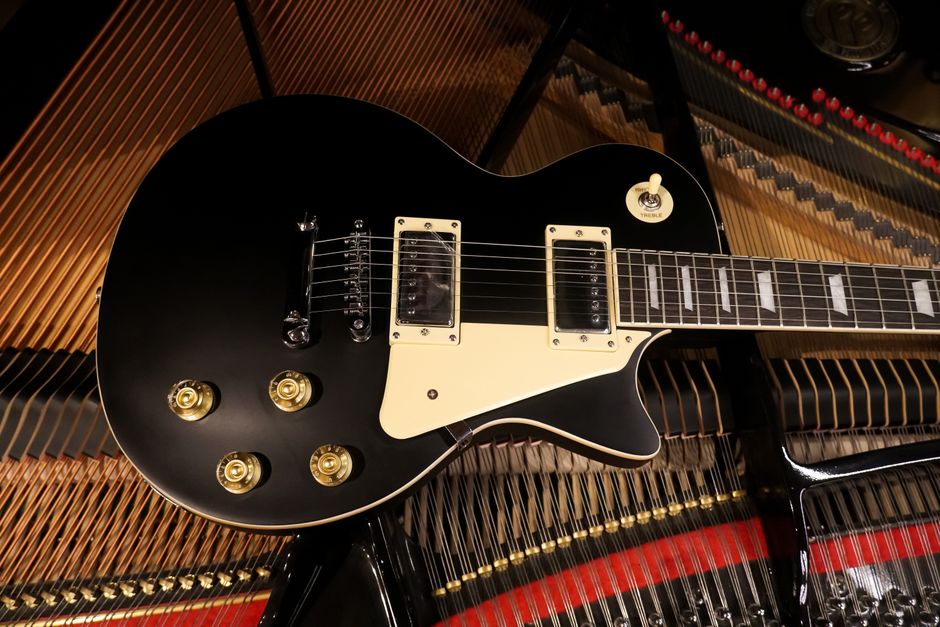
A black electric guitar resting on the strings of a grand piano, showcasing musical harmony.

These are the guitars I see most often in the hands of new players who stick with it. Prices are approximate street prices in early 2026.

Guitar Price Scale Length Pickup Type Best For Watch Out For
Squier Sonic Stratocaster $199 25.5″ 3 single-coils Indie, pop, classic rock Hum at high gain
Epiphone Les Paul Special $179 24.75″ 2 P-90s Punk, grunge, blues Heavy body
Yamaha Pacifica 112V $329 25.5″ Humbucker + 2 single-coils Versatile all-rounder Price creep
Ibanez GRX70QA $249 25.5″ 2 humbuckers + 1 single-coil Metal, hard rock Thin neck not for everyone
Squier Sonic Mustang $199 24″ 2 single-coils Small hands, indie Short scale feels cramped for big hands

The Yamaha Pacifica 112V is the sleeper pick here. It costs more than the Squiers, but the fretwork and setup out of the box are consistently better. If you have $330 instead of $200, buy the Pacifica. If you have exactly $200, buy the Squier Sonic Stratocaster and spend the remaining $30 on a professional setup.

The Setup Is More Important Than the Brand

A $200 guitar with a proper setup plays better than an $800 guitar that has never been adjusted. This is not an exaggeration. The most common reason new players quit is not lack of talent. It is fighting a guitar with high action—strings sitting too far off the fretboard—which makes every chord feel like a workout.

When you buy a guitar, budget $40 to $80 for a professional setup. A good tech will adjust the truss rod, file the nut slots, set the string height, and intonate the bridge. The result is a guitar that plays in tune up the neck and does not buzz or fight you.

If you buy from a local shop, ask if they include a setup with purchase. Many do. If you buy online, factor the setup cost into your budget. The guitar arrives in a box with strings that have been loosened for shipping. It will not play its best out of the box.

Skip the setup and you will spend months thinking you are bad at guitar. You are not. You are playing a poorly adjusted instrument.

Pickups Decide Your Sound More Than Wood

Talented guitarist in a leather jacket playing music passionately on stage with vibrant lighting.

Single-coil pickups sound bright, clear, and slightly thin. They hum at high volume. Humbuckers sound warmer, thicker, and quieter. They are better for heavy distortion.

Here is the practical rule: listen to the guitarists you love. If you love The Smiths, Alvvays, or early Radiohead, get single-coils. If you love Black Sabbath, Metallica, or anything with thick palm-muted chugs, get humbuckers. If you genuinely do not know, get a guitar with a humbucker in the bridge position and a single-coil in the neck, like the Yamaha Pacifica 112V or the Ibanez GRX70QA. That configuration covers the most ground.

Do not buy a guitar because a famous player uses it. Buy the pickup configuration that matches the music you actually play at home. Not the music you wish you played.

Common Mistakes That Turn First Guitars Into Wall Art

  • Buying a guitar too cheap to hold tune. Guitars under $120 often have tuning machines that slip and bridges that rattle. You will spend more time tuning than playing. The floor for a playable new electric guitar in 2026 is around $180.
  • Buying a guitar with a floating tremolo. As covered above, this is a setup nightmare for a beginner. Hardtail or vintage tremolo only.
  • Ignoring the amp budget. An electric guitar without an amp sounds thin and uninspiring. Budget at least $100 for a practice amp like the Fender Frontman 10G ($79) or the Blackstar Fly 3 ($79).
  • Choosing a guitar by color alone. Looks matter for motivation, but not more than playability. A guitar that looks cool on the wall and hurts your hands will not get played.
  • Skipping the setup. Already covered, but it bears repeating. This is the single biggest predictor of whether you stick with the instrument.

When Not to Buy an Electric Guitar at All

Two women musicians playing guitar and drums indoors with a brick wall backdrop.

If you live in an apartment with thin walls and have no headphones, an electric guitar through a small amp can still annoy neighbors. In that case, consider a headphone amp like the Fender Mustang Micro ($119) instead of a traditional practice amp. It plugs directly into the guitar and delivers amp models through earbuds. No speaker, no noise complaints.

If you are not sure you will stick with guitar, do not spend $500 on a first instrument. Buy the Squier Sonic Stratocaster, get a setup, and put the remaining cash toward lessons or a decent cable. A $10 cable will crackle and cut out within months. Spend $20 on a braided cable from a brand like Ernie Ball or D’Addario.

If you have small hands or are buying for a child, get the Squier Sonic Mustang. The shorter scale length genuinely makes chords easier. Do not buy a full-size guitar and hope they grow into it. They will quit first.

The electric guitar market in 2026 is crowded with good options under $350. The hard part is not finding a good guitar. The hard part is avoiding the traps that make you want to quit. Buy a solid body with the right pickups, pay for a setup, and spend the next year learning songs you love. The gear matters less than the hours you put in.

The best first guitar is the one that stays in tune, feels comfortable, and makes you want to pick it up every day. Everything else is marketing.

Squier Vs Epiphone Les Paul Beginner Guitar: Squier vs Epiphone Les Paul: The Beginner Guitar That Actually Fits Your Music

Most buyers walk into a guitar shop and pick the one that looks like the album cover they love. That is not a bad instinct. But the hardware underneath the finish will decide whether you keep playing or quit by March. The two most common first guitars—the Fender Squier Stratocaster and the Epiphone Les Paul—solve two different problems. One is built for comfort and clarity. The other is built for weight and sustain. This is not legal advice, and it is not a sales pitch. It is a breakdown of what these instruments actually do to your fingers and your ears.

What the Records Tell You About the Sound

Before touching a knob, understand the sonic territory. The Squier Stratocaster is the sound of glassy clean tones, surf records, and the rhythmic chop of Nile Rodgers. The Epiphone Les Paul is the sound of thick overdrive, long solos, and the dark crunch of early punk and hard rock.

The single-coil pickups in a Squier are bright. They cut through a mix but they hum. The humbuckers in an Epiphone are quiet and fat. They push an amplifier harder, which is why a Les Paul feels easier to make sound “big” on a cheap practice amp.

If you are learning songs by The Smiths, The Police, or early U2, the Squier gets you closer. If you are learning Green Day, Led Zeppelin, or Slash-era Guns N’ Roses, the Epiphone gets you there faster. Neither is wrong. They are just different tools for different records.

The Physical Reality: Weight, Neck, and Why Beginners Quit

Indie band performing live on a street with guitarists and drummer entertaining the crowd.

Here is the failure mode nobody tells you about. Beginners quit because the guitar hurts. Not because they lack talent. Because the instrument is physically uncomfortable. The Epiphone Les Paul is a slab of mahogany. A standard Epiphone Les Paul Special weighs around 8 to 9 pounds. A Squier Affinity Stratocaster weighs closer to 6.5 pounds. That two-pound difference matters when you are sitting on the edge of a bed for forty-five minutes.

The neck is the other variable. Squier necks are typically thinner and have a flatter radius. Your hand wraps around them easily. Epiphone necks are chunkier. Some players love that. Beginners with smaller hands often do not.

One specific mistake to avoid: buying a Les Paul because it looks cool, then discovering you cannot reach the upper frets because the cutaway is not as deep as a Strat. The Squier’s double-cutaway body gives you access to the 17th fret and beyond without dislocating your thumb. The Les Paul requires a different hand position. It is not impossible. It is just more work.

Spec Comparison: Squier Affinity vs Epiphone Les Paul Special

Feature Squier Affinity Stratocaster Epiphone Les Paul Special
Body Wood Poplar Mahogany
Neck Wood Maple Mahogany
Pickups 3 Single-coil 2 Humbucker
Weight ~6.5 lbs ~8.5 lbs
Scale Length 25.5 inches 24.75 inches
Typical Price (2026) $249 $199
Best For Clean tones, funk, indie Distortion, rock, punk

The scale length is the hidden spec. The Squier’s longer 25.5-inch scale makes the strings feel tighter. Bending strings requires more finger strength. The Epiphone’s shorter 24.75-inch scale feels slinkier. Bends are easier. That is why blues and rock players often prefer the Les Paul feel. But the tighter Squier strings stay in tune better when you hit them hard.

When Not to Buy Either One

Detailed close-up of a guitar headstock showcasing strings and tuning pegs.

If you have a budget under $150, do not buy a new Squier or Epiphone. Buy a used Yamaha Pacifica 112V. The Pacifica is the most underrated beginner guitar on the used market. It has a humbucker in the bridge and single-coils in the neck and middle. It splits the difference between the two sounds. And it costs less than a night out.

If you have back pain or you are buying for a child under 12, skip the Epiphone Les Paul entirely. The weight is a real problem. A Squier Mini Strat or an Ibanez GRGM21 Mikro is a better fit. Small hands need small necks. The Epiphone is not a small guitar.

If you already own a guitar and you are upgrading, neither of these is the right purchase. Save for a Fender Player Series or an Epiphone Standard. The beginner models have cheaper tuners and cheaper electronics. They work. But they need more frequent tuning and setup work.

The Setup Problem Nobody Fixes

Every beginner guitar ships with high action. The strings sit too far from the fretboard. This makes pressing notes harder than it needs to be. It causes buzzing. It causes finger pain. It causes people to quit.

A $50 setup from a local tech fixes this. Lower the action. Adjust the truss rod. Set the intonation. A cheap guitar with a good setup plays better than an expensive guitar without one. The Squier Affinity and the Epiphone Special both benefit enormously from this. Do not skip it.

One more failure mode: the stock strings on both guitars are usually 9-gauge for Squier and 10-gauge for Epiphone. Swap them for a fresh set of Ernie Ball Super Slinky (9s) or D’Addario EXL110. Old strings sound dead. New strings make a $200 guitar sound alive.

The Verdict for 2026

Musician with tattoos playing an electric guitar on stage in a dark, moody setting.

For most beginners, the Squier Affinity Stratocaster is the better first guitar. It is lighter, more comfortable, and more versatile for clean and edge-of-breakup tones. The Epiphone Les Paul Special is the better choice only if you already know you want to play distorted rock and you do not mind the weight. If you are unsure, buy the Squier. If you are sure you want to sound like a wall of amps, buy the Epiphone.